
Access
About 12 minutes on foot from JR Imabari Station. About 10 minutes by car from Imabari IC on the Shimanami Kaido. About 20 minutes by bike from Sunrise Itoyama.
Hours
9:00–17:00 (last entry to the keep 16:30). Closed Mondays (or the following day if Monday is a holiday).
Address
愛媛県今治市通町3-1-3
Imabari Castle is a sea castle built in 1602 by the warlord Todo Takatora beside Imabari Port, counted with Takamatsu Castle and Nakatsu Castle among Japan's three great sea castles. Its broad moats are filled with seawater, and in its day boats could sail right into the castle. From the keep, rebuilt in 1980, you can look out over the islands of the Seto Inland Sea.
GUIDE
Imabari Castle: Highlights and How to Visit
What to see and how to get around, with photos
What is Imabari Castle? One of Japan's three great sea castles
Imabari Castle stands facing the Seto Inland Sea in Imabari, the Ehime gateway to the Shimanami Kaido. Built in 1602 by Todo Takatora, a warlord famed as a master castle builder, it is counted with Takamatsu Castle and Nakatsu Castle among Japan's three great sea castles.
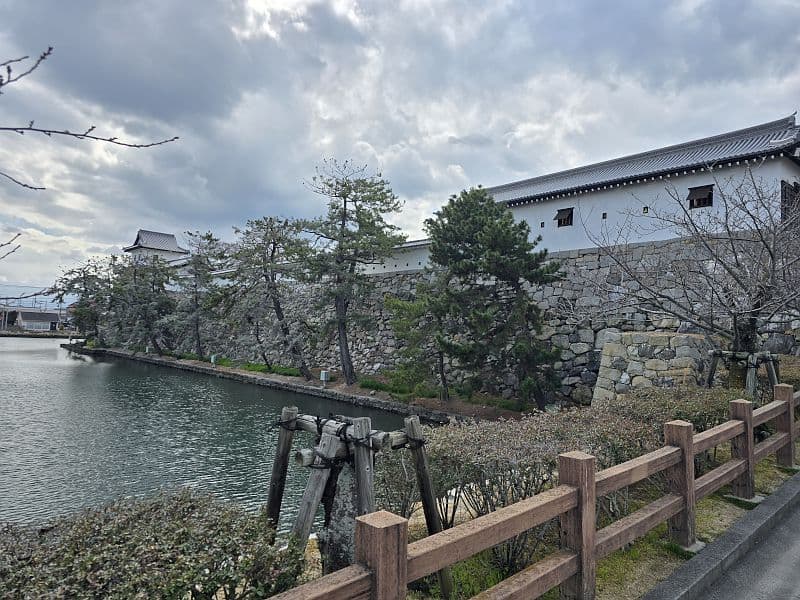
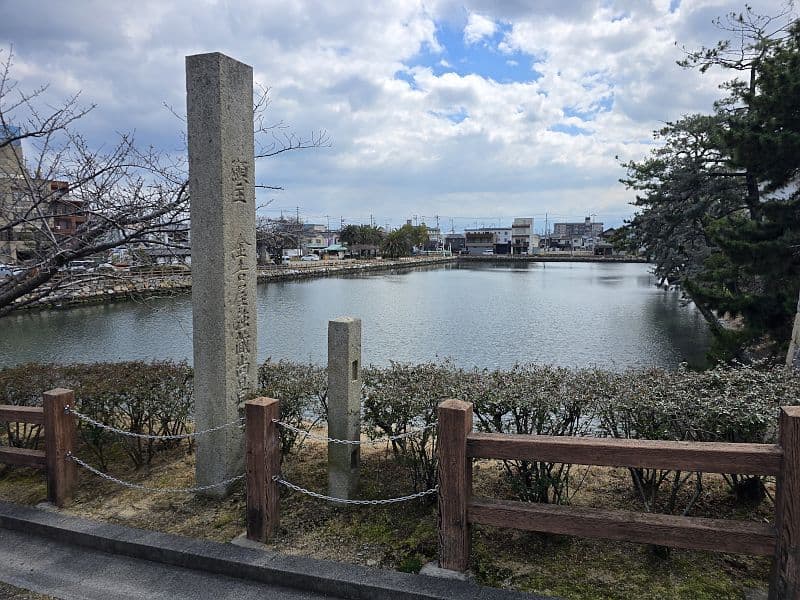
A sea castle (mizujiro) uses the water of the sea, a lake or a river directly for defense. Imabari Castle makes full use of its location next to Imabari Port, with seawater drawn into its moats. It is said that sea and castle were once so connected that boats could enter the moat directly, letting the castle control sea traffic for both defense and supply.
Imabari Castle and the Murakami pirates
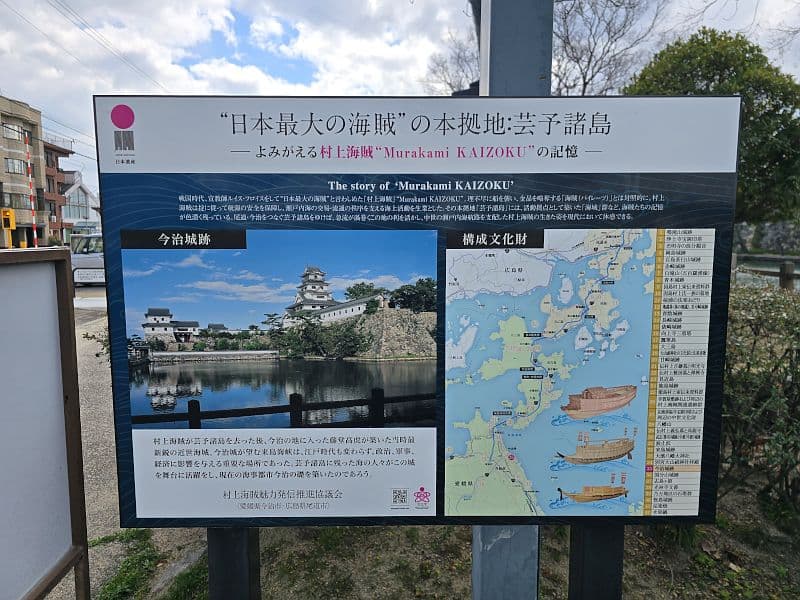
Before Imabari Castle was built, the Murakami pirates (Murakami navy) ruled this area from the sea. Moving freely across the Seto Inland Sea, they have been called "Japan's greatest pirates" and controlled sea traffic from their bases in the Geiyo Islands. Some say that by building a castle here, Todo Takatora secured Imabari by taking over the sea power the Murakami had held. The castle site is one of the cultural properties of the Japan Heritage story of the Murakami Kaizoku.
Fish in the moat of Imabari Castle
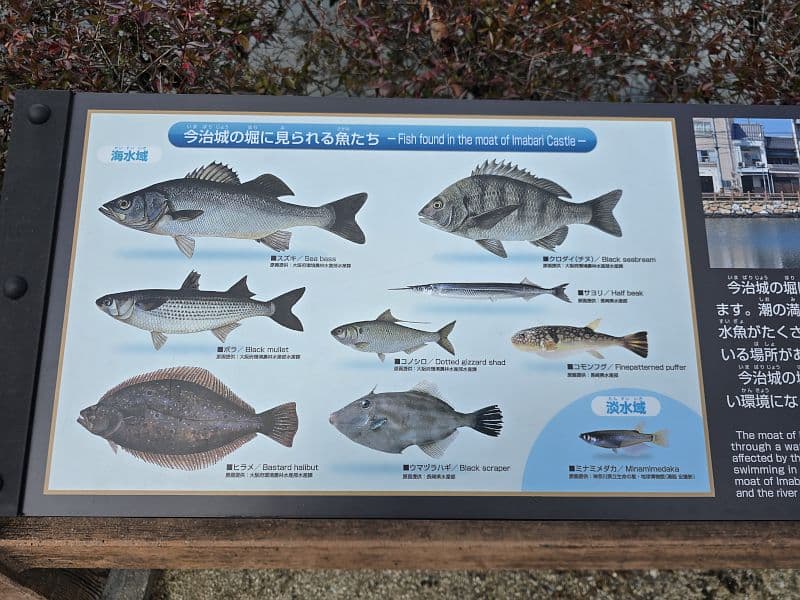
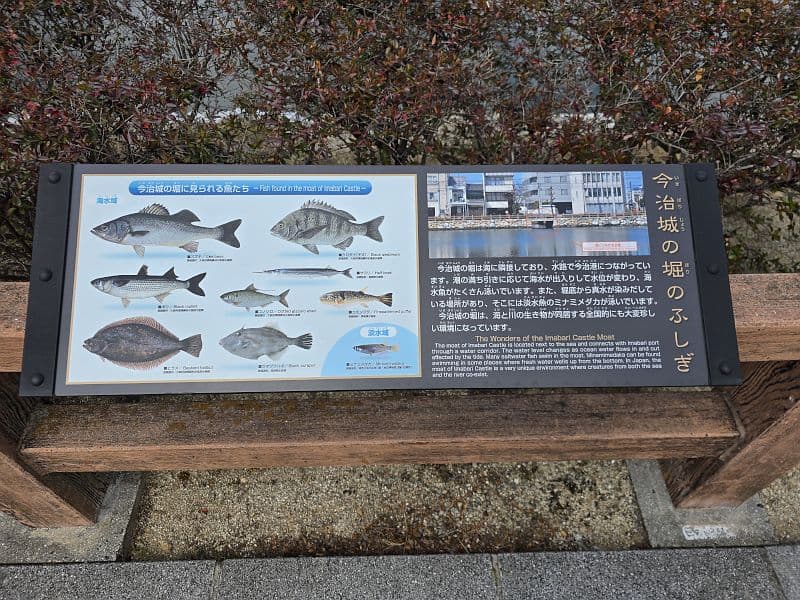
The moat of Imabari Castle connects to the sea, and with the tides it becomes brackish, a mix of seawater and fresh water. As a result, saltwater fish such as sea bass, black sea bream and flounder live in the moat along with freshwater fish such as the southern medaka, a rare environment in Japan. Look into the water as you walk along the moat and you may spot a surprisingly big fish.
Imabari Castle history: from construction to restoration
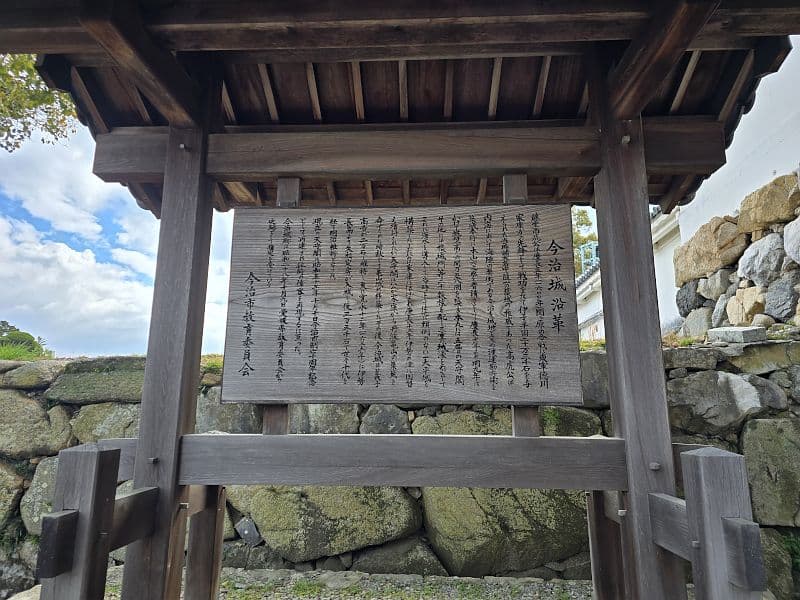
Construction of Imabari Castle began in 1602 under Todo Takatora. Moats filled with seawater were dug on low ground facing Imabari Port, and the framework of the castle is said to have been completed in just a few years. Takatora was later transferred to the Tsu domain in Ise Province, and the Matsudaira (Hisamatsu) clan ruled the castle from then until the end of the Edo period.
Imabari Castle was the political and military center of the Imabari domain throughout the Edo period, but after the Meiji Restoration, most of its buildings were demolished under the castle abolition order (1873). The keep and other main buildings were lost, and for a long time only the stone walls and moats remained.
The current keep was rebuilt in reinforced concrete in 1980. In 2007 the Kurogane Gate was rebuilt in wood, greatly improving the scene around the castle entrance. Preservation and restoration of the stone walls, moats and other remains continue today, in an effort to bring back the full form of the castle.
Todo Takatora: the master castle builder behind Imabari Castle
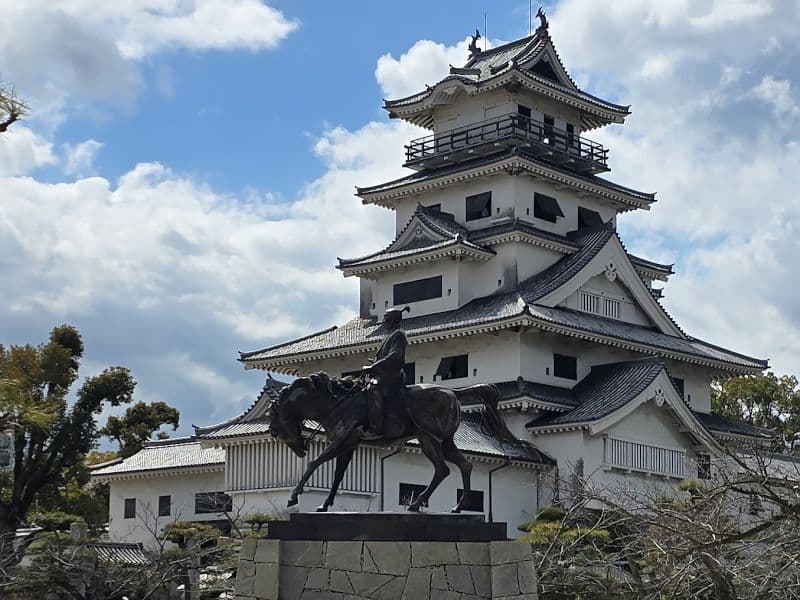
You cannot talk about Imabari Castle without Todo Takatora (1556–1630). A warlord who served Toyotomi Hideyoshi and Tokugawa Ieyasu, he built many castles, including Uwajima, Sasayama and Tsu, and is called a master of castle building.
Imabari Castle was the residence Takatora built when he ruled Iyo (today's Ehime Prefecture). Among flatland castles, it is especially praised for its layout using water. The surviving stone walls and moats show how rational and advanced his castle-building techniques were.
The keep of Imabari Castle from every angle
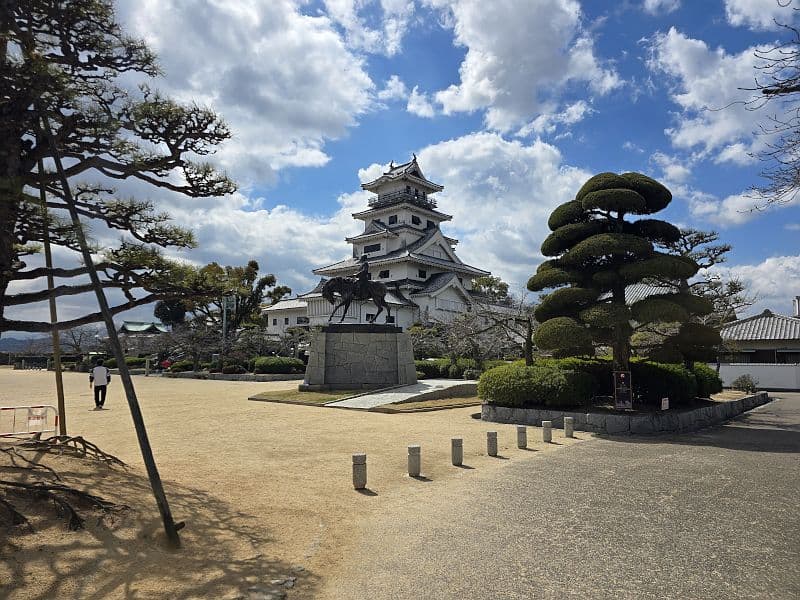
The current keep, rebuilt in 1980, has five stories above ground. It looks different from the Honmaru plaza, the grounds of Fukiage Shrine and the main approach. The white keep against blue sky and clouds makes a good picture from any angle. Inside are exhibits on the castle's history, Todo Takatora's life, and armor and weapons (admission charged), and from the top floor you can look out over the Seto Inland Sea.
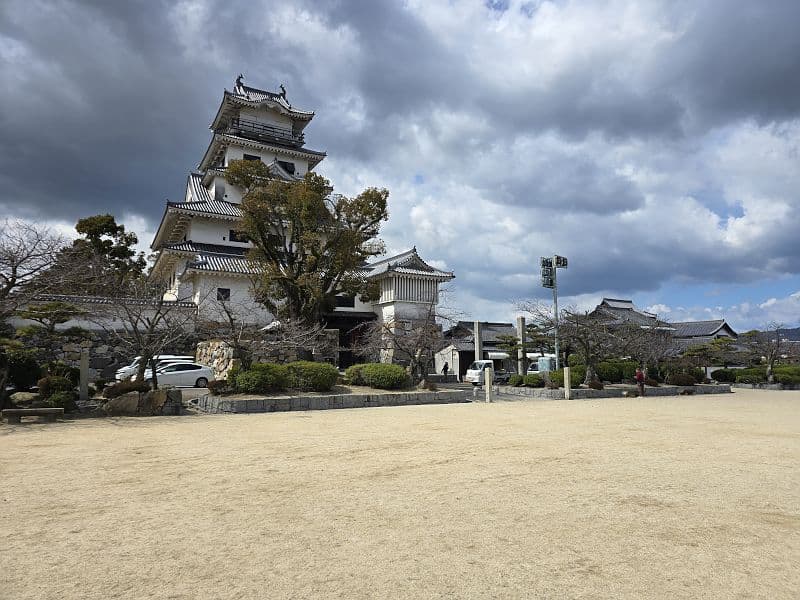
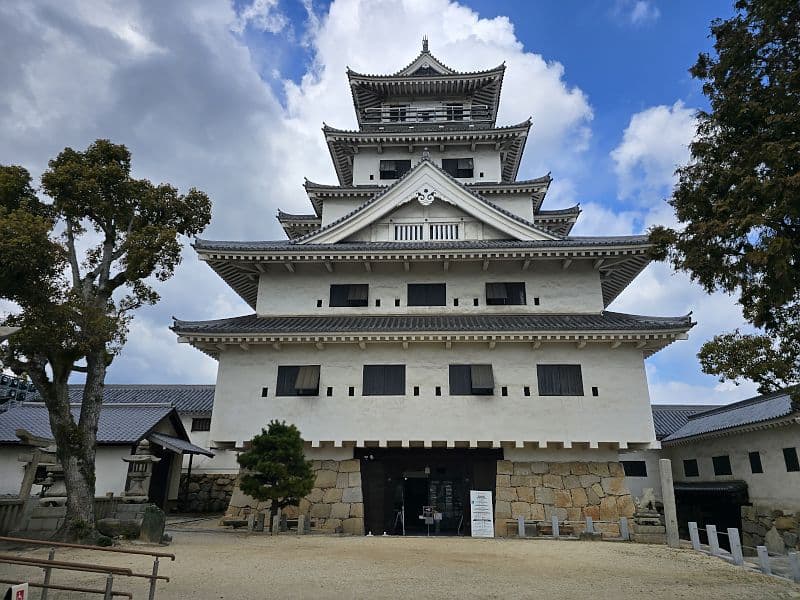
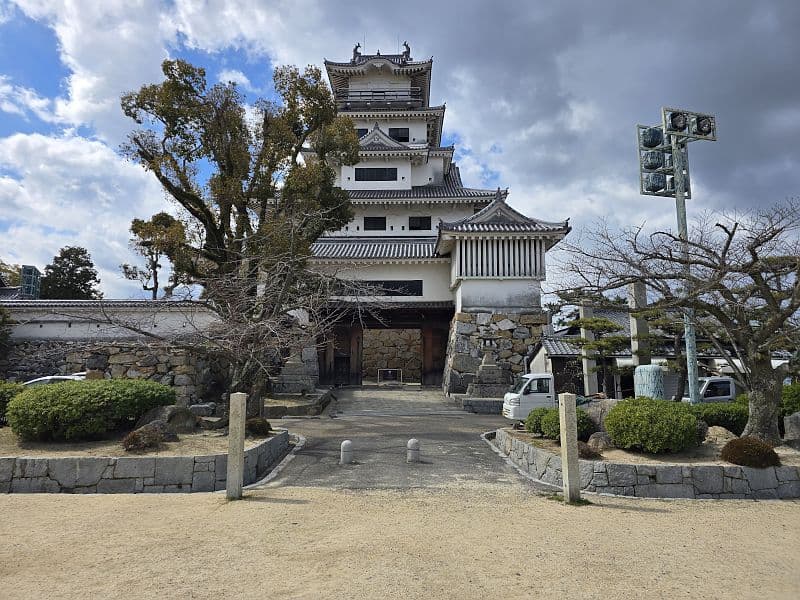
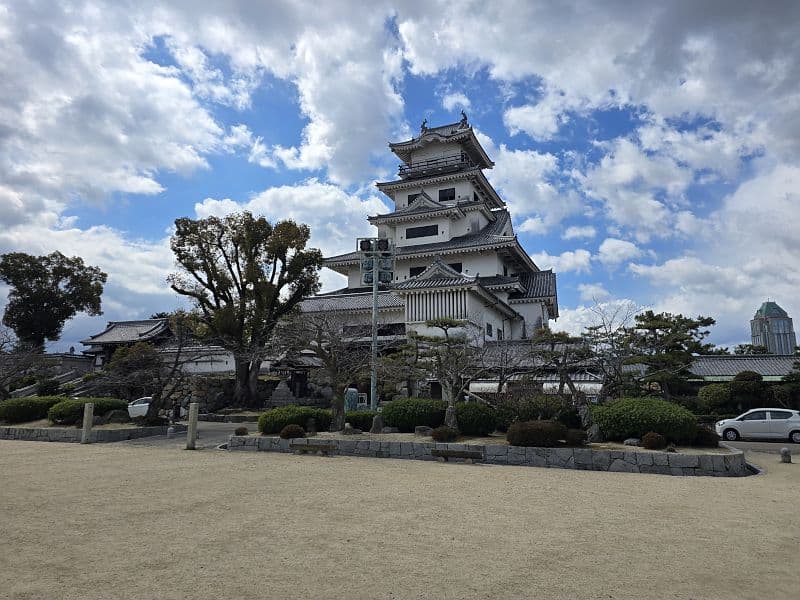
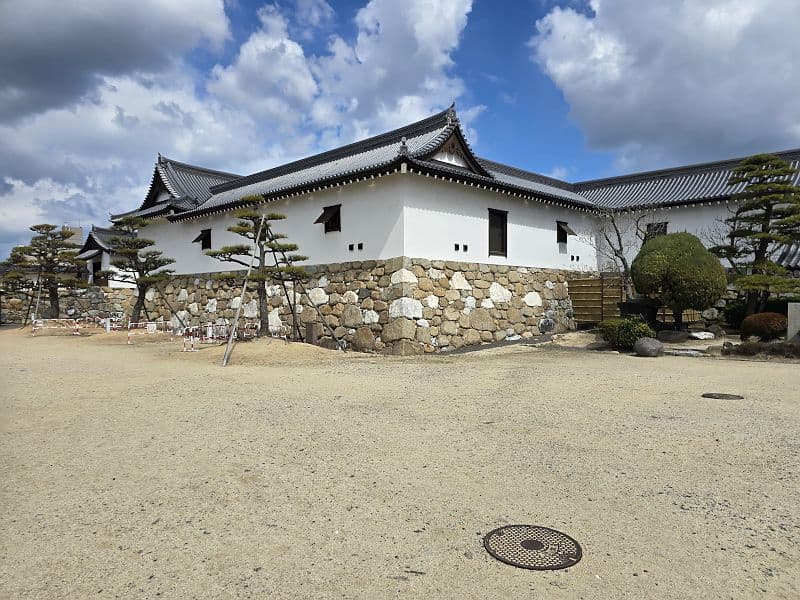
Imabari Castle's Kurogane Gate and stone walls
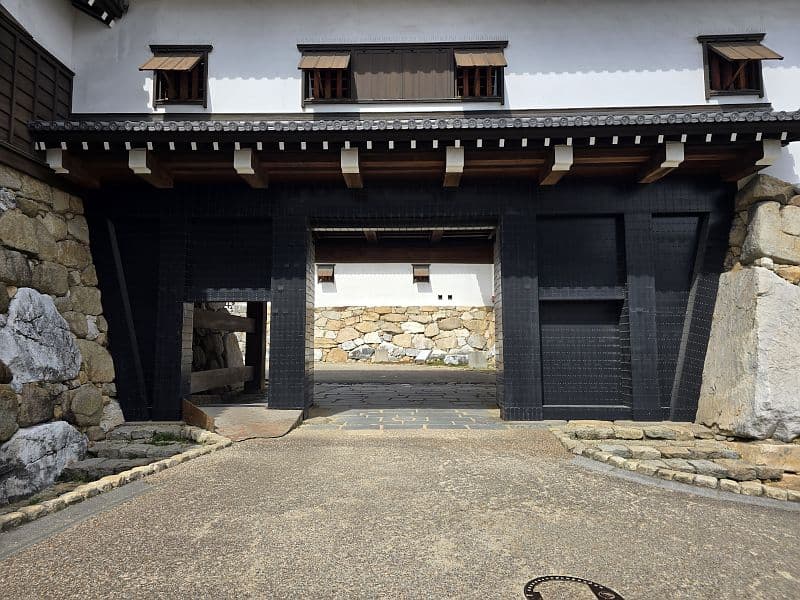
Along with the keep, the Kurogane Gate, rebuilt in 2007, is a highlight. It is the gate you pass through after crossing the bridge over the moat, and the rebuilt wooden gate with the stone walls and masugata enclosure around it conveys how the castle entrance once felt.
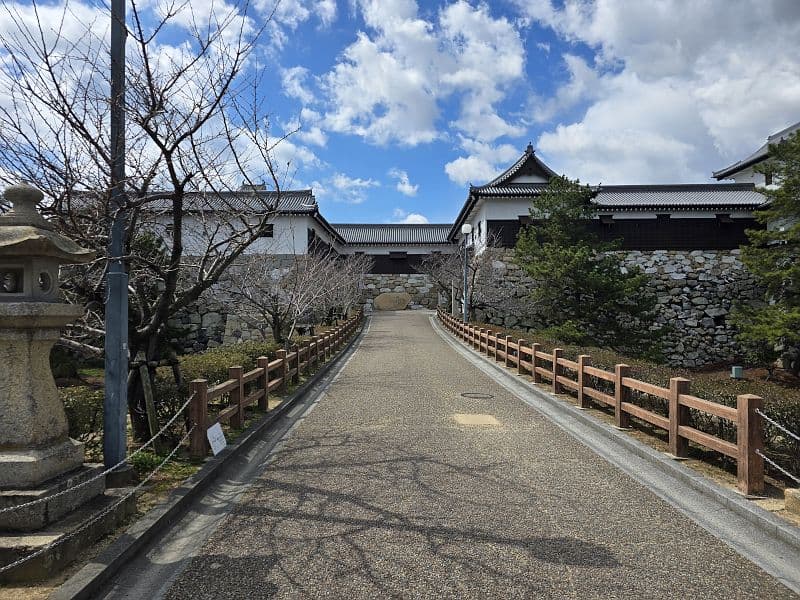
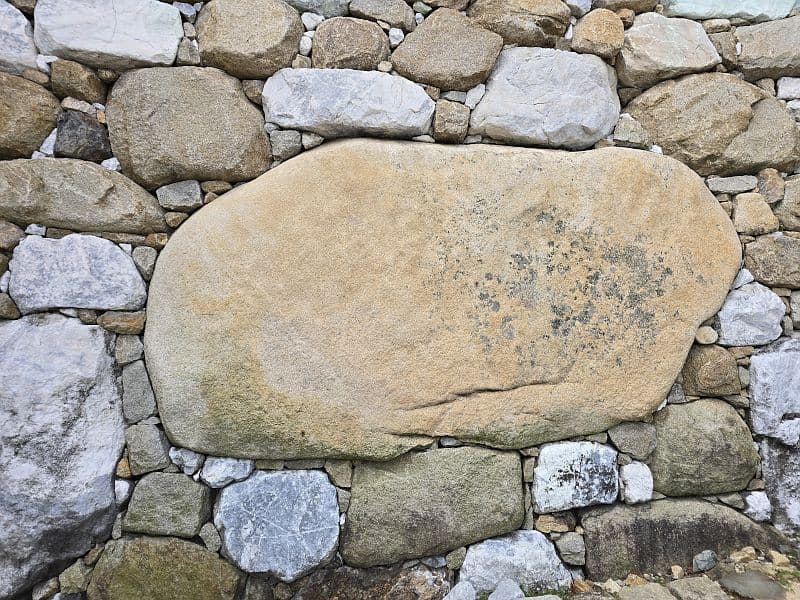
The stone walls laid in the early Edo period survive, and they mix the nozura-zumi (rough natural stone) and kirikomi-hagi (cut and fitted stone) techniques. Look closely at how they are stacked and you can see the rushed work of the original construction and the traces of later repairs. Look especially for the Kanbei Stone, an exceptionally large natural stone set into the wall, which you can see on site with an information sign.
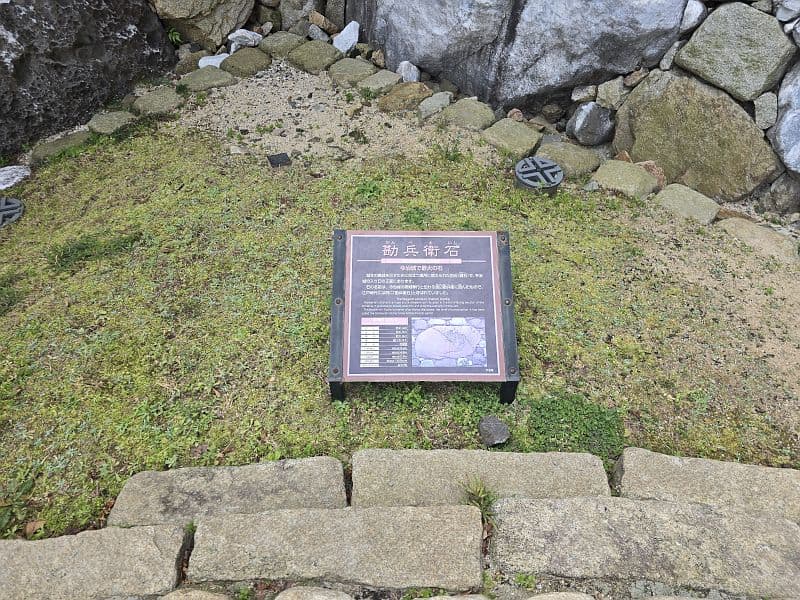
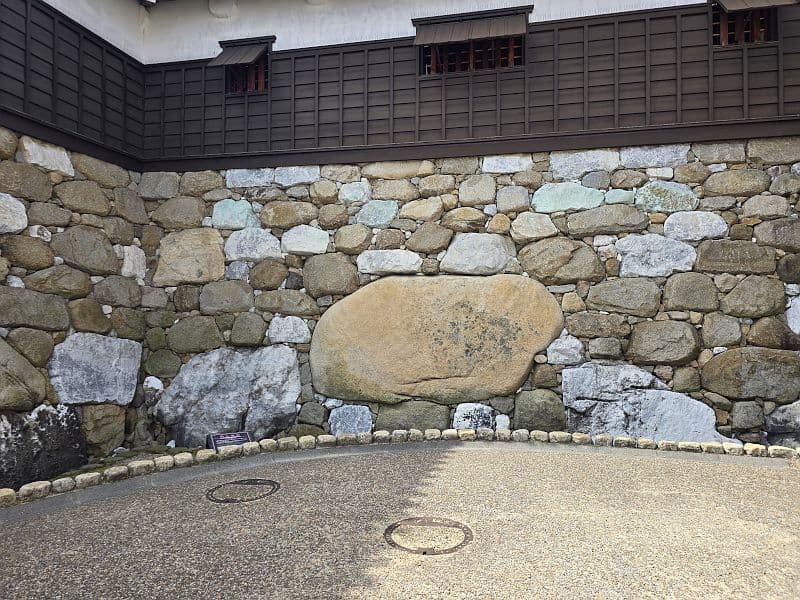
The Kurogane Gate is a solid, black-painted gate, and beyond it is a square space called a masugata. This defensive structure surrounded attackers on three sides and shows the skill of castle building at the time.
Shrines inside Imabari Castle: Fukiage Shrine and Fukiage Inari
On the site of the Honmaru of Imabari Castle stands Fukiage Shrine, which enshrines Todo Takatora along with Amaterasu, Hachiman and Hisamatsu Sadafusa. It was formed after the Meiji era by combining shrines from around Imabari, and it has watched over the town's history together with the castle. Its annual festival is on the second Saturday of May.
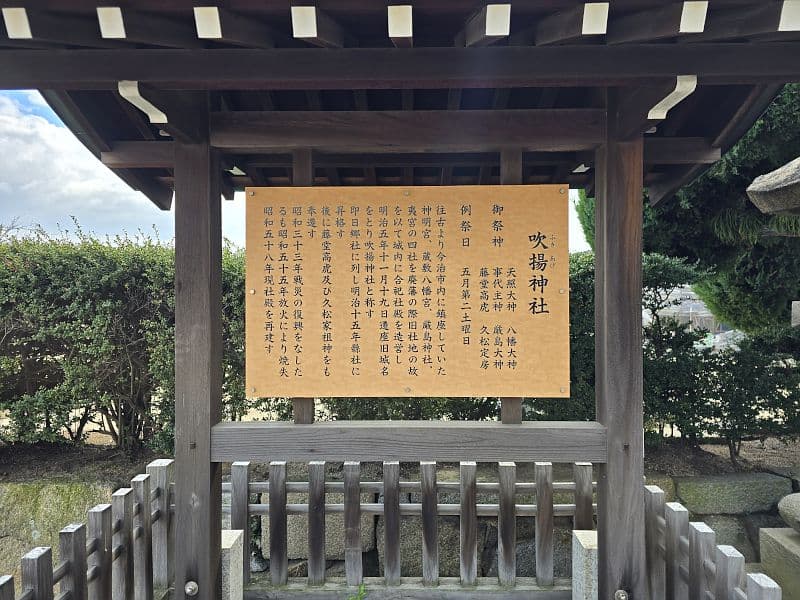
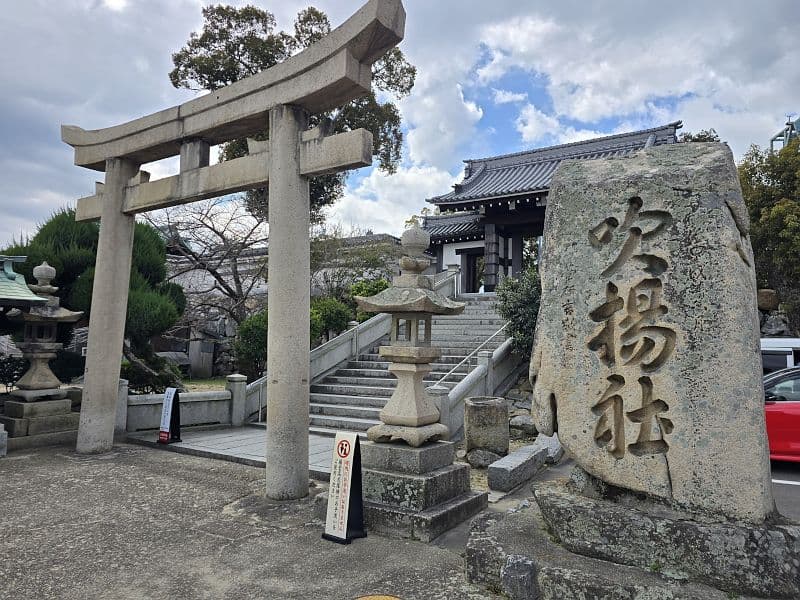
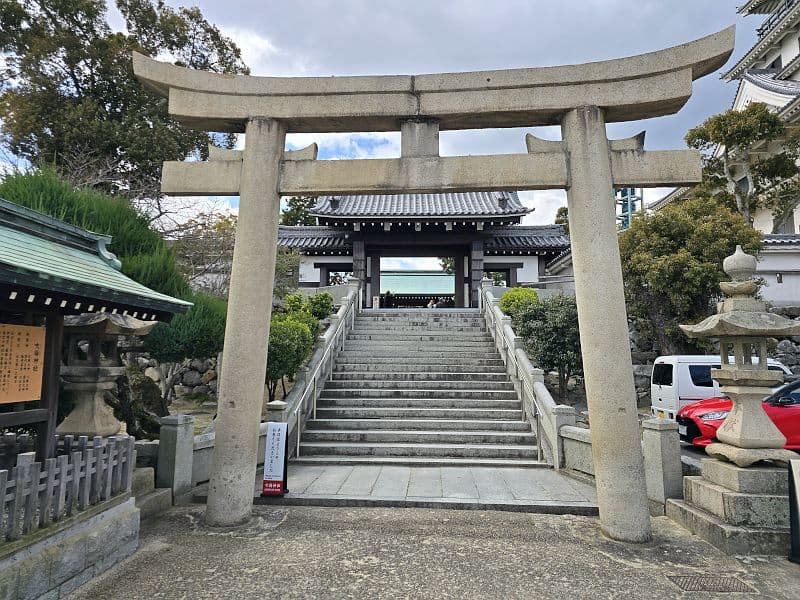
Fukiage Shrine stands on the site of the Honmaru of Imabari Castle. It enshrines four deities: Amaterasu-Omikami, Hachiman-Okami, Todo Takatora and Hisamatsu Sadafusa. It has been worshipped inside Imabari Castle since the days of the domain and has long been dear to the townspeople.
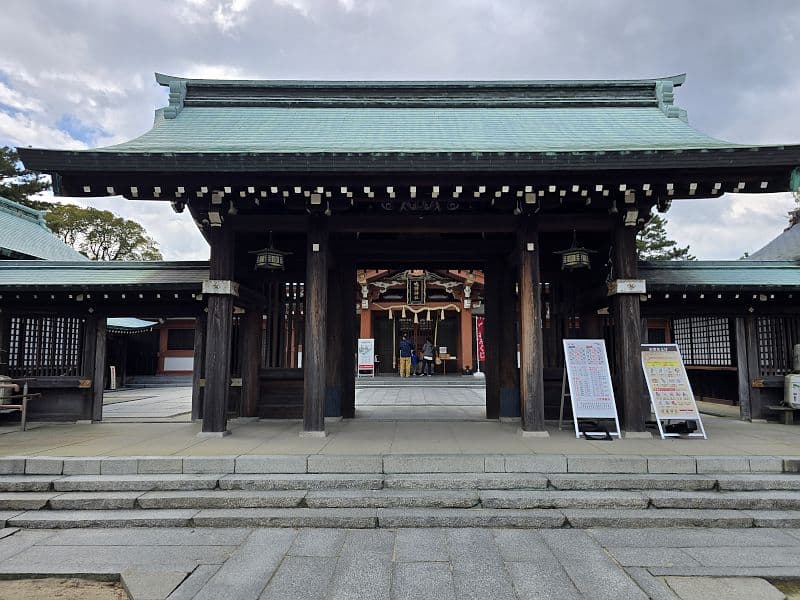
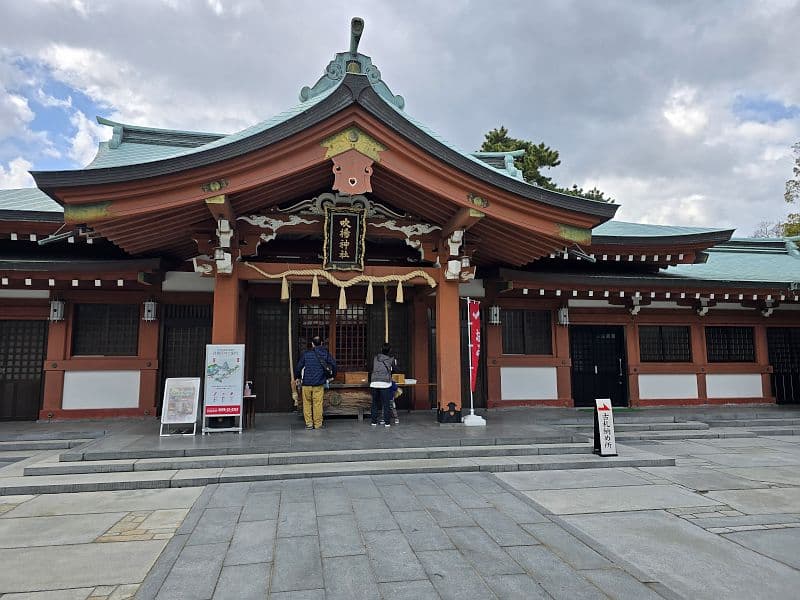
In 1900, several shrines scattered around Imabari were combined here, giving it its current form. The buildings were lost in a fire in 1958, but in 1983 parishioners and worshippers rebuilt them, including today's worship hall with its verdigris roof and the vermilion main hall.
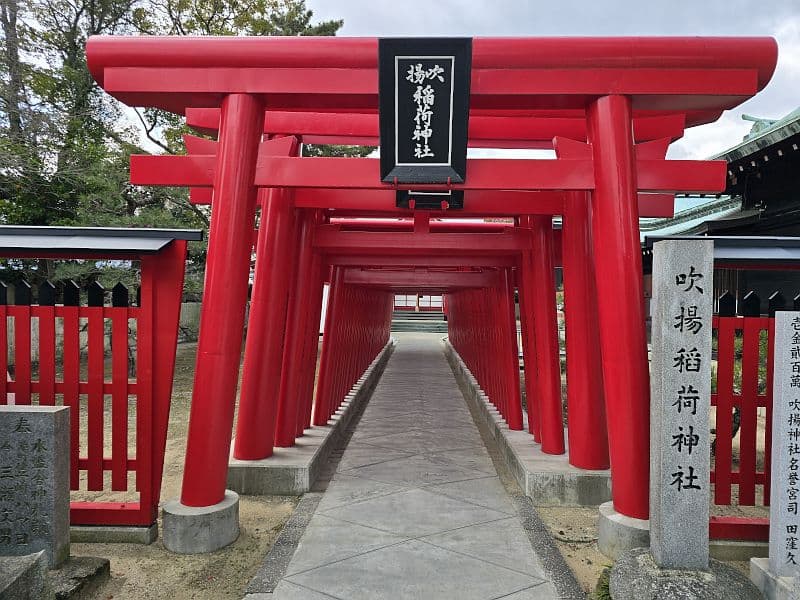
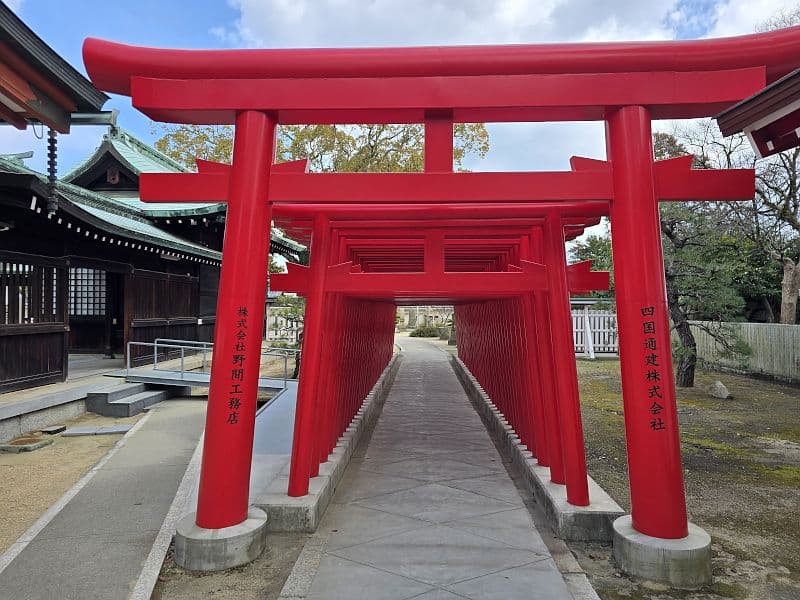
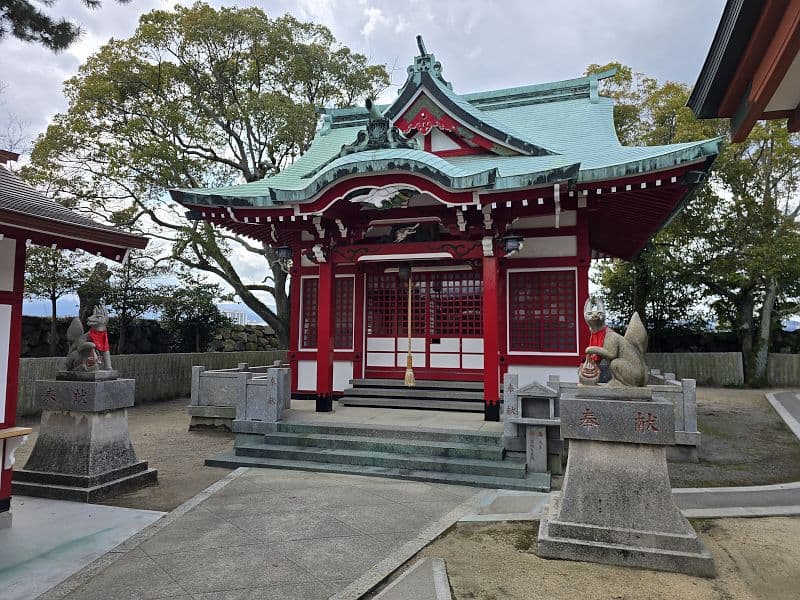
Through the torii and up the steps, a heavy gate-style worship hall greets you. The vermilion main hall beyond it stands out in vivid contrast to the castle's black and white. Fukiage Inari Shrine is also enshrined in the grounds, and its tunnel of vermilion torii is another highlight. Do stop by when you visit Imabari Castle.
Fukiage Inari Shrine: a tunnel of vermilion torii
Fukiage Inari Shrine is enshrined in the grounds of Fukiage Shrine. Inari shrines are known for rows of vermilion torii, as at Fushimi Inari, and here too a vivid tunnel of torii awaits, hard to believe inside a castle. Beyond it stand a small vermilion shrine and stone fox statues, a different world from the castle's black and white. Look back after praying and you see Fukiage Shrine through the tunnel of torii, a view with real depth.
Combining Imabari Castle with a Shimanami Kaido trip
Imabari Castle is in central Imabari, the Shikoku end of the Shimanami Kaido, so it is a natural stop after crossing by bike or car. It is about 20 minutes by bike from Sunrise Itoyama, the Imabari-side cycling terminal. Many cyclists like to ride on to the historic castle, still buzzing from crossing the Kurushima-Kaikyo Bridge.
It is also about 12 minutes on foot from JR Imabari Station, convenient if you come by train. Imabari has shops selling Imabari towels and diners serving the local specialty yakibuta tamago meshi (roast pork and egg rice), so we recommend spending half a day to a full day exploring the town along with the castle. See the Shimanami Kaido cycling guide for the route.
Tips for visiting Imabari Castle
- The outer moat and stone wall areas are free to walk around. Even without going into the keep, walking past the walls across the moat, the Tamon turret and the Kurogane Gate is well worth it
- The keep charges admission (520 yen for adults, 260 yen for high school students, free for junior high students and younger, as of 2024). Inside are armor and weapons, and the top floor looks out over the Seto Inland Sea
- Closed Mondays (or the following day if Monday is a holiday). The outer moat area is open, but you cannot enter the keep or the Kurogane Gate
- Fukiage Shrine and Fukiage Inari are free to visit, an easy stop while walking around the castle
- Parking available (south side of the castle). Check the latest opening information before you go




Basic information
Photo gallery
Tap a photo to enlarge it (swipe or use ← → keys).
RELATED