
Onomichi Guide
Walking Onomichi— a town of slopes, cats and temples
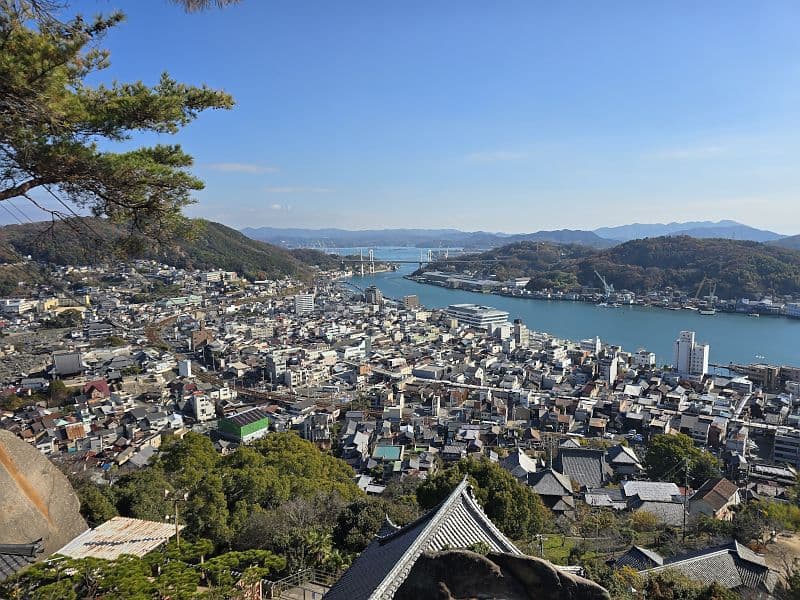
Step out of JR Onomichi Station and the Onomichi Channel is right in front of you, only 300 m wide. Small ferries quietly shuttle back and forth to Mukaishima on the other side. Turn around and the hills come almost down to the sea. The town has hardly any depth: that is the first impression Onomichi gives.
Film directors such as Yasujiro Ozu and Nobuhiko Obayashi chose this town as a setting, probably because of that narrowness. Squeezed into a thin strip between hills and sea, the town packs in temples, slopes, lanes, a shopping street and ferries. In a day, you can walk through all of it at an easy pace.
Morning in Onomichi: starting from the station and shopping street
The trip starts at Onomichi Station. The station building, renovated in 2019, is glass-fronted, and you can see the sea the moment you step off the platform. In the station square is a statue of the writer Fumiko Hayashi, with her line “The life of a flower is short, and full only of hardship” carved beside it.
Walk 2–3 minutes north from the station and an arcade running east to west appears: the Onomichi Hondori shopping street, about 1.2 km long, where long-established shops from the Showa era mix naturally with cafes opened by newcomers. Walk it early in the morning (before the shops open, around 7:00) and the arcade pillars cast long shadows, and the still-empty street feels as if it is there for you alone.
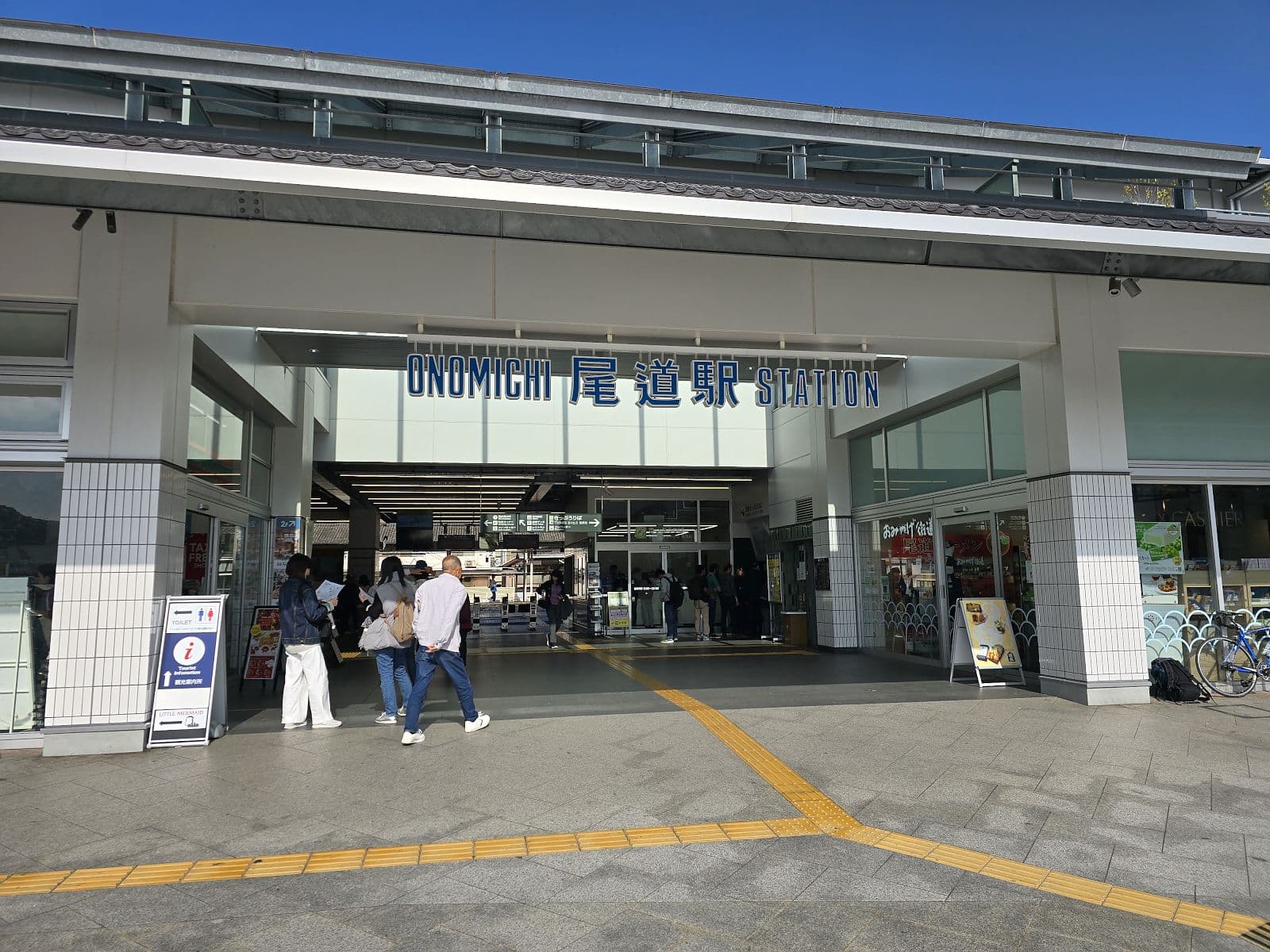
JR Onomichi Station
The starting point for Shimanami Kaido cycling and sightseeing in Onomichi. The Onomichi Channel is right in front, and the ferry pier is 3 minutes on foot.
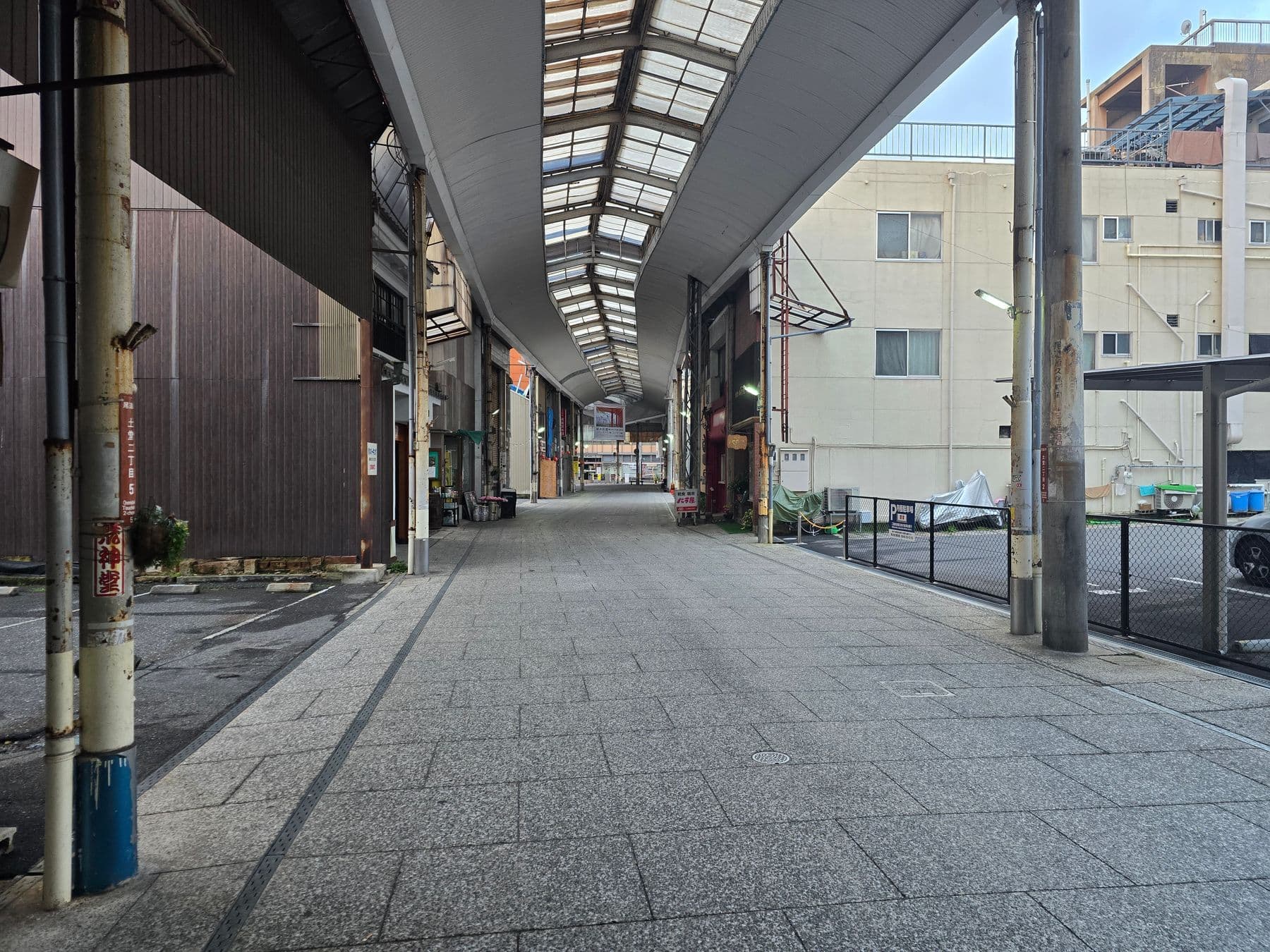
Onomichi Hondori Shopping Street
An arcade about 1.2 km long running east to west from Onomichi Station, full of street food such as Onomichi ramen, Onomichi pudding and bakeries.
Up the slopes: Senkoji and the Path of Literature
Senkoji is an old temple halfway up Mt. Senkoji (144 m), said to have been founded in 806. The ropeway takes about 3 minutes to the summit station (720 yen round trip for adults). From there, the standard route is to walk down the Path of Literature to the main hall.
Standing at the summit, you see waves of tiled roofs, the blue Onomichi Channel, Mukaishima across the water and island outlines beyond. It is a view with more depth than height, and there is a moment when you think, “So this is Onomichi.”
The Path of Literature is lined with 25 stone monuments carved with poems. Parts of the slope are stone-paved and slippery in the rain or when leaves have fallen. Sneakers are a must; avoid going up in sandals.
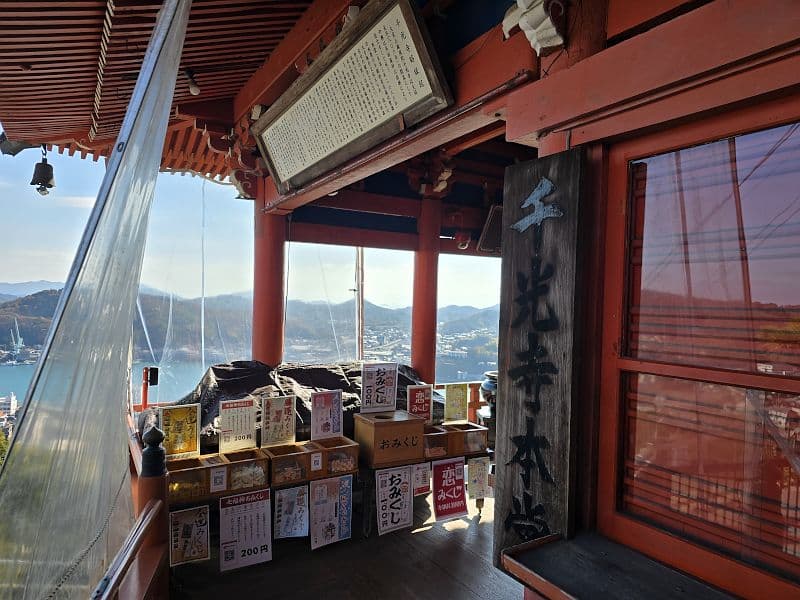
Senkoji Temple
Onomichi’s best-known old temple. The standard route is up by ropeway and down the Path of Literature. Don’t miss the view of the Onomichi Channel from near the main hall.
Through the lanes: Cat Alley and Ushitora Shrine
Cat Alley is a stone-paved lane crossing the slope of Mt. Senkoji, 1–2 m wide and about 200 m long. More than 100 fukuishi-neko, lucky cats painted on stones, are scattered along it, so cat faces appear everywhere you look.
When we visited after 5 a.m. on April 11, 2026, there was no one in the lane. Morning light slanted across the stone paving, and only the stone cats lined the quiet lane. Around midday (11:00–13:00), visitors pack in and people cannot pass each other on the 1–2 m path. If you want photos, aiming for before 9:00 is the realistic choice.
Right next to Cat Alley is Ushitora Shrine. A giant camphor tree said to be over 900 years old stands beside the torii, its base so thick that several people together still cannot reach around it. It is known as a pilgrimage site for the film The Girl Who Leapt Through Time, and its quiet grounds feel different from commercialized tourist sites.
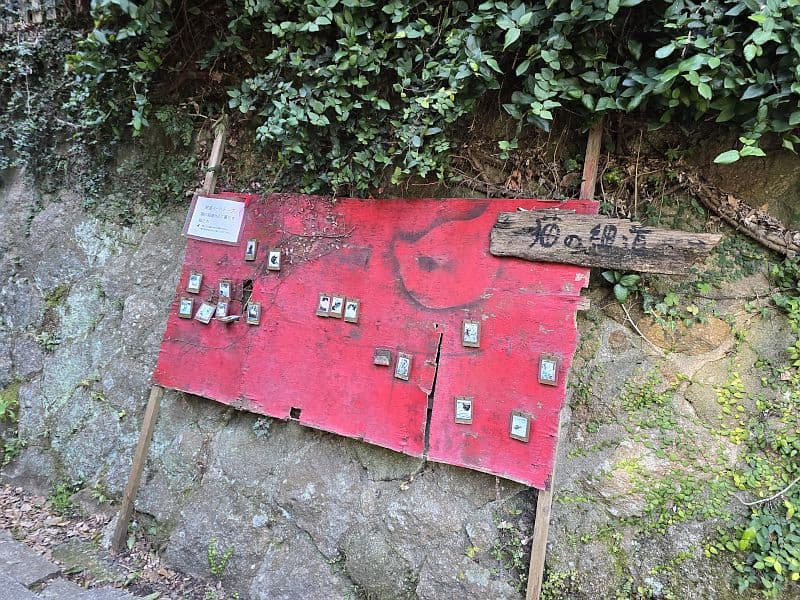
Cat Alley (Neko no Hosomichi)
A hidden gem: more than 100 ceramic “lucky stone cats” dotted along a narrow stone lane. The 1–2 m lane is quiet early in the morning.
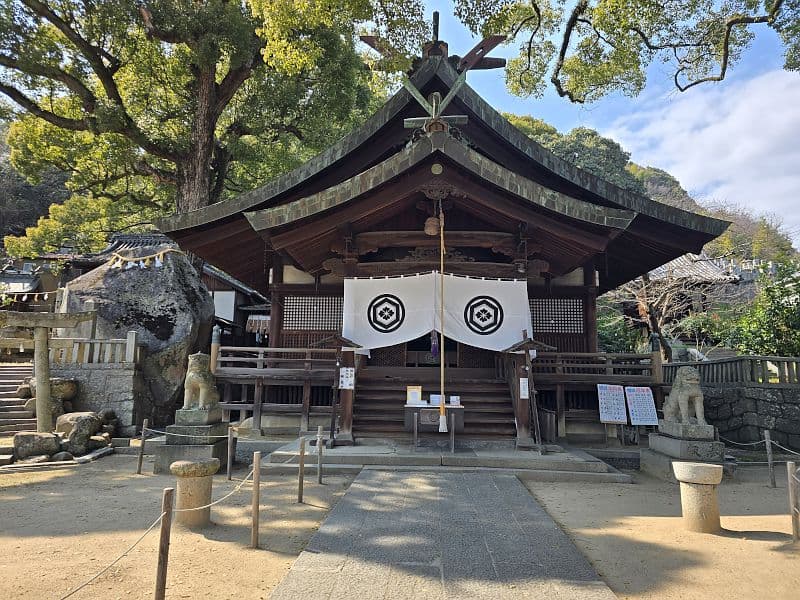
Ushitora Shrine
One of Onomichi’s oldest shrines, with a camphor tree over 900 years old. Known as a location for The Girl Who Leapt Through Time. Right by Cat Alley.
Tenneiji Three-Story Pagoda
A Rinzai Zen temple founded in the Muromachi period. Its pagoda, seen from the sea side, is one of Onomichi’s classic views and appears in many paintings and photos.
Walking the Onomichi Temple Walk
The Temple Walk laid out by Onomichi City is a walking route linking the temples and shrines of the hillside area by stone-paved slopes and steps. It is about 2.5 km long and takes 2–3 hours (depending on stops). Temples such as Jikoji, Komyoji and Hodoji usually see few visitors, and you can pray quietly at each.
At Jikoji you can try “nigiri-botoke.” You squeeze clay in your own hands into the shape of a Buddha. It only takes 10–15 minutes, but seeing the shape of your palm become the face of a Buddha stays with you more than you might expect. Komyoji and Hodoji have gates and stone steps that make classic Onomichi scenes, and the views of the Onomichi Channel from both grounds are hard to choose between.
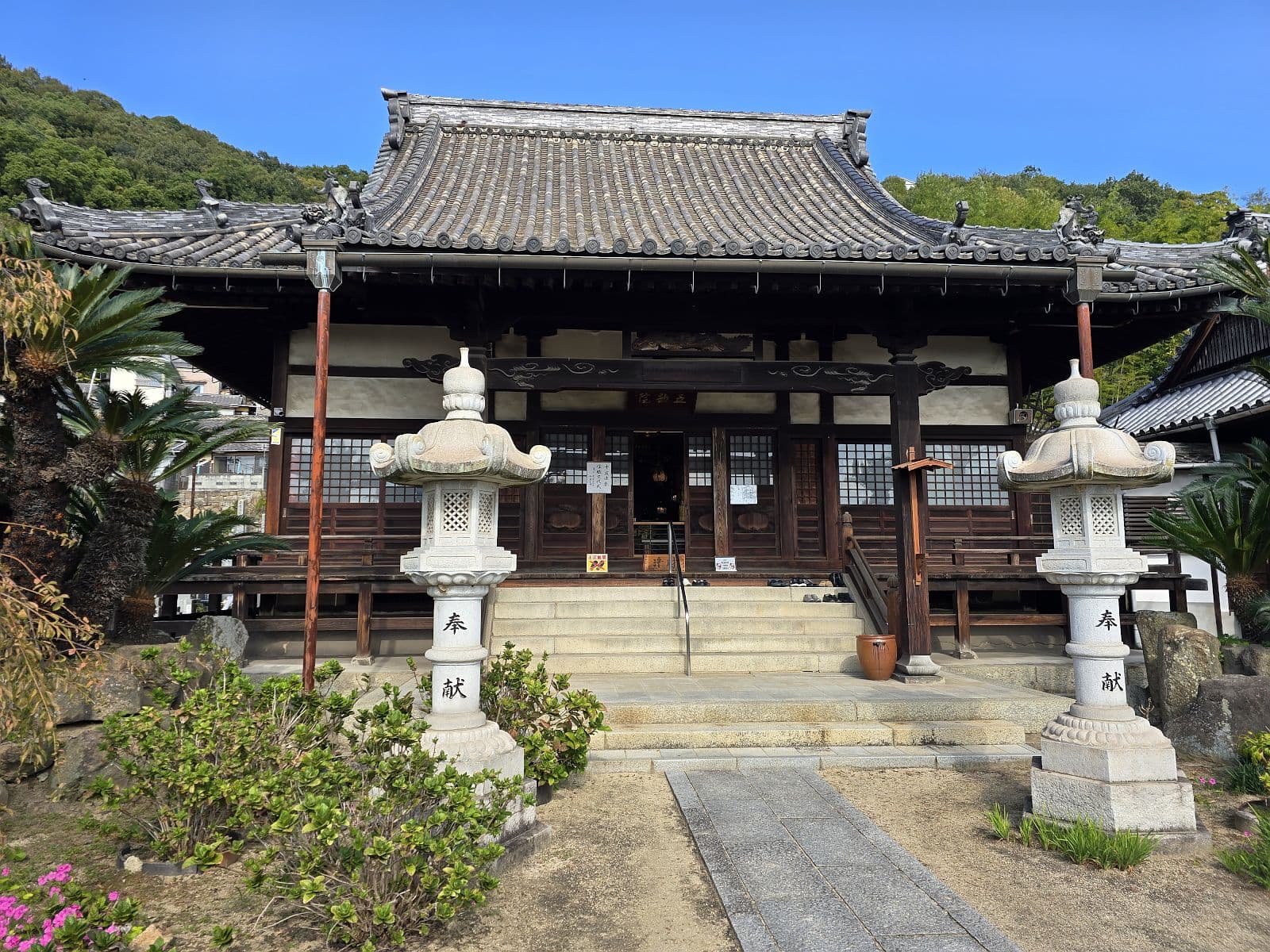
Jikoji Temple
A temple near the start of the Temple Walk, known for “nigiri-botoke,” where you make your own Buddha figure.
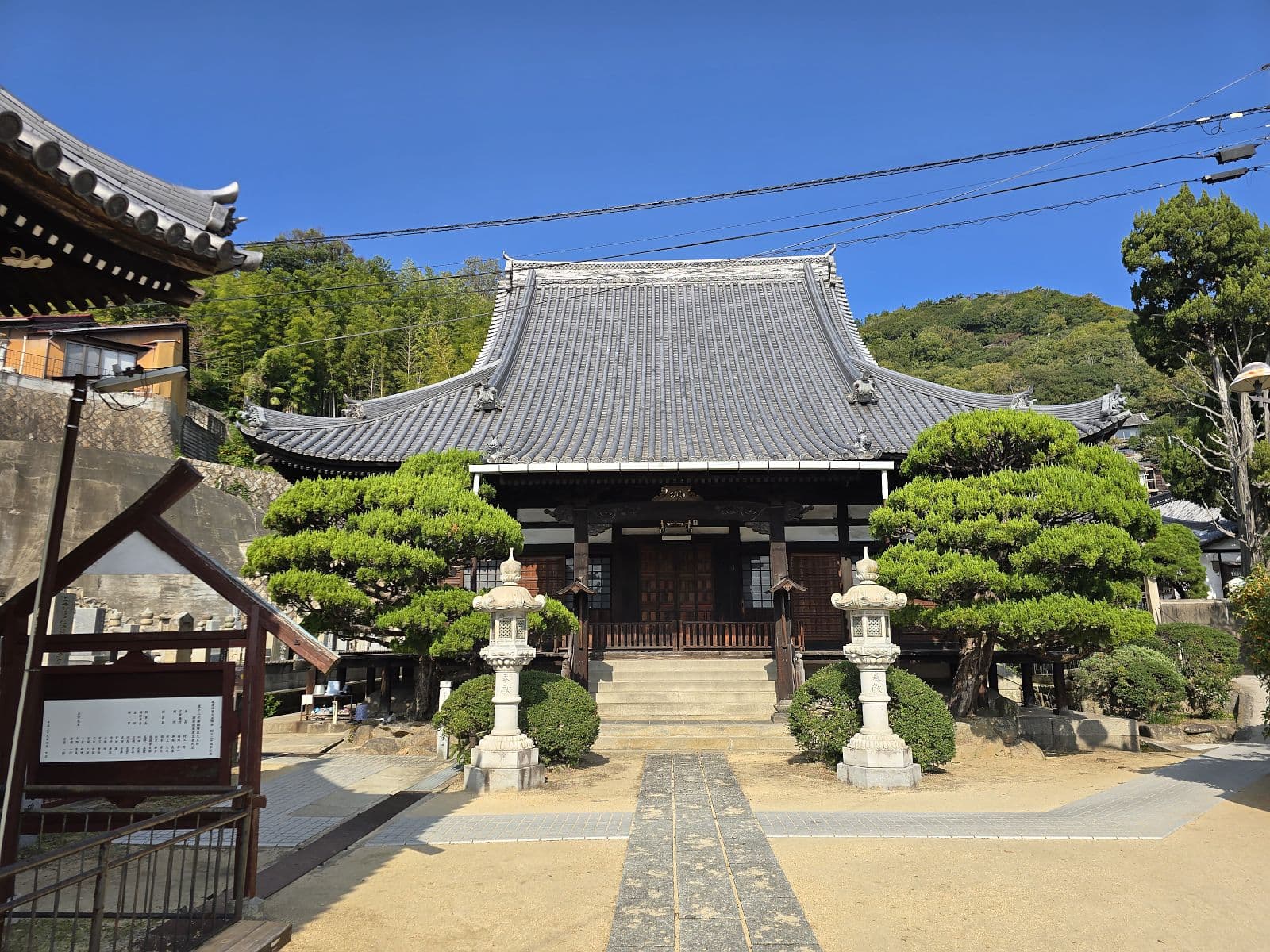
Komyoji Temple
A temple on the Temple Walk whose stone steps and gate make a classic Onomichi scene.
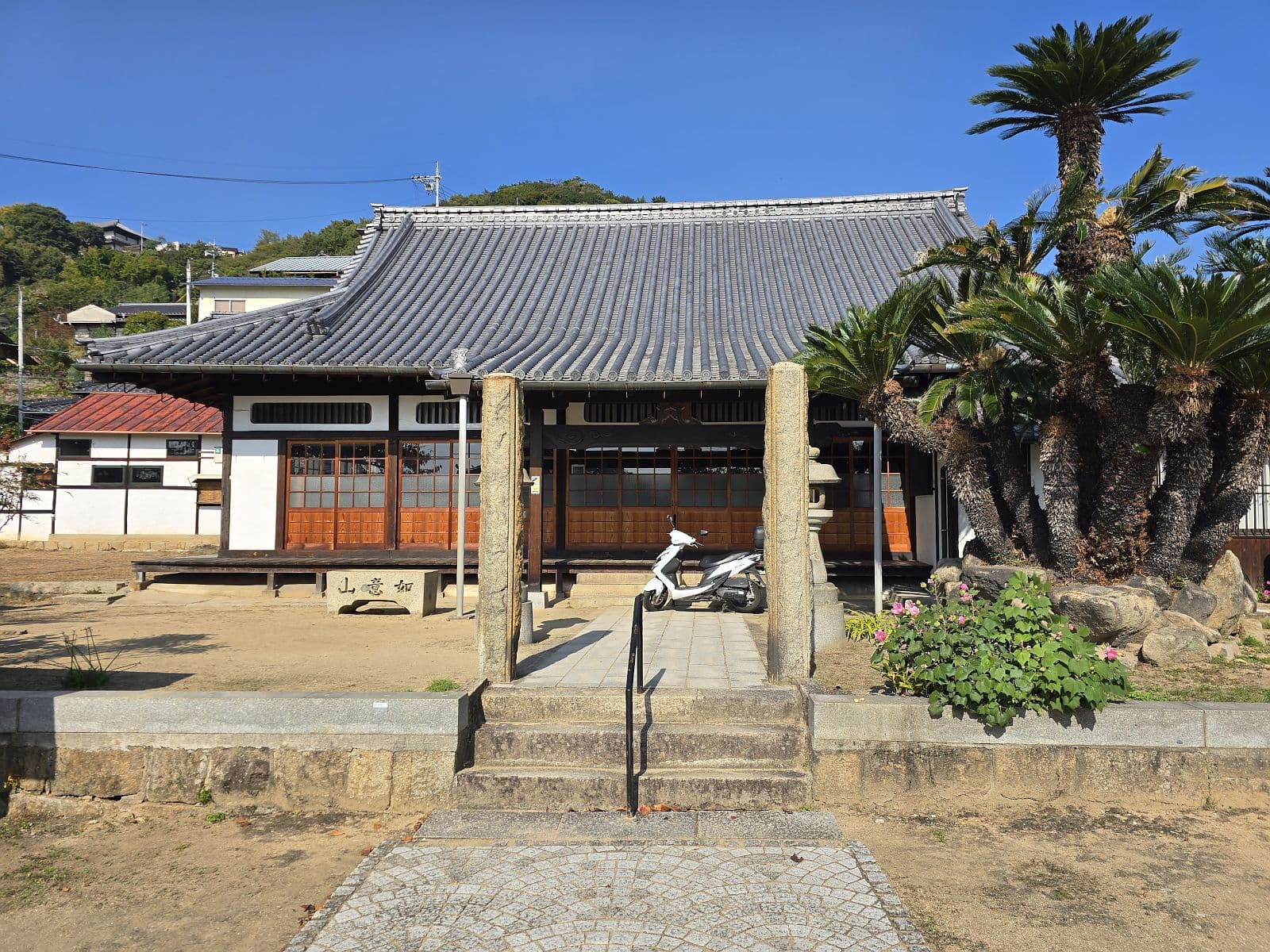
Hodoji Temple
A temple on the Temple Walk with a gentle view of the Onomichi Channel from its grounds, a quiet place to stop.
Temple Walk practical information
- Onomichi Station → through the shopping street into the hills (about 10 minutes)
- Jikoji → Komyoji → Hodoji (visit each temple)
- Ushitora Shrine → explore the Cat Alley area
- Tenneiji pagoda → the slope up to Senkoji
- Senkoji main hall (down by ropeway, 360 yen one way for adults)
- Stone steps and steep slopes. Sneakers essential; no sandals
- Little shade at midday in summer; watch for heatstroke and bring water
- The Senkoji Ropeway is paid (720 yen round trip for adults, as of 2025)
Onomichi food: a town for eating as you walk
Onomichi ramen is a bowl of soy-based soup with back fat floating on top. The standard combination is a rich broth of chicken bones and small fish with flat, medium-thin noodles. Well-known shops cluster around the station and shopping street, and each varies its soup and amount of back fat slightly. We recommend arriving just after opening (around 11:00), before the queues get long.
On the shopping street, Onomichi pudding is the classic sweet to eat as you walk: smooth pudding in a glass jar, in several flavors such as plain, milk and matcha. Onomichi is also said to be among the top cities in Japan for bread consumption, and distinctive bakeries are scattered around the shopping street. Many travelers stop by for breakfast before a ride.
Facing the Seto Inland Sea, Onomichi has fresh conger eel, sea bream and octopus, and conger eel rice bowls and tempura are very Onomichi dishes.
For details on the Onomichi Hondori shopping street, where food spots are concentrated (hours, access and highlights), see its own page.
→ See places to eat in the Onomichi areaBy ferry to Mukaishima: crossing the Onomichi Channel
To finish your time in Onomichi, take a ferry. 100 yen for adults, 10 yen for a bike, 5 minutes. For that price and time, you arrive on another island.
Mukaishima is the first island on the Shimanami Kaido. Though it is only 5 minutes by ferry from central Onomichi, the air changes the moment you arrive. Ride southwest along the coast and a natural sand beach, Tachibana Beach, appears. It faces the Innoshima Bridge up close. When we visited around 5:30 a.m. on April 12, 2026, there was no one on the beach. Orange light just after sunrise colored the sea, and the only sound was the waves.
From the summit of Mukaishima’s Mt. Takami (283 m), you can look out over the Seto Inland Sea in a wide 240° view. Onomichi town, Mukaishima, Innoshima, Ikuchijima: the overlapping island outlines change a lot with the time of day. Sunrise, sunset and night views are all different. However, the road near the summit is in poor condition, and the parking lot fits only 4–5 cars. Try to avoid busy times.
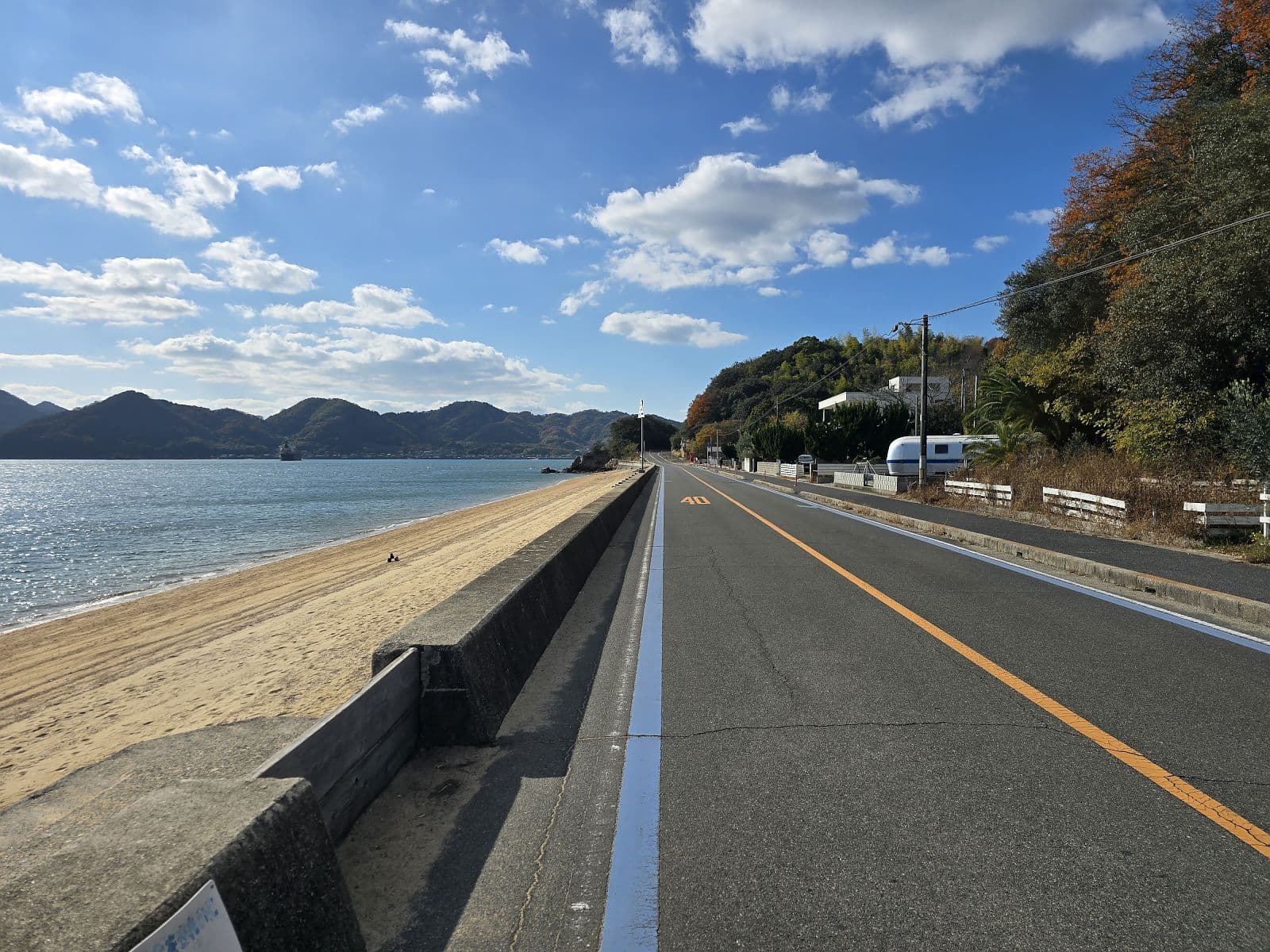
Tachibana Beach
A natural sand beach in southwest Mukaishima, 5 minutes by ferry from Onomichi, facing the Innoshima Bridge. Around 5–6 a.m. no one is there and you can have the sunrise to yourself.
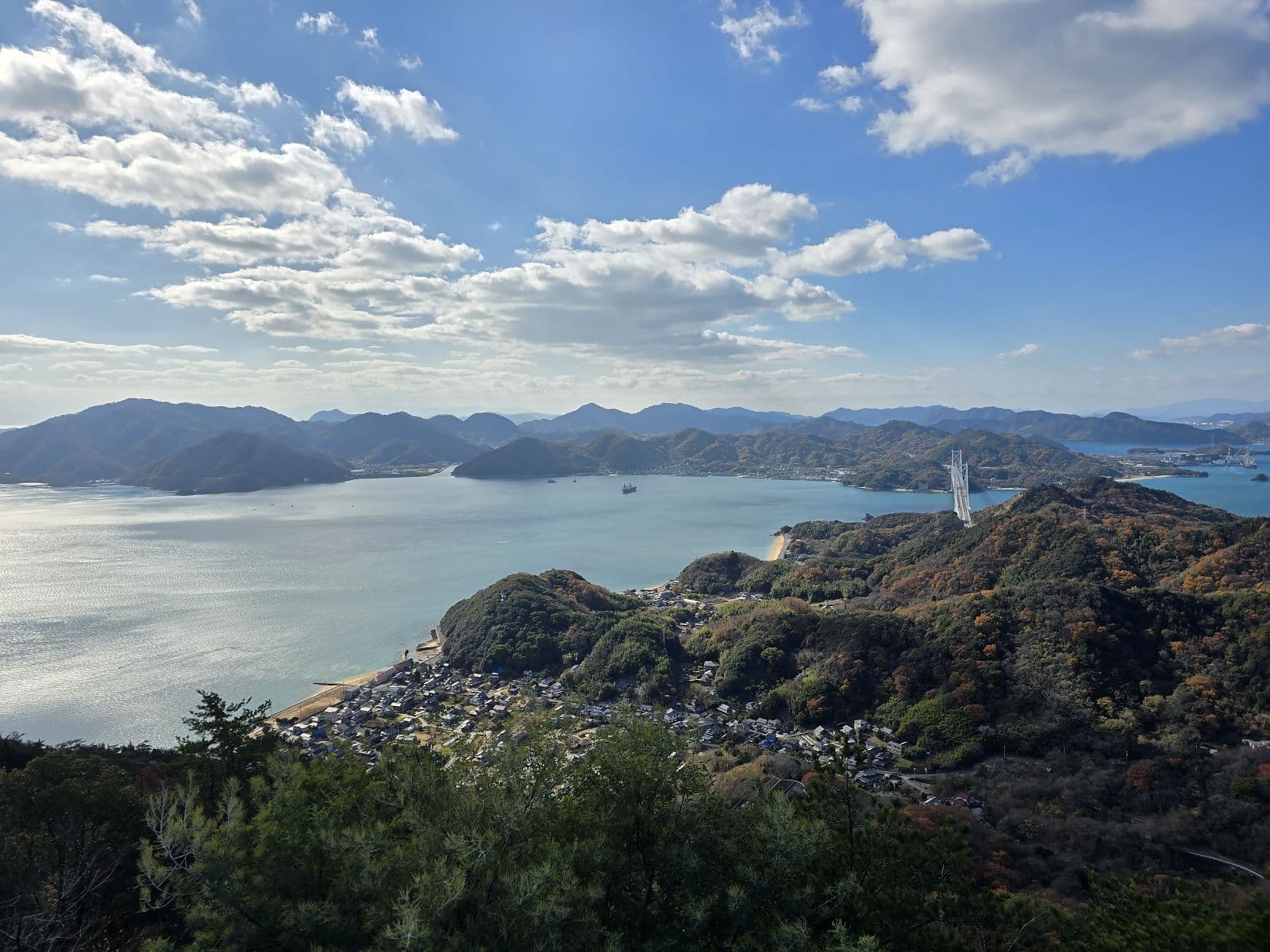
Mt. Takami Observatory
A viewpoint on a 283 m summit with a wide 240° panorama of the Seto Inland Sea. Sunrise, sunset and night views each look different.
Getting to Onomichi
Get off at Fukuyama Station → about 20 minutes on the JR Sanyo Line → Onomichi Station. Or get off at Mihara Station → about 15 minutes. Shin-Osaka to Fukuyama is about 1 hour on the Nozomi.
From Hiroshima Airport, about 40 minutes by limousine bus → Mihara Station → about 15 minutes on the JR Sanyo Line → Onomichi Station. There is also a direct bus from Hiroshima Airport to Onomichi (check the timetable).
Highway buses run from Osaka, Kyoto, Okayama, Hiroshima and elsewhere, arriving at the bus terminal in front of Onomichi Station. Overnight buses also run.
About 5 minutes from Onomichi IC on the Sanyo Expressway. Parking in town is limited and gets busy at sightseeing times, so check paid lots near the station in advance.
*Fares and timetables may change. Check the official websites of JR and the bus companies for the latest information.
Onomichi: day trip or overnight stay?
If you only want to see central Onomichi, a day trip from Osaka or Okayama is quite doable. But if you want to cycle the Shimanami Kaido or go as far as Mukaishima and Innoshima, you need at least one night.
What you can do on a day trip
- Senkoji, the Path of Literature and the Temple Walk (2–3 hours)
- Cat Alley, Ushitora Shrine and Tenneiji (1–2 hours)
- Onomichi Hondori shopping street, ramen and pudding
- Ferry to Mukaishima and back plus Tachibana Beach (half a day)
When we recommend staying overnight
- You want to cycle the Shimanami Kaido
- You want to see the channel at night, the sunset or the shopping street early in the morning
- You want sunrise or night views from Mt. Takami Observatory
- You want to go on to Innoshima, Ikuchijima or Omishima
STAY
Places to stay in Onomichi


Related guides