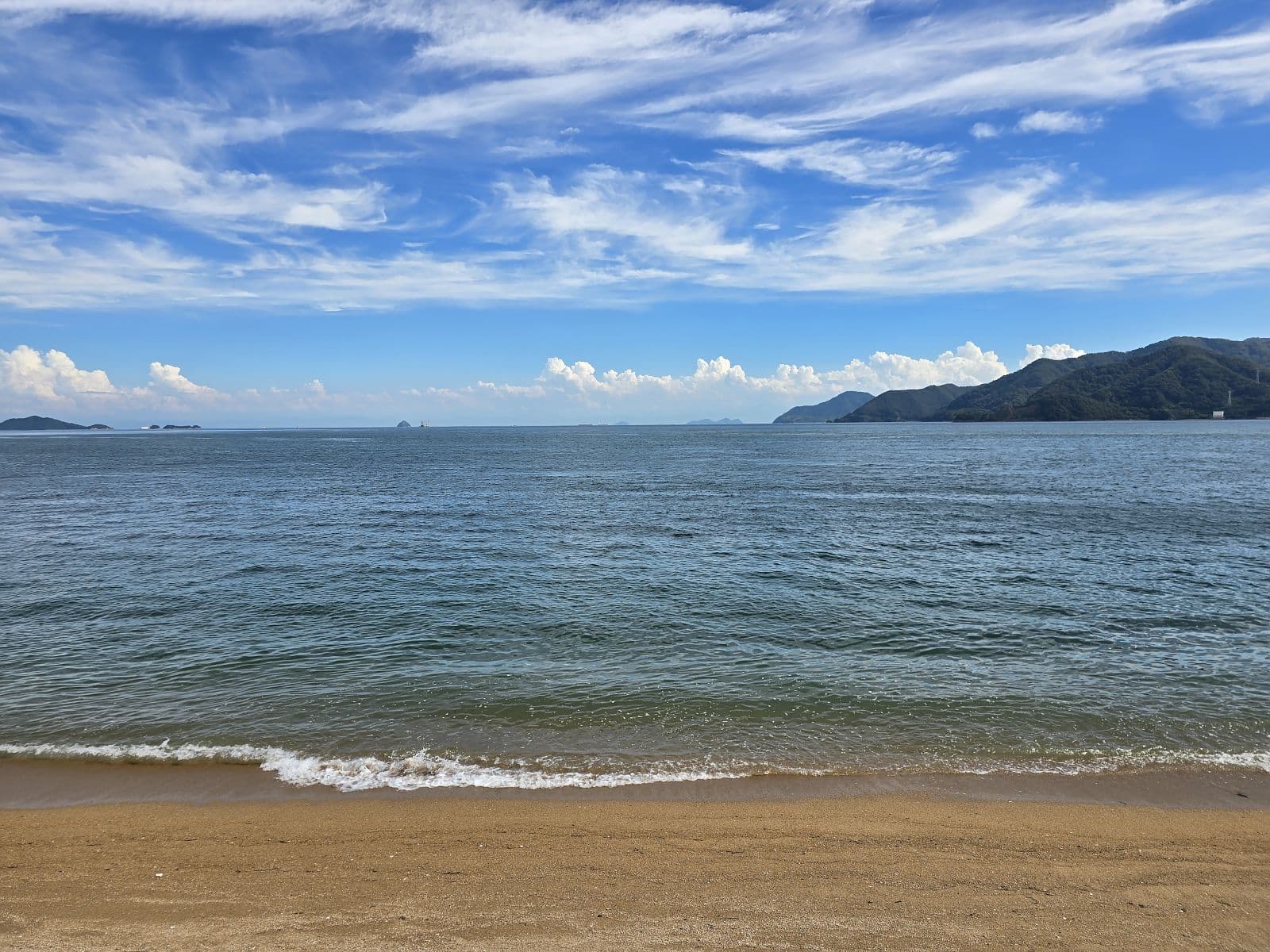
Access
About 20 minutes by car from JR Onomichi Station (Sanyo Line). You can drive to the summit by rental car or your own car.
Hours
Viewable at any time, 24 hours a day.
Address
広島県尾道市向島町橘大谷山148 付近
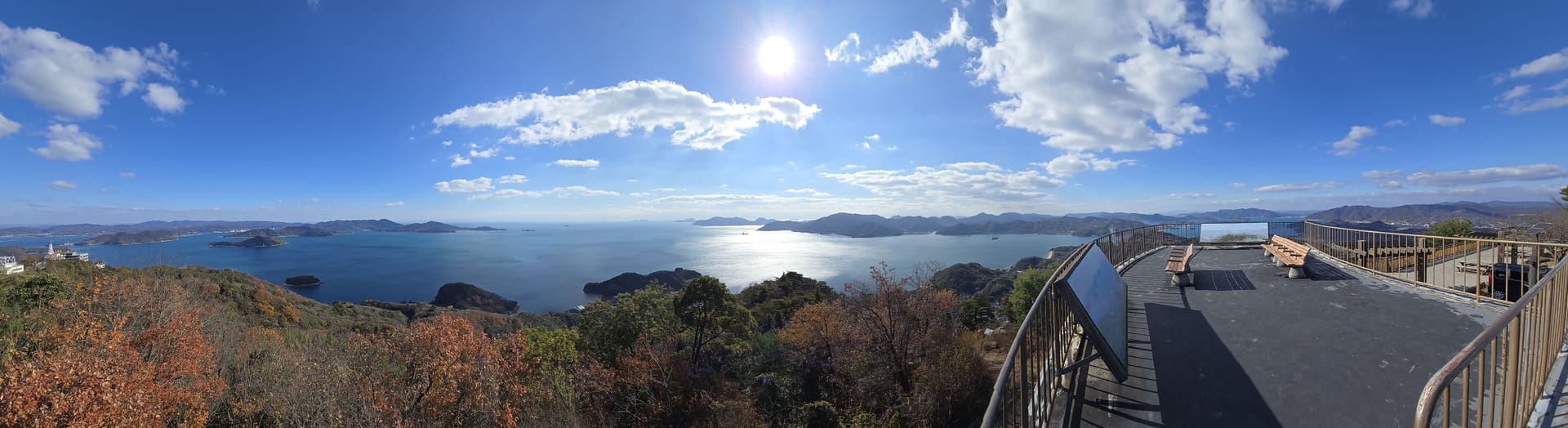
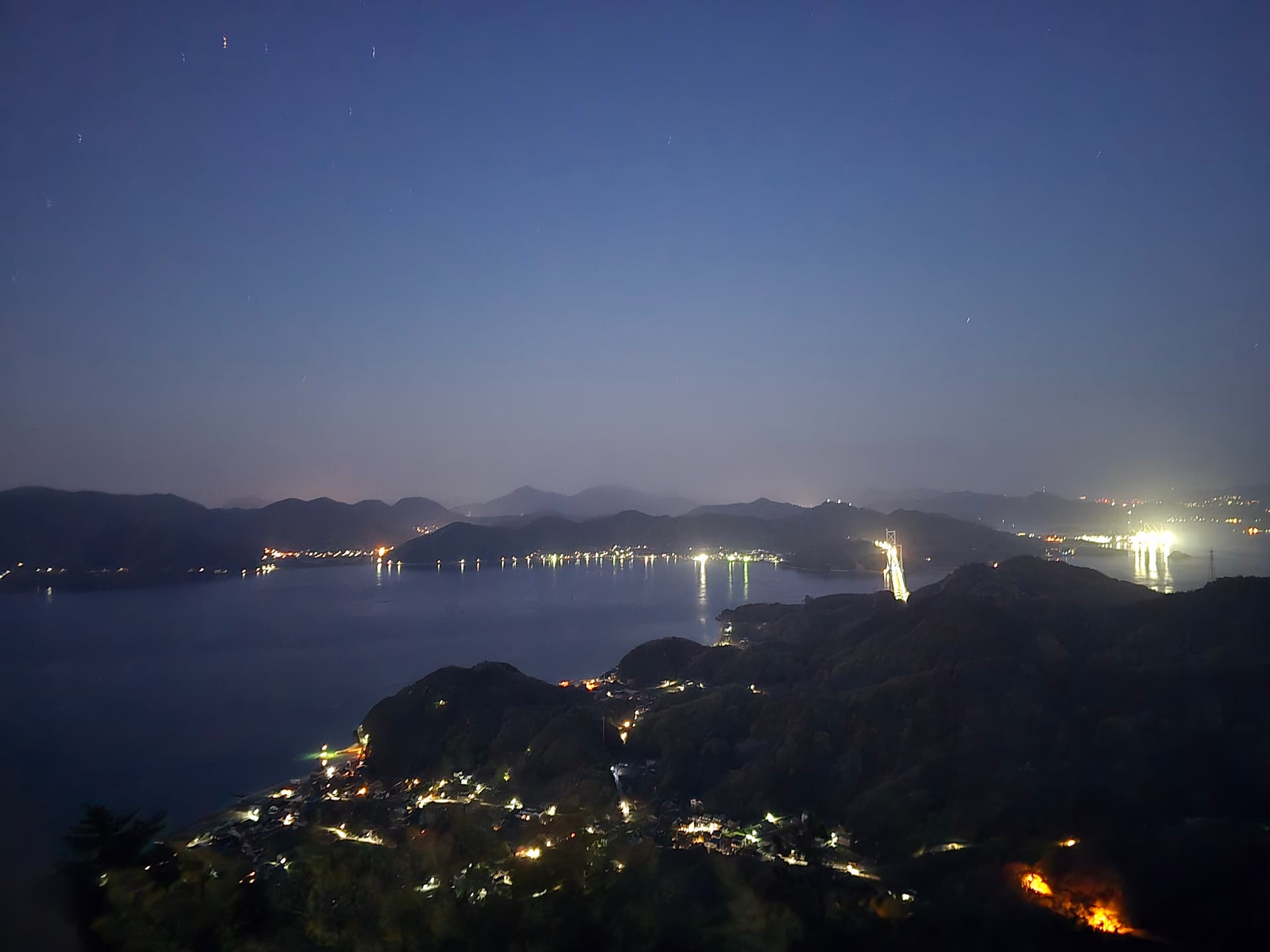
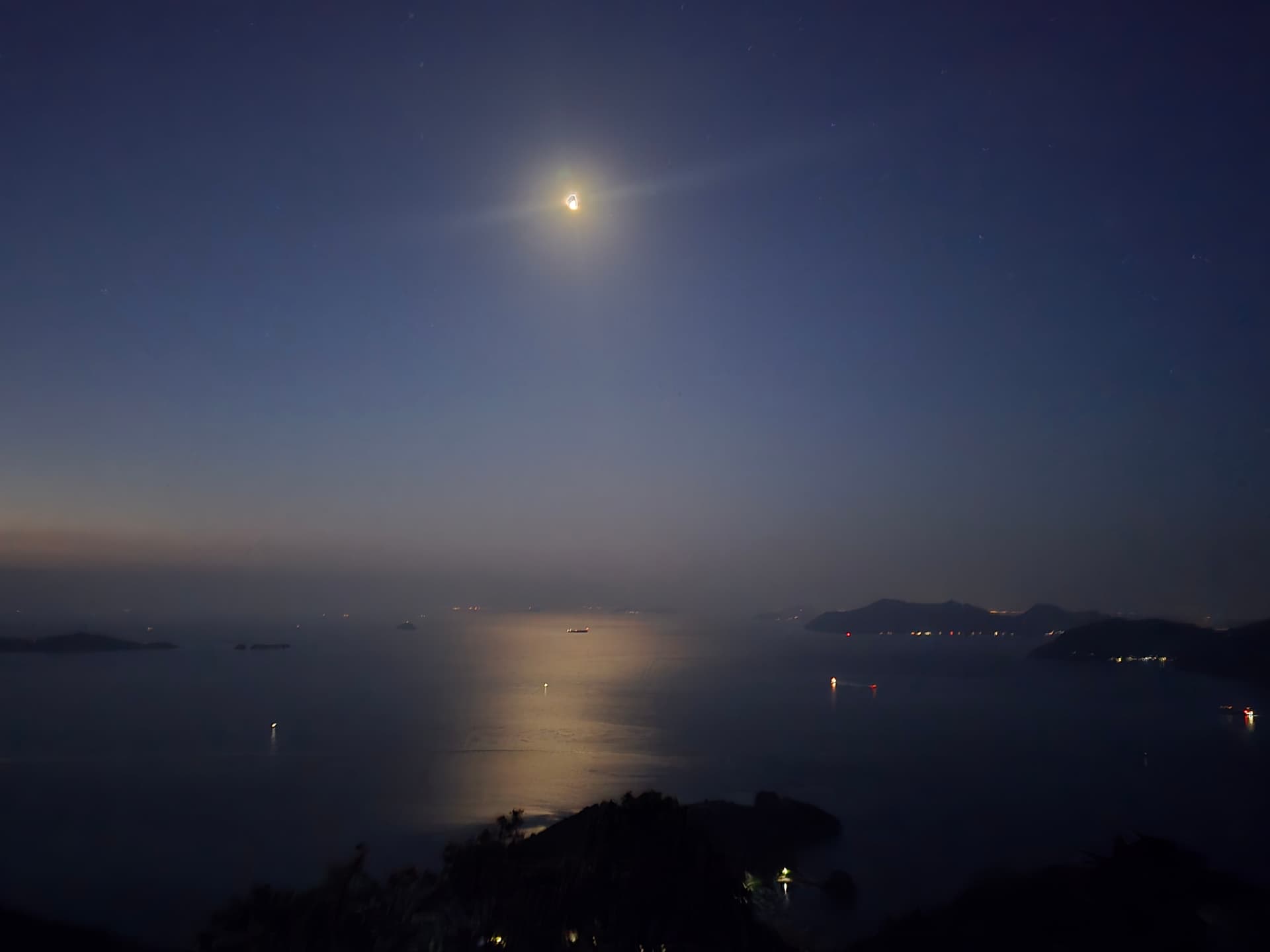
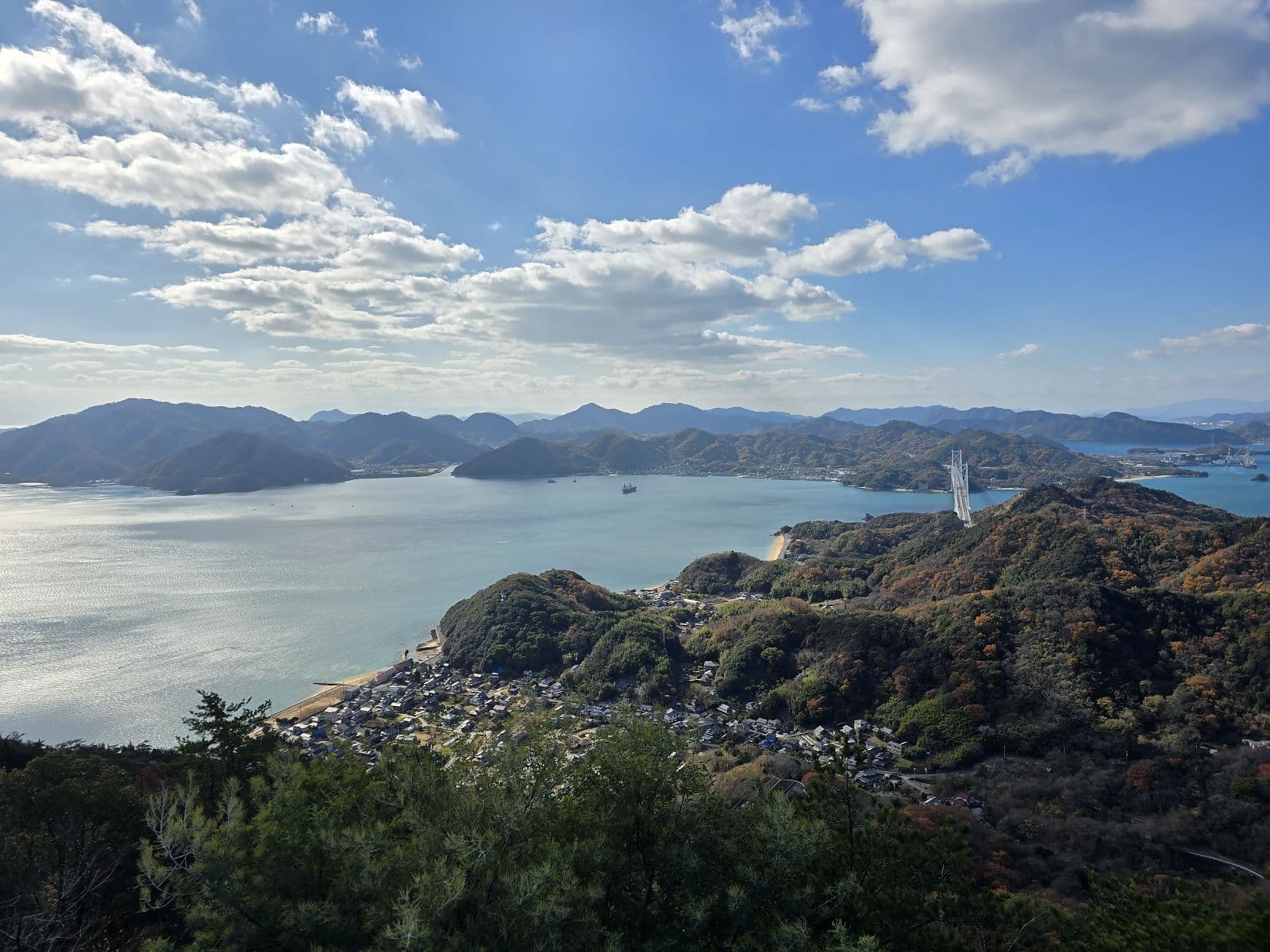
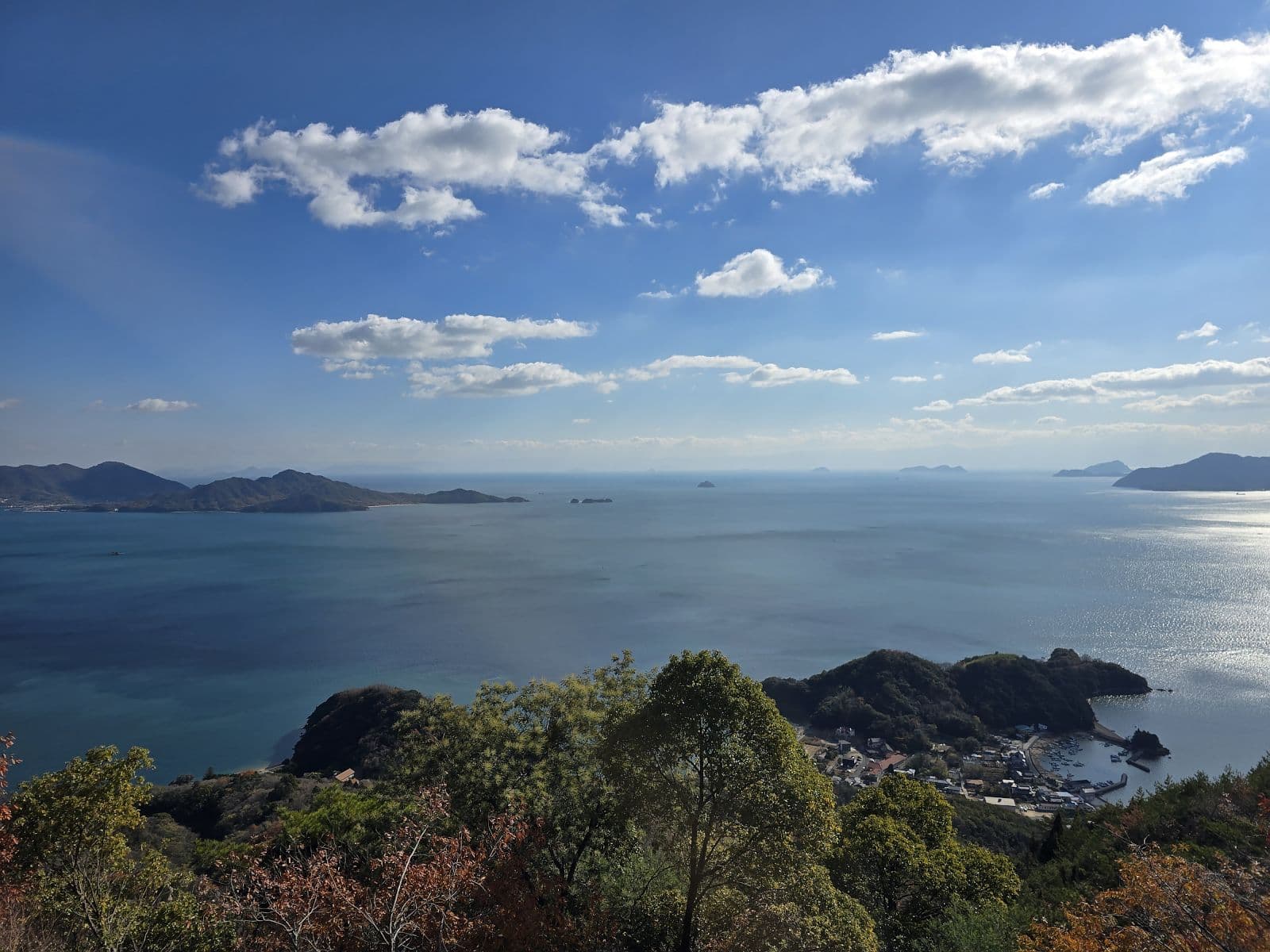
Mt. Takami Observatory is a viewpoint on the 283 m summit of Mt. Takami in Mukaishima-cho, Onomichi. From the deck you get a wide view of about 240°, taking in the islands and bridges from the Innoshima Bridge toward the Tatara Bridge, and on clear days the mountains of Shikoku. The scenery changes a lot through the day, from sunrise and blue midday sea to sunset and night views. It is a lesser-known spot where you can enjoy the view in relative quiet, popular for photography and as a stop on a drive.
GUIDE
Mt. Takami Observatory: Highlights and How to Visit
What to see and how to get around, with photos
What is Mt. Takami Observatory? A 240° island view from Mukaishima
Based on our own visits in February 2026 and early in the morning on April 11, 2026.
Mt. Takami Observatory is a viewpoint on the 283 m summit of Mt. Takami in southern Mukaishima-cho, Onomichi. Mukaishima is the first island on the Shimanami Kaido, just a short ferry ride from Onomichi, yet from its summit you get a wide view that seems to take in the whole route.
From the deck you can see the outlines of Shimanami bridges such as the Innoshima Bridge, Ikuchi Bridge and Tatara Bridge, countless islands dotting the Seto Inland Sea, and on clear days the mountains of Shikoku. When you want to get a sense of the whole Shimanami Kaido, this is one of the first places to go.
The view from Mt. Takami Observatory changes through the day
The biggest feature of Mt. Takami Observatory is how dramatically the view changes with the time of day.
Morning (sunrise to late morning) The air is clearest in the morning, when you can see the farthest. As the sun starts to light the sea, the outlines of islands and bridges stand out sharply. In seasons when fog forms easily, you may see islands floating in sea mist.
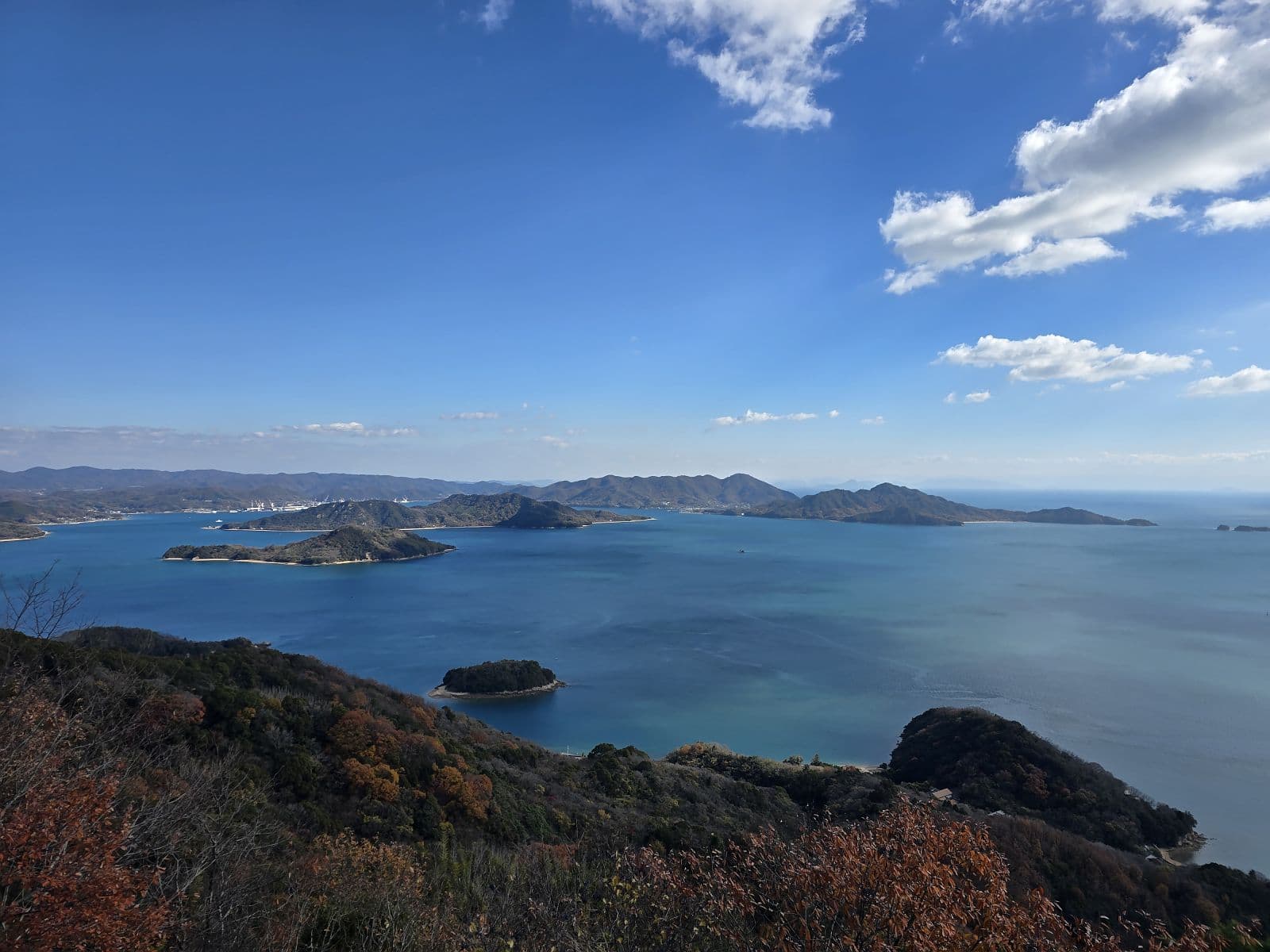
Midday (blue sky) The contrast between blue sky and calm sea is at its best. The bridges are easy to see, and you can clearly make out ferries and cargo ships. For photos, midday works well too, when the blue of the sky stands out.
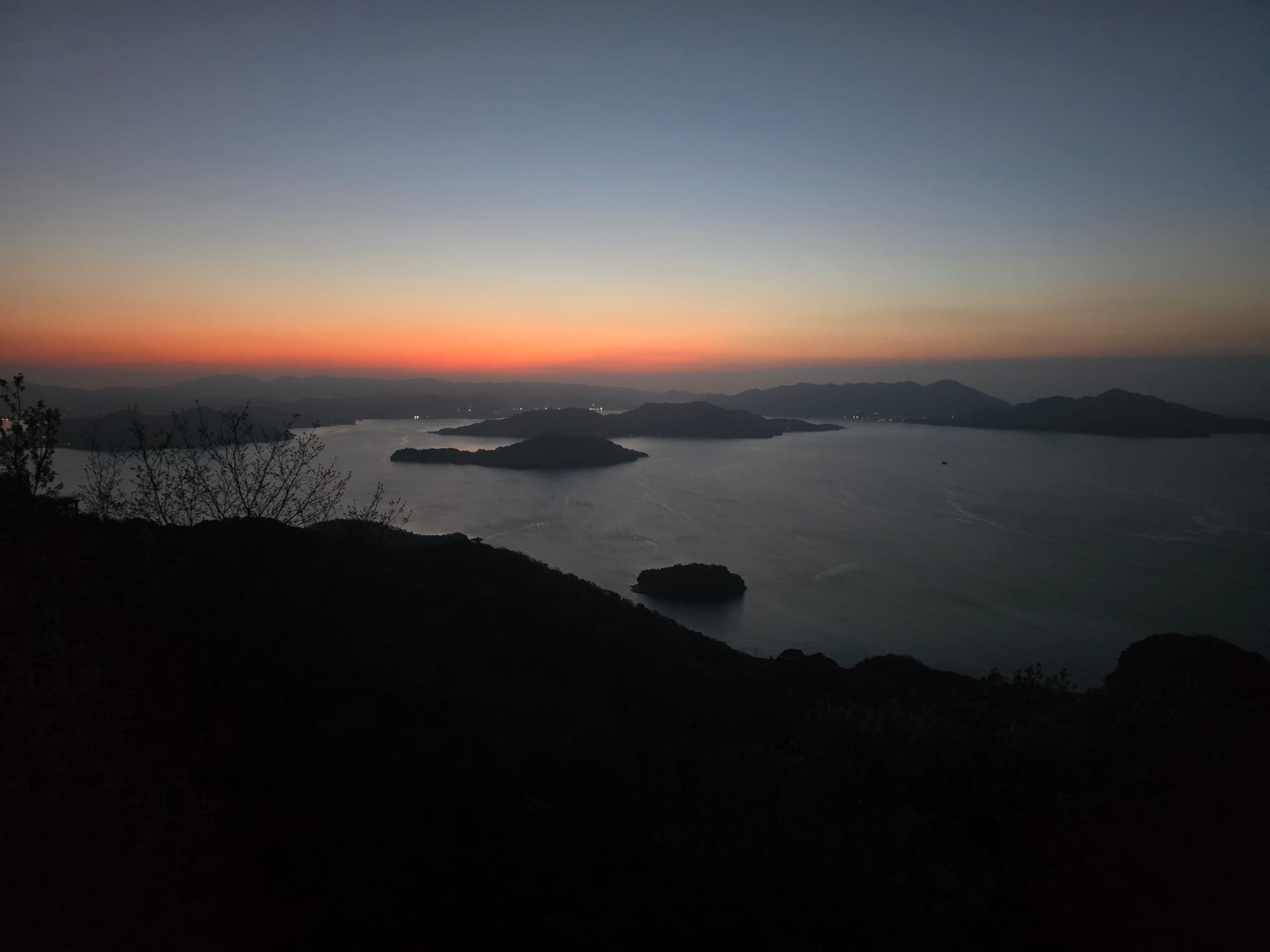
Evening (around sunset) This was the busiest time when we visited. The setting sun turns the sea orange, red and purple, and the islands become black silhouettes, one of the classic views of the Shimanami Kaido. Be at the summit 30 minutes to an hour before sunset to watch the sky change color.
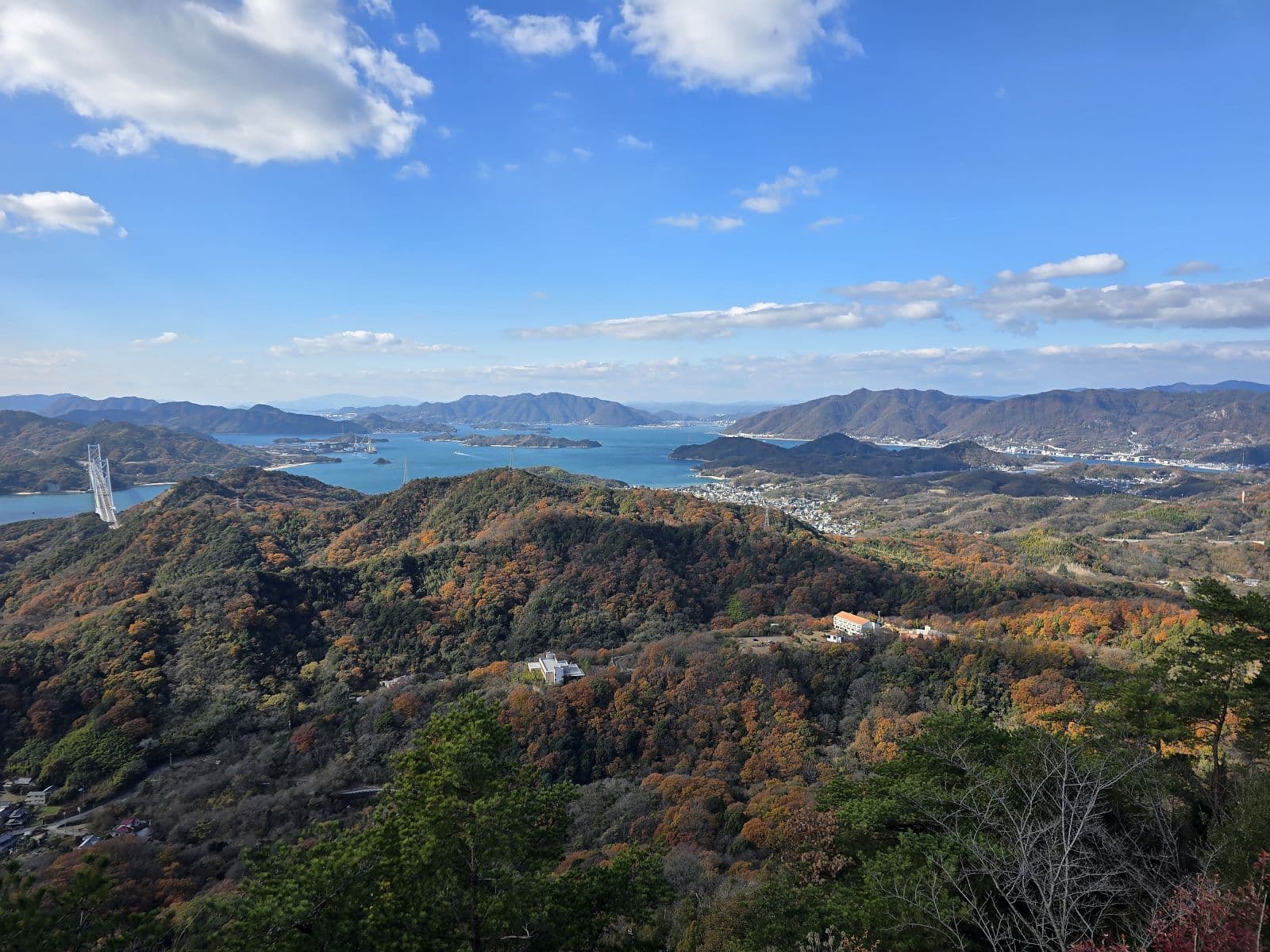
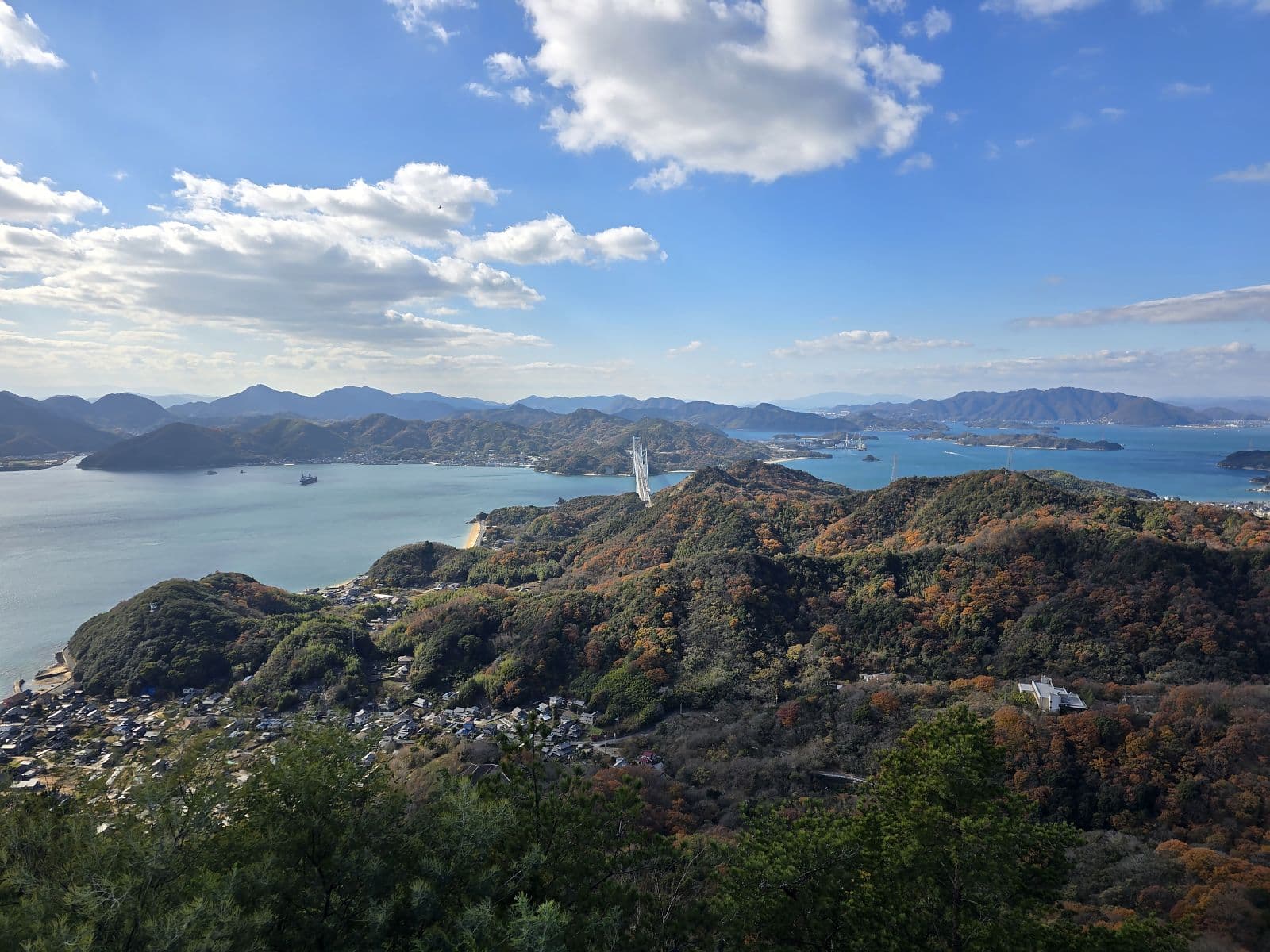
Panorama photography at Mt. Takami Observatory
Mt. Takami Observatory suits wide-angle and panorama shots. Little blocks the view at the summit, and the view opens out horizontally, so a phone's panorama mode or a wide-angle lens can fit the Shimanami scenery into a single frame.
You can also do long exposures on a tripod to capture the shift from sunset to night or moonlight on the sea. The mountain road is dark at night, though, so always bring a light and check a safe route.
Mt. Takami Observatory access and parking
Getting here by car is the norm. Take the ferry from Onomichi Station to Mukaishima, then drive southeast across the island to the summit.
There is a parking area near the summit, a small lot that fits only 4–5 regular or kei cars. There is also a toilet. The lot fills up at popular times for sunset and night views, so arrive with time to spare.
It gets especially crowded for the first sunrise on New Year's Day, when cars pile onto the mountain road. Some sections are too narrow for cars to pass each other, so there is a risk of traffic jams or getting stuck. If you are coming for the New Year sunrise, leave early to arrive before the lot fills, or consider walking up.
From Onomichi Station, allow roughly 20–30 minutes including the ferry and the drive across Mukaishima.
Local buses are infrequent, and none go directly to the summit, so a rental car or your own car is the realistic option.
Cycling and riding motorcycles to Mt. Takami Observatory
If you ride a bicycle to the summit, there are very steep grades along the way. It is hard to make it unless you have plenty of fitness to spare, and forcing yourself up raises the risk on the way down when you are tired.
Some sections also have poor road surfaces, and large amounts of dead and fallen leaves pile up along the road, making it very slippery in the rainy season, in wet weather and in autumn and winter. This applies not only to cyclists but also to motorcycle tourers. Take great care on two wheels.
- Steep grades: not recommended unless you have fitness to spare
- Rough surface: watch for bumps and cracks
- Slippery leaves: especially dangerous in autumn and winter, and also in the rainy season and in rain (no hard braking in corners)
- Narrow road, hard to pass: ride carefully and watch for oncoming cars
Tachibana Beach is a few minutes' drive from the observatory. Many people visit both, seeing up close the coastline they saw from the summit. For general Shimanami cycling information, see the cycling guide.
Before you visit Mt. Takami Observatory
Check the weather On cloudy days or days with poor visibility, distant bridges and islands are hard to see. If the view is your goal, check the forecast and visibility the day before and on the day. Even on sunny days, haze can wash out the distant scenery.
At night and in bad weather Lighting around the summit is limited at night, and in rain or strong wind your footing and visibility get worse. If you come for sunset or night views, always bring a flashlight or use your phone's light. Mountain roads may freeze when it snows, so take care with the weather in winter.
How long to stay Plan 30 minutes to an hour to relax and take in the view. If you are waiting for sunset, arrive 1–2 hours ahead, counting back from sunset time.


Basic information
Photo gallery
Tap a photo to enlarge it (swipe or use ← → keys).
RELATED