Access
About 20–30 minutes on foot from JR Onomichi Station. Or take the ropeway from the lower station to the summit station and walk a few minutes.
Hours
Grounds generally open to walk around (visiting hours 9:00–17:00, fee charged; check the official website for the latest).
Address
広島県尾道市東土堂町19-1(付近)
Senkoji is an old Shingon temple founded in 806, halfway up Mt. Senkoji in the middle of Onomichi. From its vermilion main hall, built into the bedrock, you can see the Onomichi Channel and the town. The grounds are dotted with distinctive boulders such as the Mirror Rock, Mitsu-iwa and the Husband-and-Wife Rocks, and there is a chain-climbing course modeled on Mt. Ishizuchi and the Path of Literature lined with 25 stone monuments. Easy to reach by ropeway, it is a standard stop in Onomichi.
GUIDE
Senkoji Temple: Highlights and How to Visit
What to see and how to get around, with photos
What is Senkoji? A vermilion temple held in Onomichi's hillside
Senkoji is an old Shingon-lineage temple halfway up Mt. Senkoji (about 140 m), near the middle of Onomichi. It is said to have been founded in 806 by Kobo Daishi (Kukai), and its principal image is the Thousand-Armed Kannon. It has long prospered as the guardian temple of the port town, a place of prayer watching over sea traffic on the Seto Inland Sea.
The vermilion main hall, merged with the rock face, catches the eye from far away, and from the grounds you can see the Onomichi Channel and the town. Between worship, views, giant boulders and literary monuments, there is something new to find every time you visit.
As one of the defining sights of Onomichi, the starting point of Shimanami Kaido cycling, it is widely known among cyclists and travelers from Japan and abroad. The ferry pier for Mukaishima is within walking distance, so many travelers plan to visit Senkoji first and then set off on the Shimanami Kaido. It is a standard starting point for sightseeing in Onomichi.
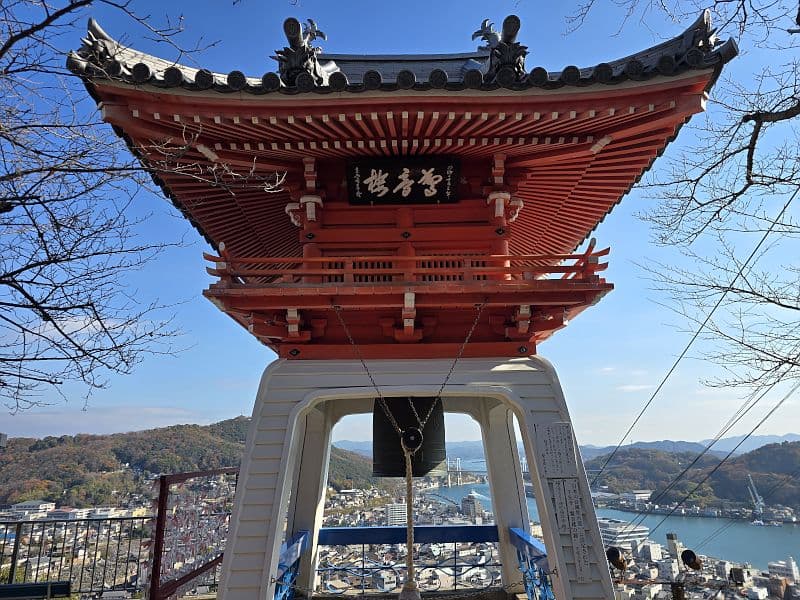
From the ropeway summit station to the Senkoji main hall
The easiest way to reach Senkoji is the ropeway from the lower station, about 10 minutes on foot from Onomichi Station, which takes about 3 minutes to the summit station. When you get off, the key is to start down following the signs toward the main hall, rather than heading to the Senkoji Park observation deck first.
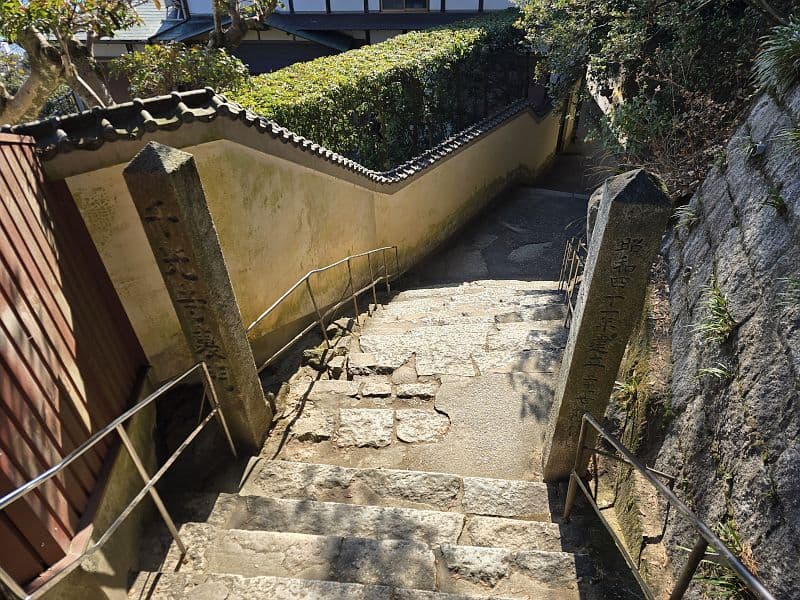
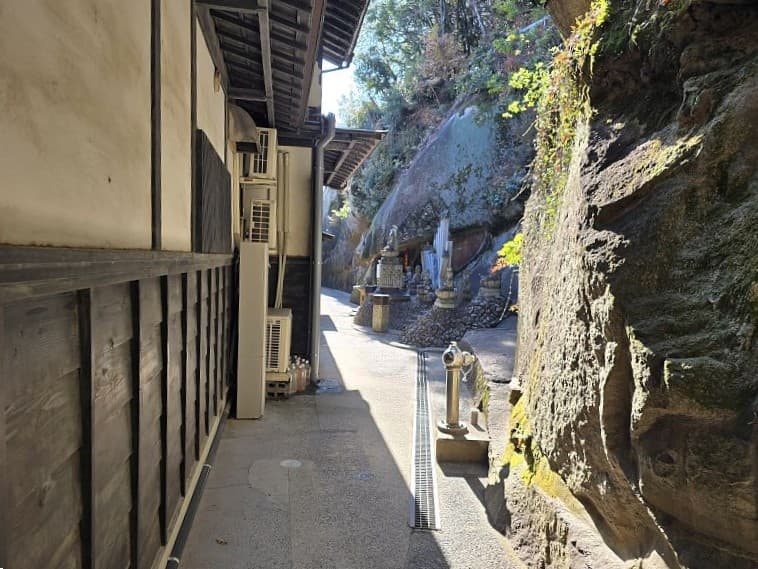
Down the steps, a narrow path appears between temple buildings and a granite rock wall. Stone lanterns line it and a small shrine is visible beyond, giving it a distinctive atmosphere. Pass through and you reach the grounds.
Worship at the Senkoji main hall
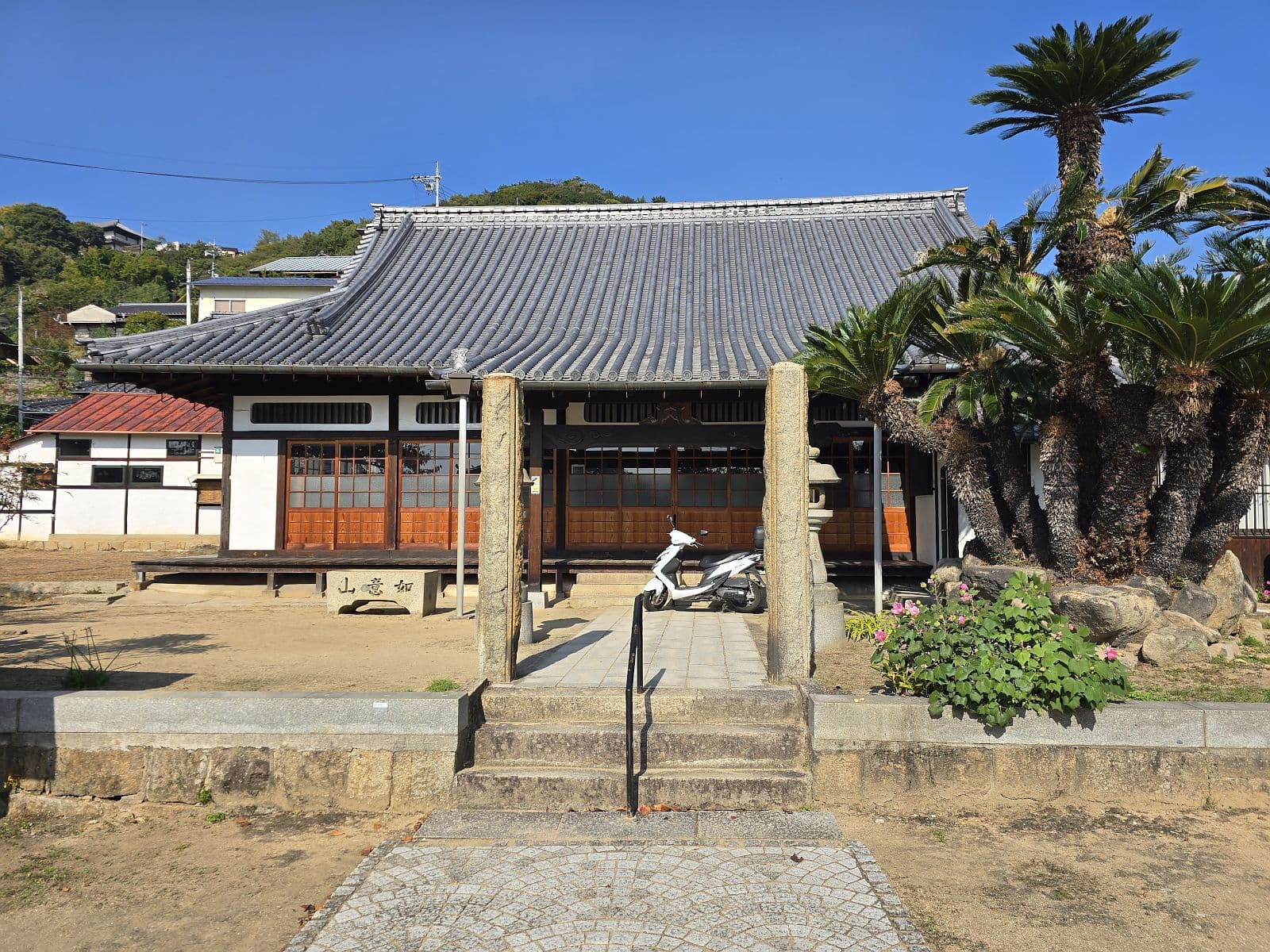
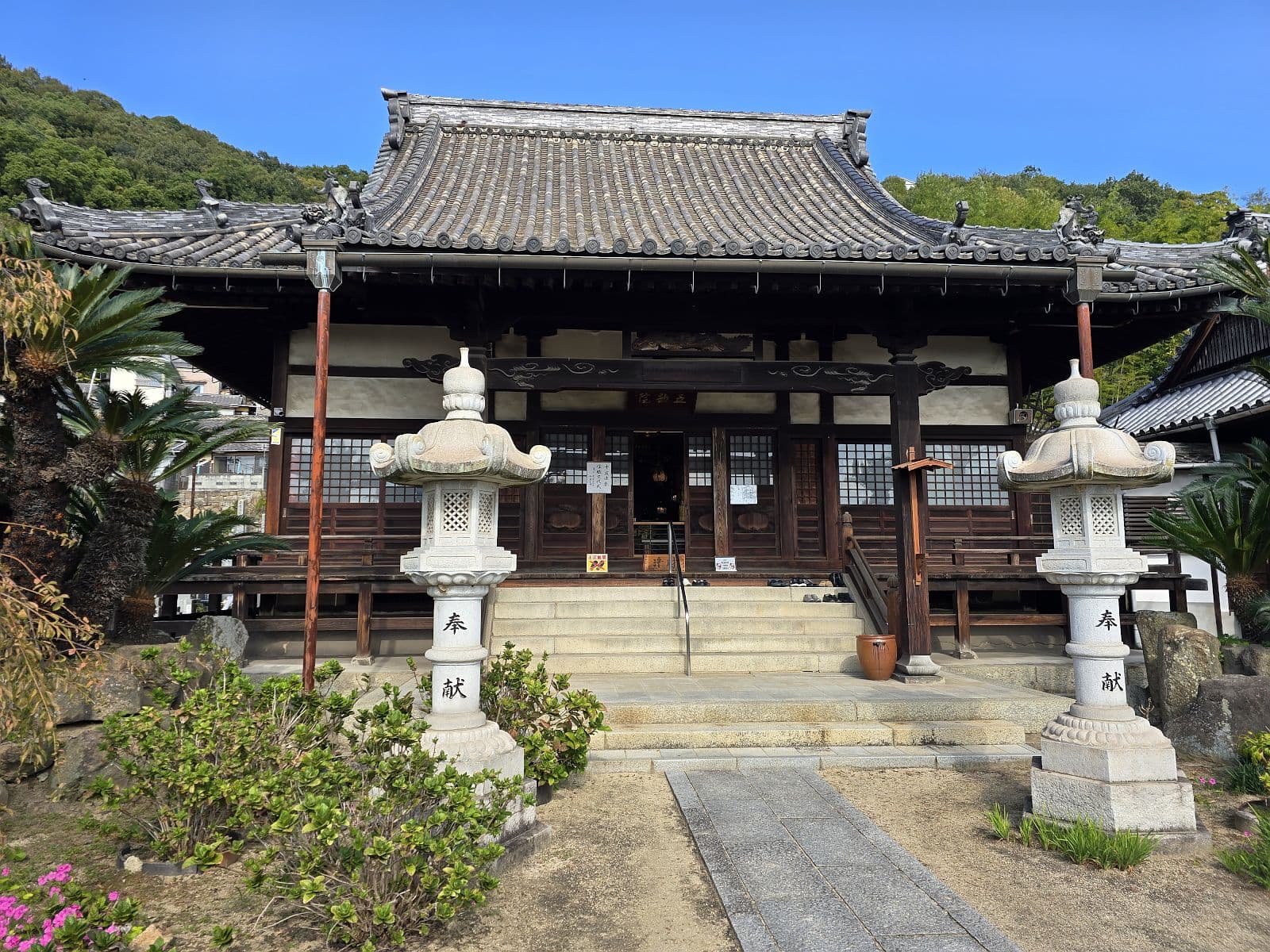
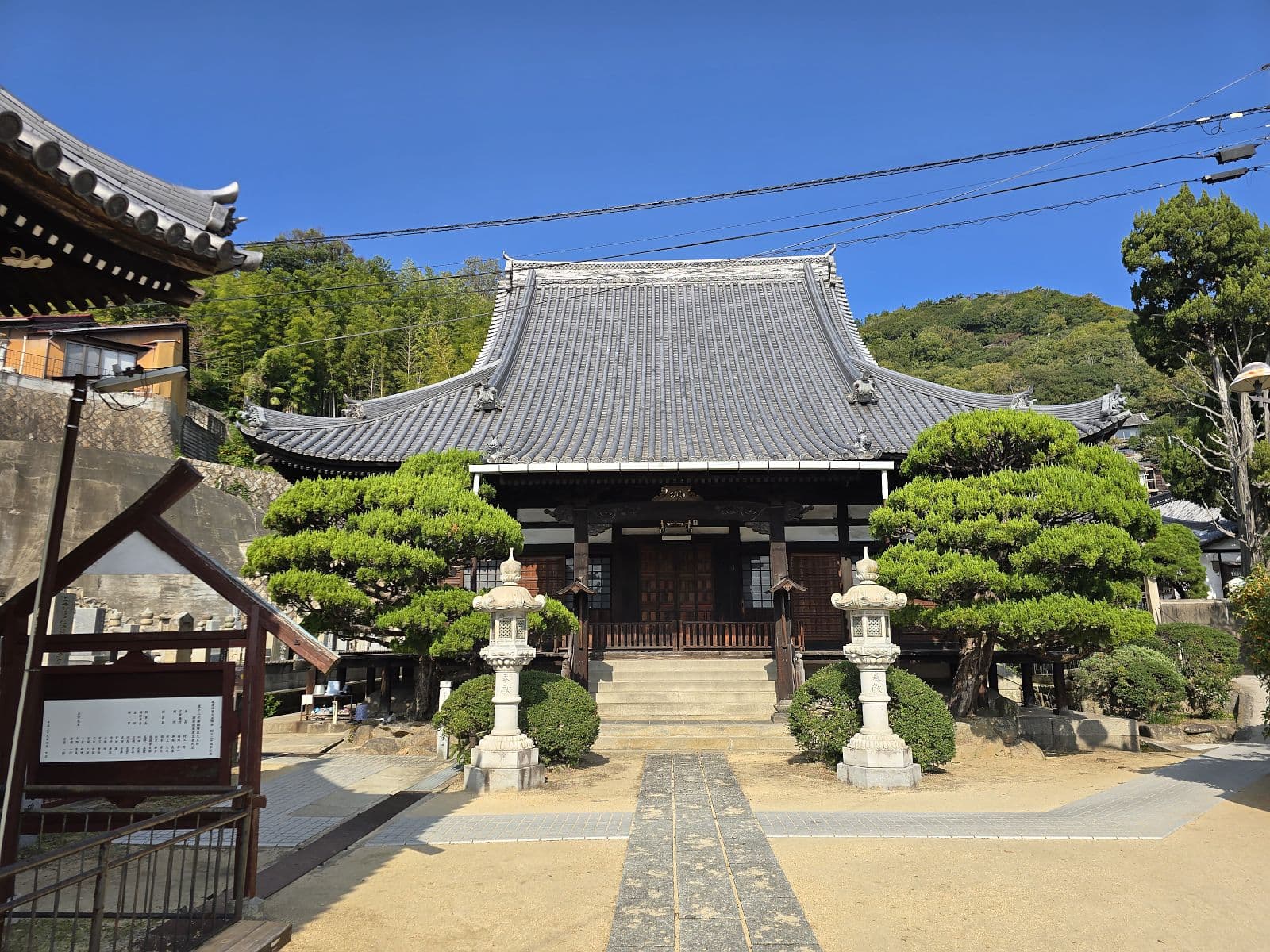
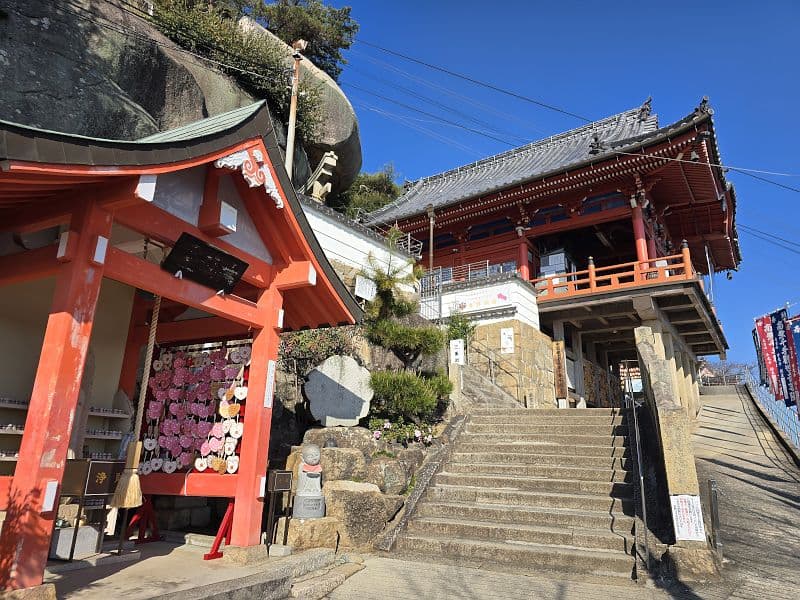
Inside the grounds, the vermilion main hall stands in front of you. The principal image is the Thousand-Armed Kannon. Photography of the principal image is not allowed, so please pray quietly. The temple is known for many blessings, including protection from misfortune, good luck and matchmaking, and it is a living temple that local people visit every day.
The main hall is built as if merged with the bedrock, and its unusual structure, using the granite rock face directly, is one of the highlights. From the veranda you can see the Onomichi Channel, so you can enjoy the view while you pray.
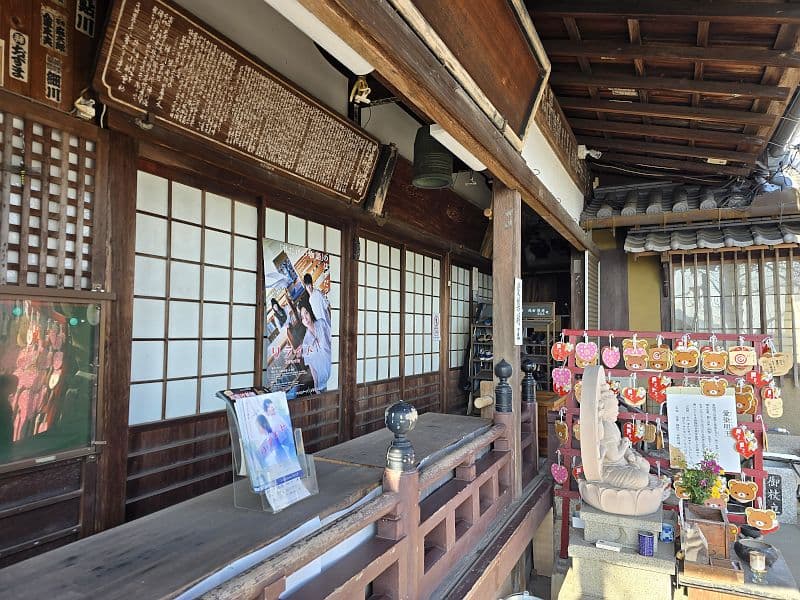
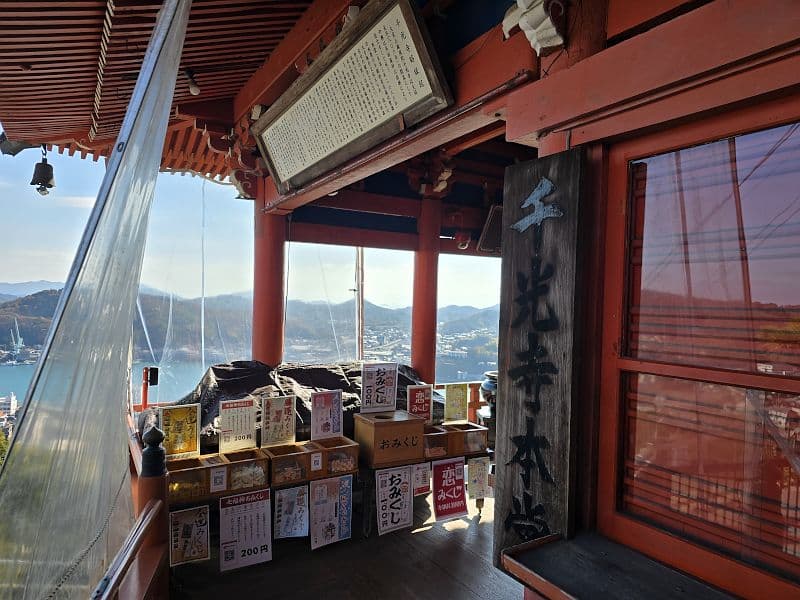
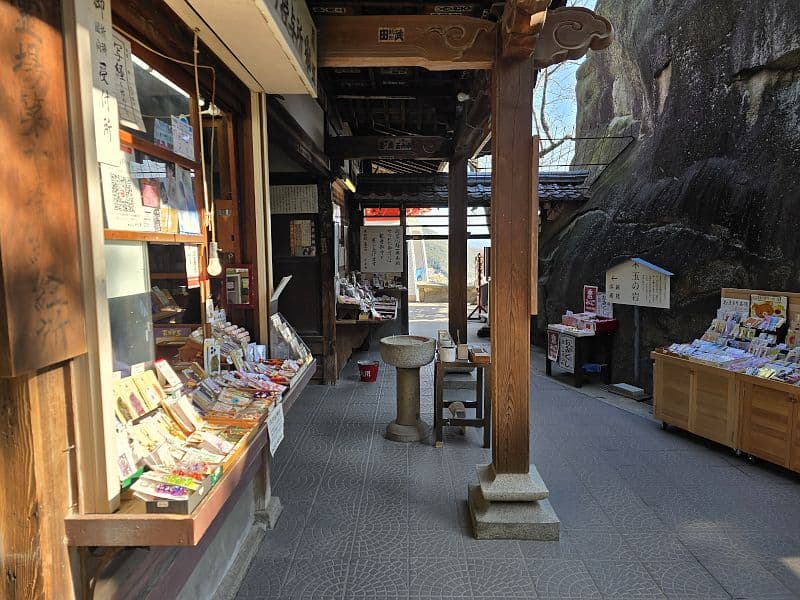
After praying, visit the counter in the grounds for amulets and goshuin seals. There is a wide selection, and choosing is part of the fun.
Senkoji's view over all of Onomichi
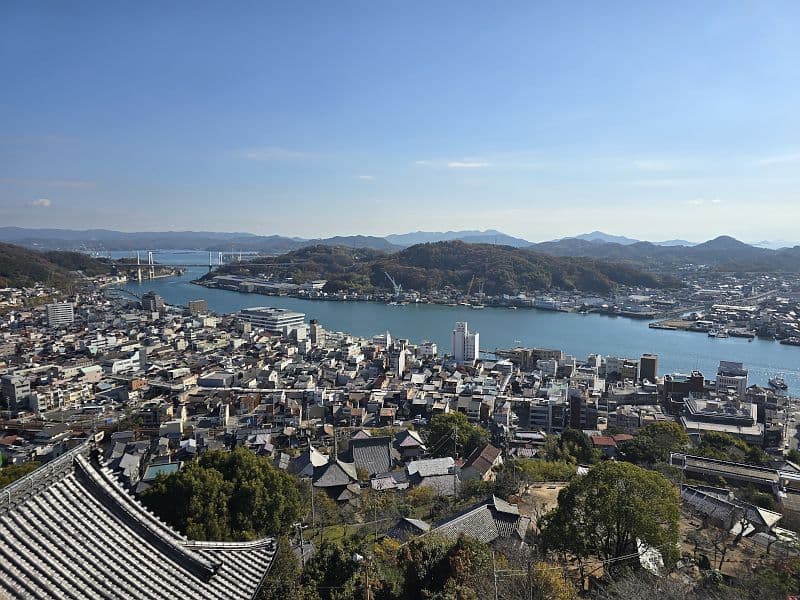
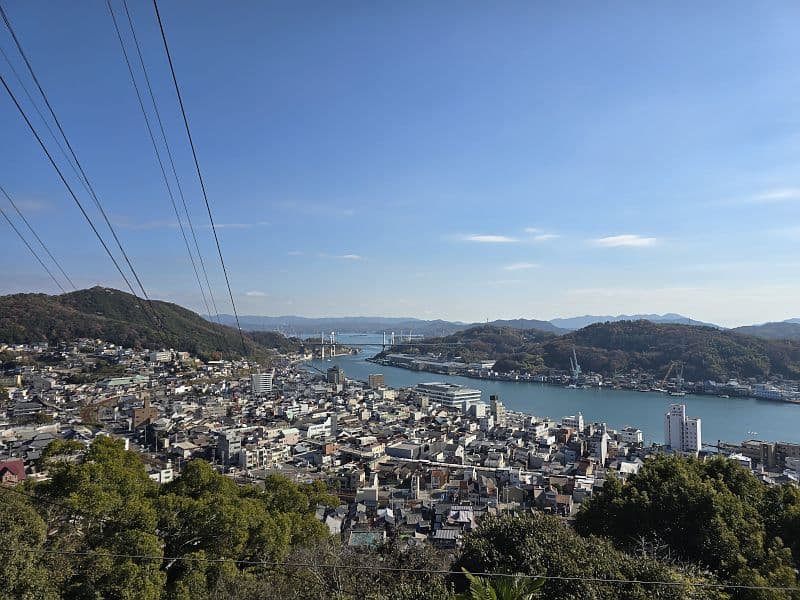
The view from the grounds of Senkoji is one of the best in Onomichi. Below you are the streets of Onomichi, beyond them the Onomichi Channel, Mukaishima across the water and even the Onomichi Bridge. Looking down on the port town from about 140 m, you get a sense of Onomichi's three-dimensional terrain that you cannot see from street level.
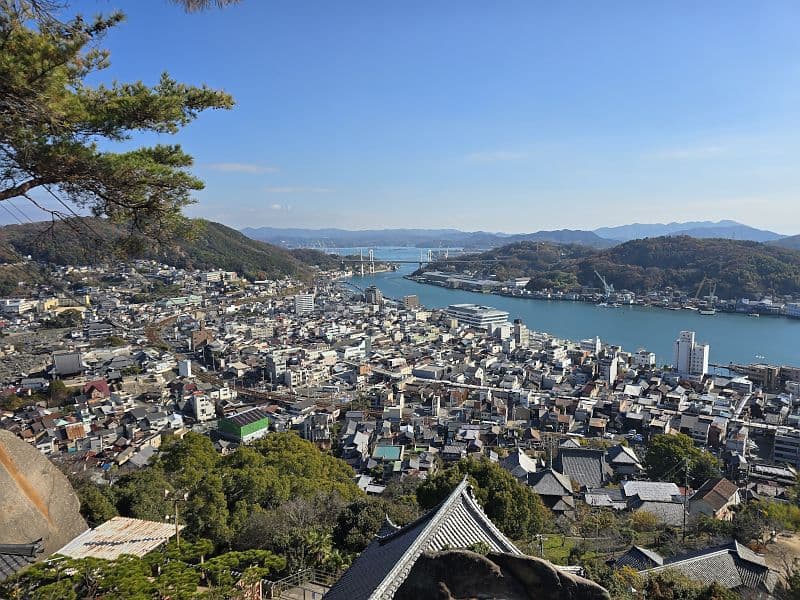
You can look in the same direction from near the ropeway summit station. In the morning the light hits the town head-on and it looks bright, while in the evening the western sun turns the Onomichi Channel gold. The view changes a lot with the time of day, so if you have time, stay a while and watch the light change.
Giant boulders in the grounds of Senkoji
Huge rocks that have long been objects of worship are scattered around the grounds. Each has a name and a story, and visiting them as you go is one of the pleasures here.
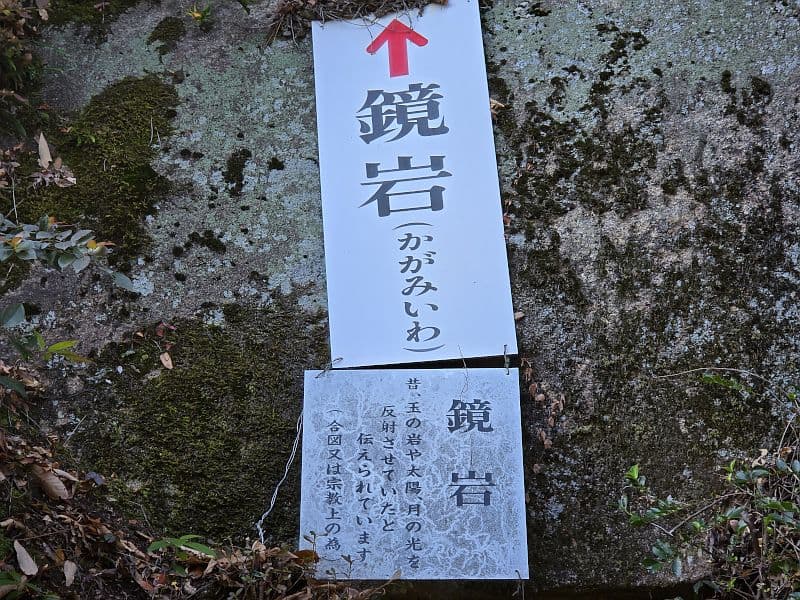
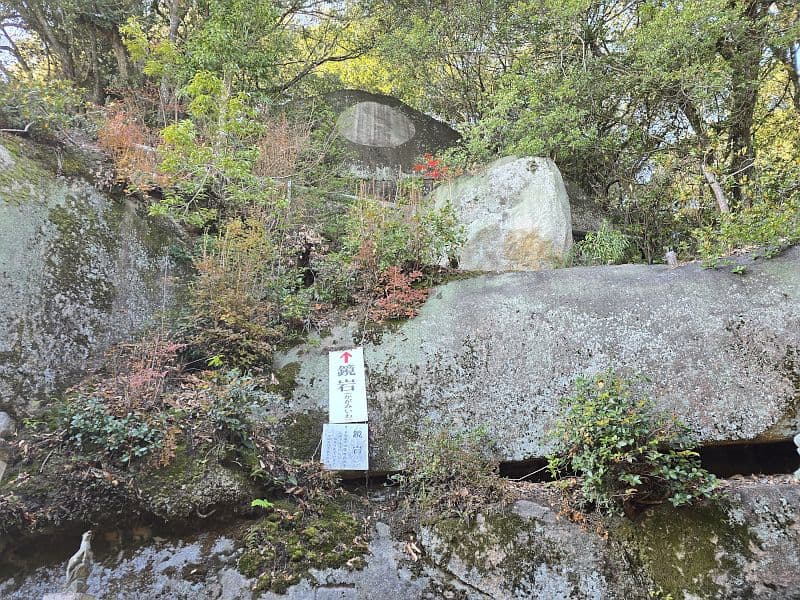
Mirror Rock (Kagami-iwa)
Mirror Rock, beside the approach, is a giant boulder said to have once reflected the light of a jewel, or of the sun and moon. Some say this light guided ships through the Onomichi Channel at night, making it a symbol of the deep bond between Senkoji and the port town. A sacred rope is still tied around it, and it is carefully revered.
Light Rock, Mitsu-iwa and the Buddhist statues
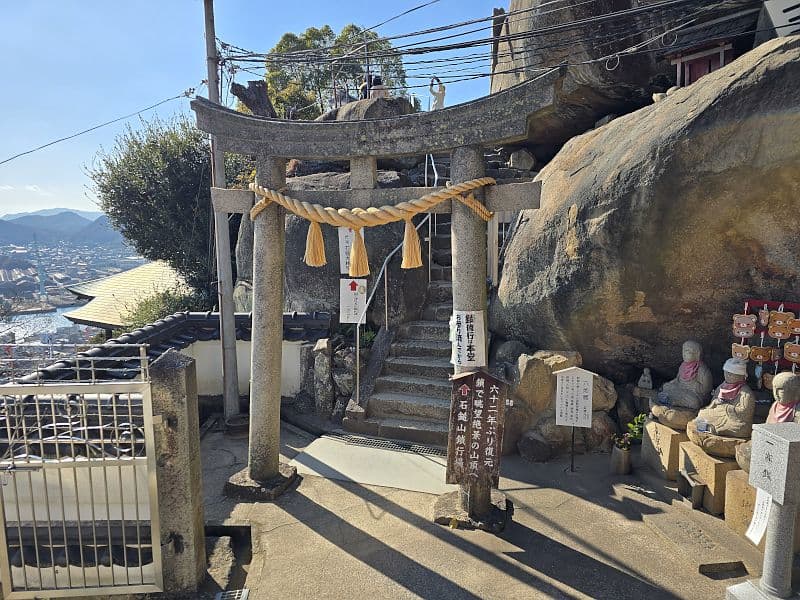
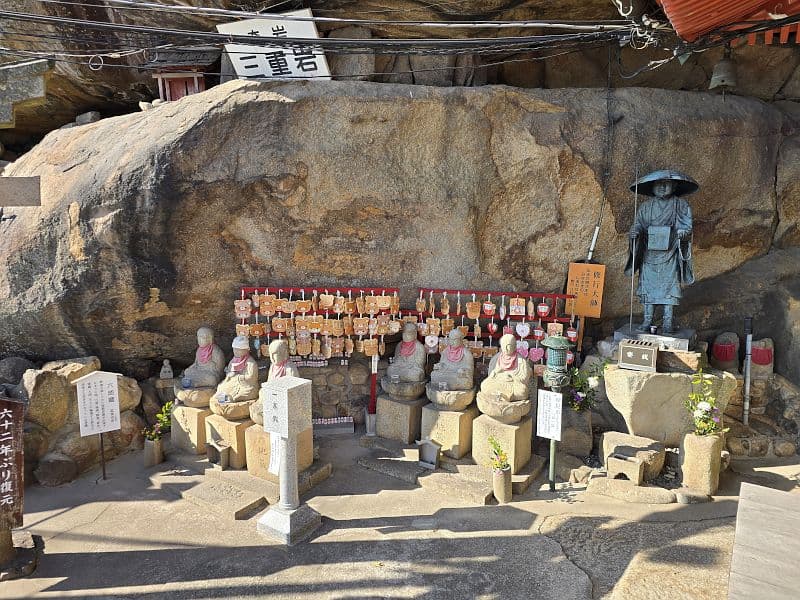
Stone Buddhas line the rocky areas of the grounds, giving them the atmosphere of a pilgrimage site. Mitsu-iwa is where three giant rocks stand as if stacked together, with six Jizo statues and ascetic figures enshrined against the rock wall. Passing through a small stone torii to reach them feels like entering a small sanctuary within the grounds.
Mt. Ishizuchi chain climbing
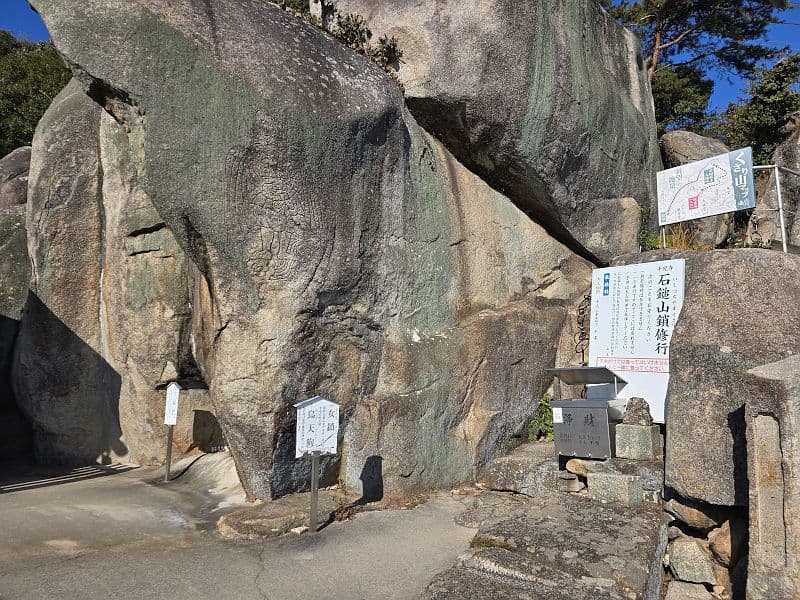
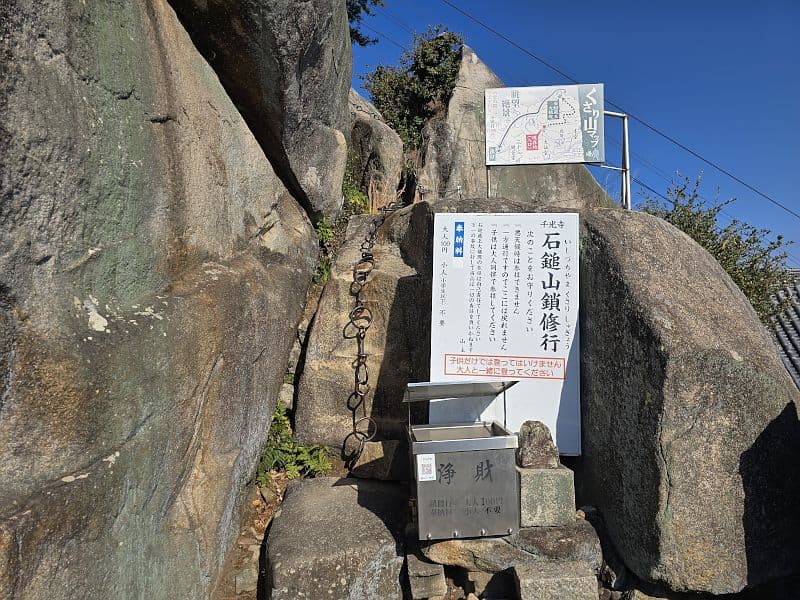
At the back of the grounds is a course modeled on the chain climbing of Mt. Ishizuchi, the sacred mountain in Ehime. You climb the rock using iron chains fixed to a giant boulder. Children cannot do it alone; they must go with an adult.
Husband-and-Wife Rocks (Meoto-iwa)
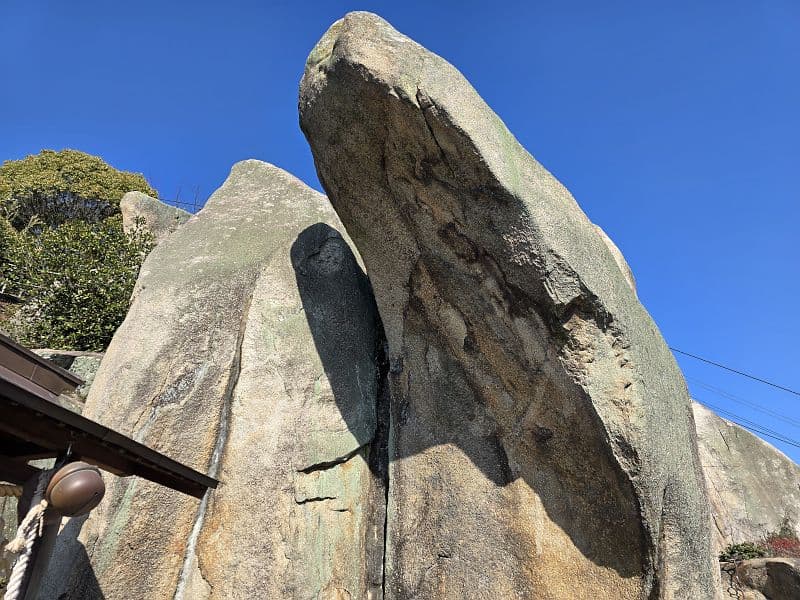
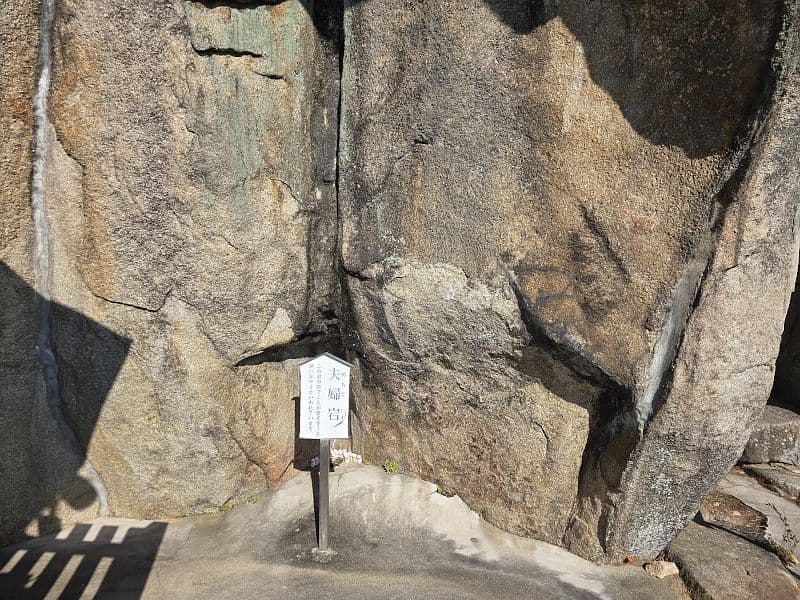
The two giant rocks right beside the chain-climbing area are the Husband-and-Wife Rocks, named for the way they stand close together. They are said to bring luck in relationships, and couples often stop here. You can visit them right after the chain climb.
The Path of Literature at Senkoji
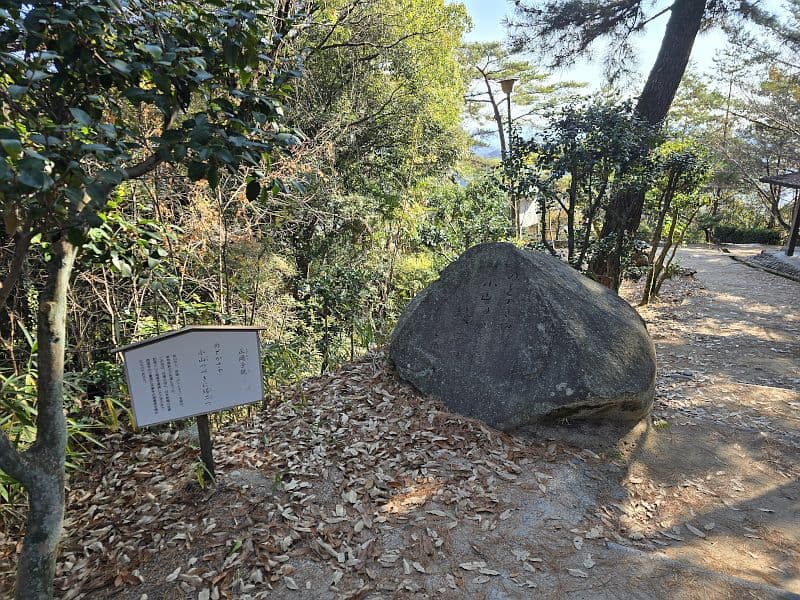
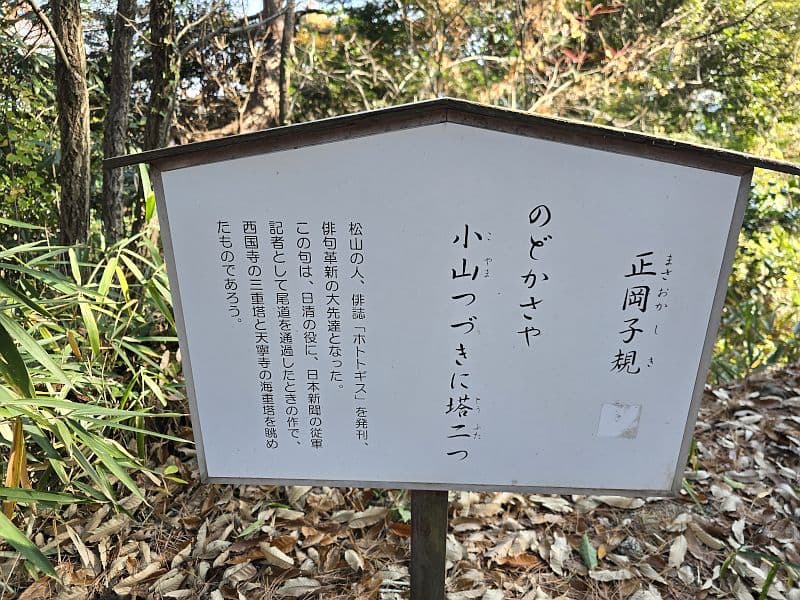
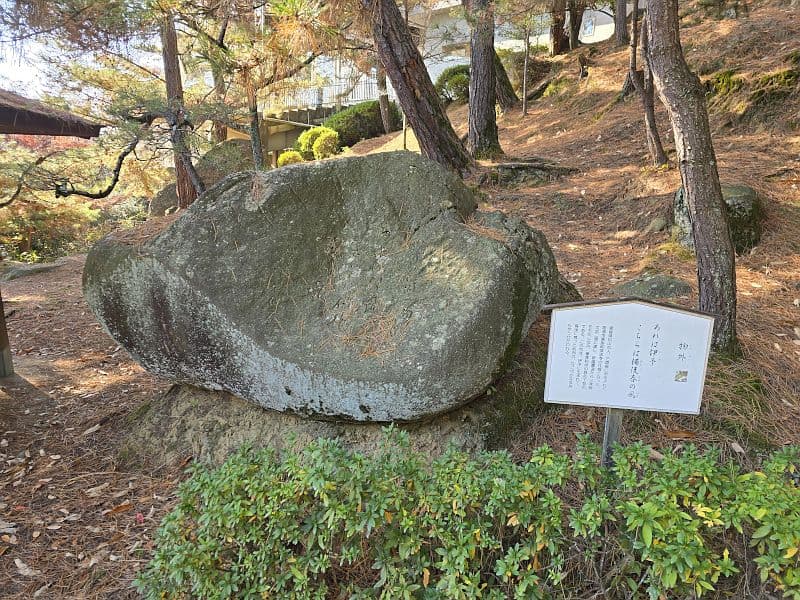
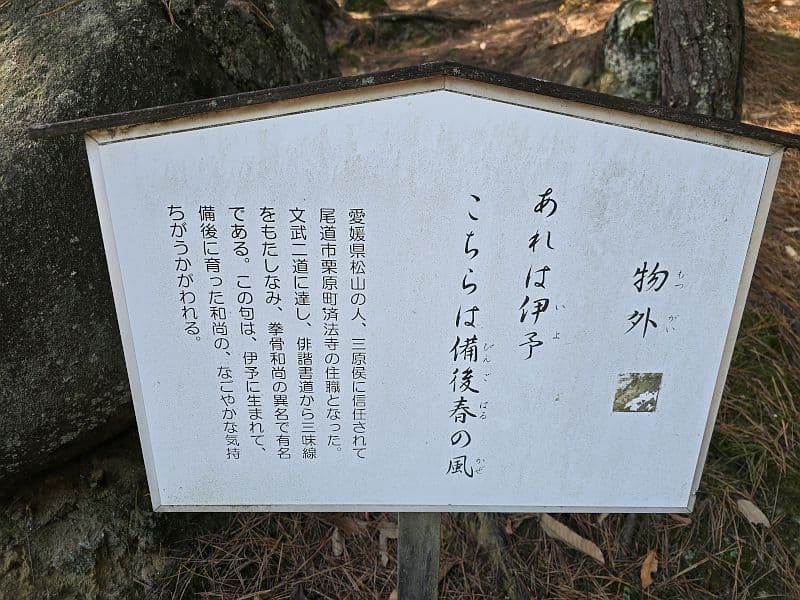
Mt. Senkoji has a walking path called the Path of Literature. Along about 1 km, 25 stone monuments are carved with verses and passages by writers and poets connected with Onomichi, including Masaoka Shiki, Naoya Shiga and Fumiko Hayashi. You can enjoy them while walking from the ropeway summit station toward the main hall.
Getting to Senkoji: ropeway or on foot
There are two main ways to reach Senkoji.
By ropeway (recommended)
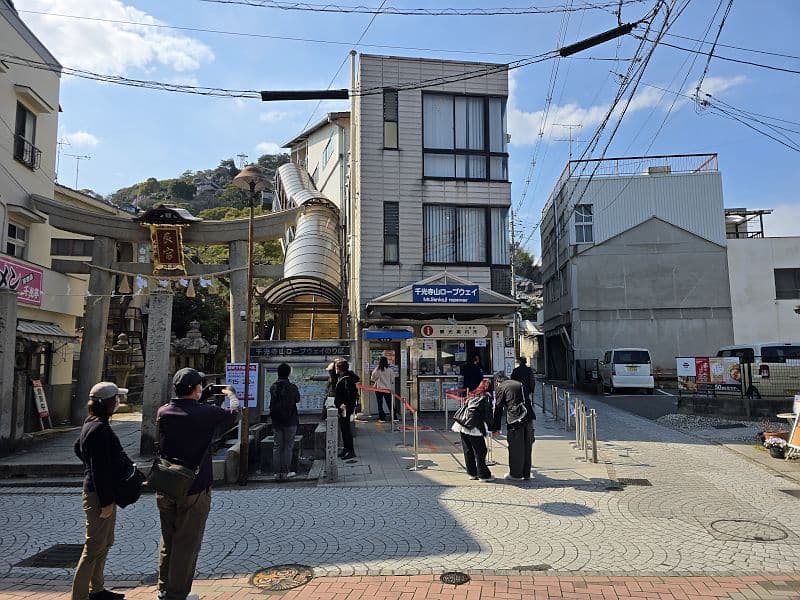
Take the ropeway from the lower station, about 10 minutes on foot from Onomichi Station, to the summit station in about 3 minutes. The standard route is to walk down the Path of Literature from the summit station toward the main hall.
On foot
From the north exit of Onomichi Station, climb stone-paved slopes and steps for about 20–30 minutes. This route follows the Temple Walk, passing several temples such as Jikoji, Komyoji and Hodoji on the way to Senkoji. If you have the energy, it gives you more of Onomichi's lanes and slopes.
Combining Senkoji with Shimanami Kaido cycling
If you start the Shimanami Kaido from Onomichi, Senkoji is the ideal stop before setting off. A standard route is to rent a bike at Onomichi Station and visit Senkoji before heading to the ferry pier. Looking out over the Shimanami islands from the grounds before you start helps you appreciate the port town even more. See the Shimanami Kaido cycling guide and the Onomichi guide.
Senkoji through the seasons
Senkoji looks different in every season.
Spring (late March to early April)
Senkoji Park is Onomichi's best-known cherry blossom spot. The contrast between the hillside covered in blossoms and the Onomichi Channel is stunning, and together with the vermilion main hall it makes especially good photos. Weekends are very crowded, so go on a weekday or early in the morning.
Autumn (mid to late November)
Maples in the grounds and along the Path of Literature turn red, and you can see autumn leaves together with the vermilion main hall. It is less crowded than spring, so you can walk around calmly. The boulders with autumn leaves are another highlight.
Sunset and night
The Onomichi Channel seen from near the main hall around sunset looks completely different from daytime. When the sky turns red it is especially beautiful, so if you are coming for photos, plan to arrive in the evening. It gets dark underfoot at night, though, so check the layout of the grounds while it is still light.
Tips for walking around Senkoji
Crowds
On weekends and in the cherry blossom and autumn leaf seasons, both the grounds and the approach are crowded. When taking photos, choose a spot where you do not block others. The chain-climbing area is especially narrow, so take turns when it is busy.
Footing
There is a lot of stone paving, steps and bare rock, and it gets especially slippery in the rain. Avoid sandals and heels; we strongly recommend sneakers. Even if you use the ropeway, the walk from the summit station to the main hall and along the Path of Literature has ups and downs.
Time needed
About 15–20 minutes just to visit the main hall. 30–40 minutes including the boulders and chain climb. Allow 1 to 1.5 hours to walk the Path of Literature and ride the ropeway back down.


Basic information
Photo gallery
Tap a photo to enlarge it (swipe or use ← → keys).
RELATED