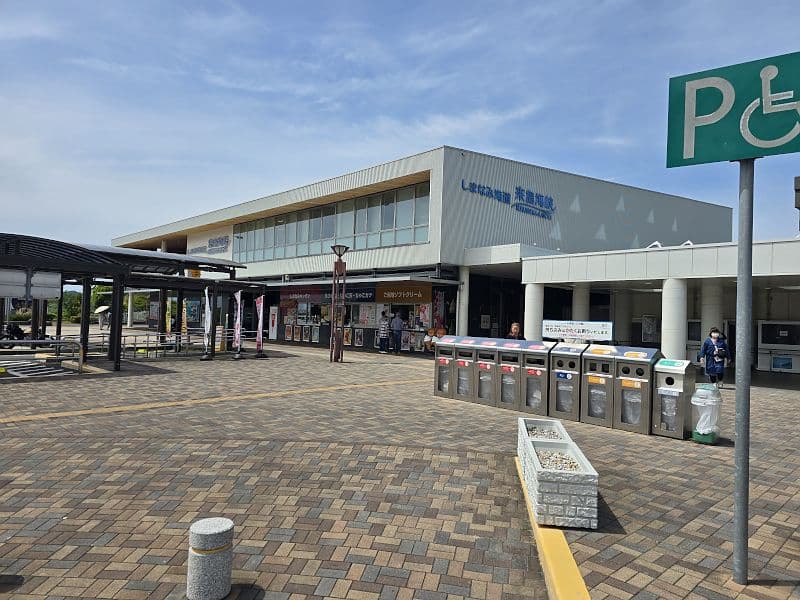
Access
From the Imabari side: about 30 minutes by car from Imabari IC. About 15 minutes by car from Oshima-minami IC on the Shimanami Kaido. By bike, you need to climb a very steep road on Oshima (about 300 m of elevation gain), suited to strong riders.
Hours
6:00–21:00 (observatory and parking). Open all year.
Address
広島県今治市吉海町南浦487-4
Mt. Kiro Observatory Park is a viewing facility on the summit of Mt. Kiro (307.8 m), the highest point on Oshima. The view of the Kurushima-Kaikyo Bridge and the islands of the Seto Inland Sea from its deck is known as one of the defining views of the Shimanami Kaido. The observatory, designed by architect Kengo Kuma, is built into the summit's landforms and is also well regarded as architecture.
GUIDE
Mt. Kiro Observatory Park: Highlights and How to Visit
What to see and how to get around, with photos
What is Mt. Kiro Observatory Park? The best view on the Shimanami Kaido
Oshima is the Shimanami island closest to Imabari. Mt. Kiro Observatory Park, on the summit of its highest peak (307.8 m), is known to cyclists and travelers in Japan and abroad as a viewpoint everyone visiting the Shimanami Kaido should see once.
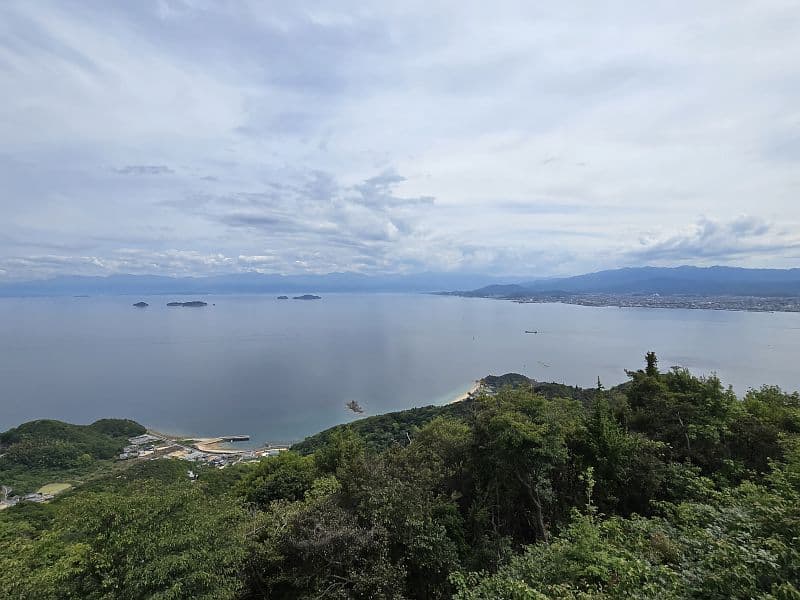
The whole Kurushima-Kaikyo Bridge below you, countless islands of every size on the Seto Inland Sea, and the mountains of Shikoku and Honshu in the distance: on a clear day the view extends 360°. It is the kind of scenery that stays with you far better than any description.
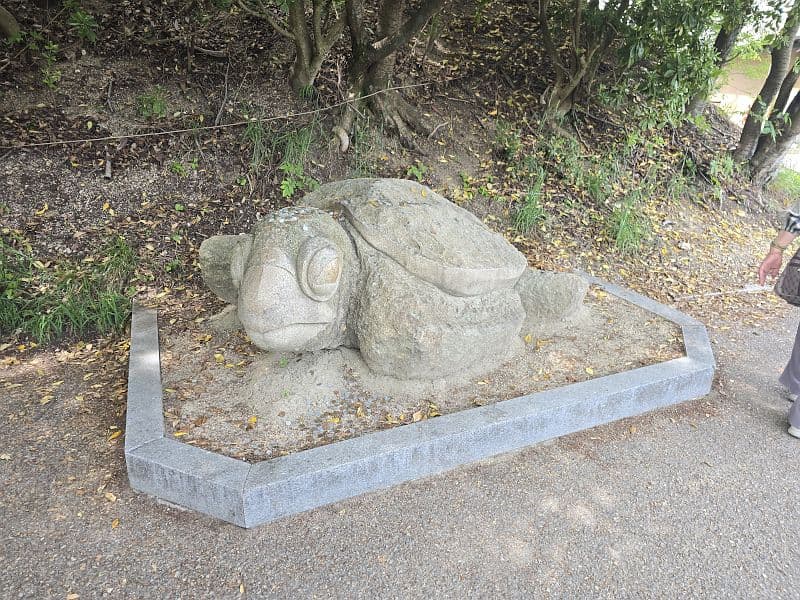
The Kurushima-Kaikyo Bridge below you: an angle you won't get elsewhere
What makes the view from Mt. Kiro special is that you look down on the bridge. All the Shimanami bridges are long and graceful, but on most of them you look out at the islands from the bridge. Mt. Kiro is higher than the bridge, so you can look down on the white arcs of the deck floating over the strait, almost like a model.
The Kurushima Strait is one of Japan's three great tidal races, with fast currents. When conditions are right, you can see swirling flows and tide lines from the deck. Ships passing under the bridge make it a moving scene you can watch for a long time.
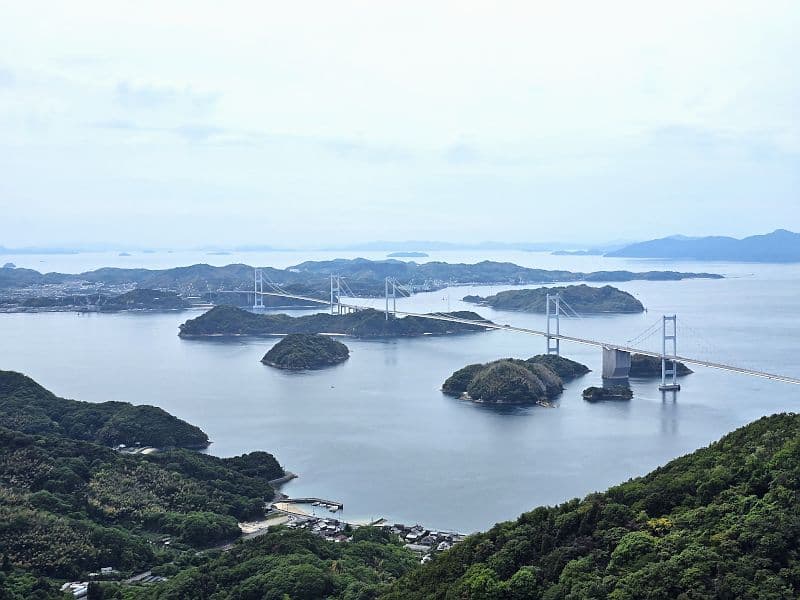
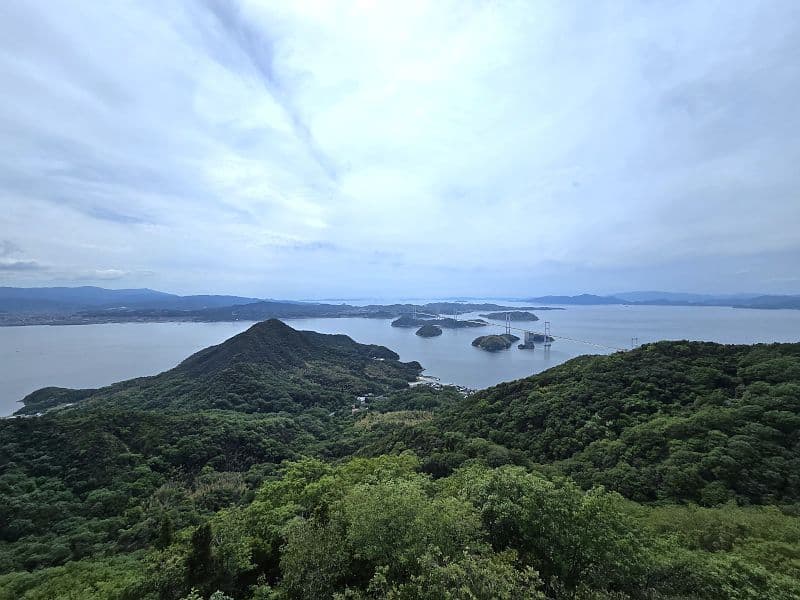
The Mt. Kiro observatory by Kengo Kuma: architecture that blends into nature
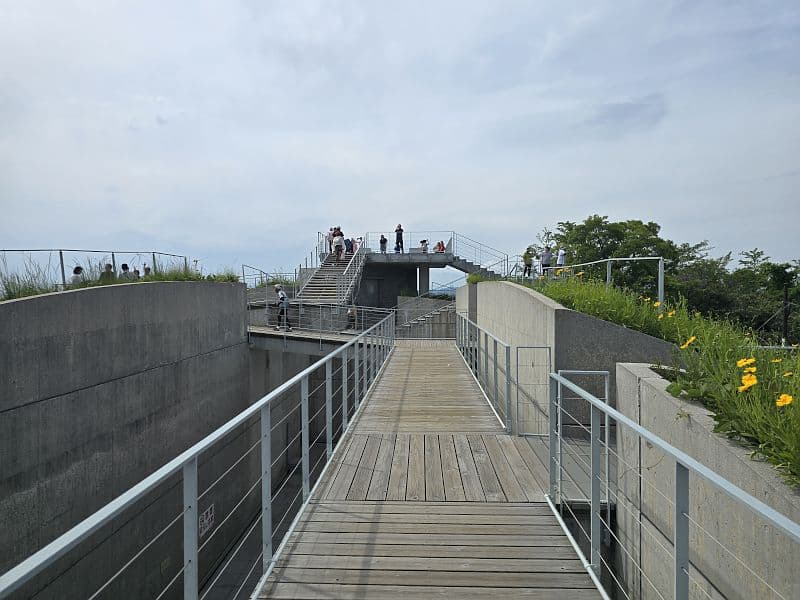
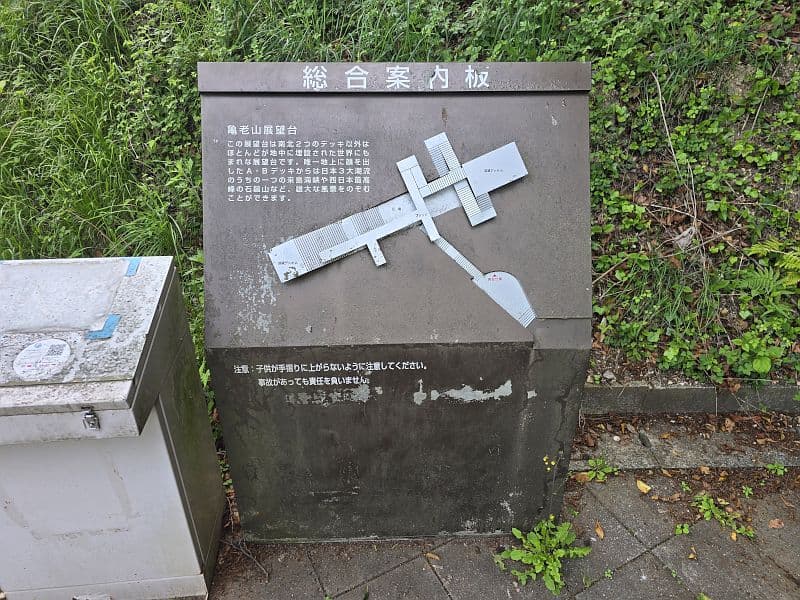
The Mt. Kiro observatory is also known as a work by architect Kengo Kuma. It is set into the terrain along the summit ridge, so from a distance it is hard to spot. It was designed to provide views without spoiling the natural landscape of the summit, and it is highly regarded as architecture.
The decks face several directions at different heights, so besides the Kurushima Strait you can see inland Oshima, the islands to the west and, on clear days, the mountains of western Japan.
A sanctuary for cyclists: the reward of a steep hill climb
Mt. Kiro is also a special place for cyclists. The steep climb of about 4 km from the foot of the mountain up to 307 m has become a place for Shimanami riders to test themselves.
The view that opens up after grinding through the steep switchbacks feels completely different from arriving after an easy ride. The sense of "I climbed up here for this view" is one reason cyclists hold Mt. Kiro in such regard.
On an e-bike the climb is fairly manageable, but on a regular crossbike or road bike you need plenty of fitness and suitable gears.
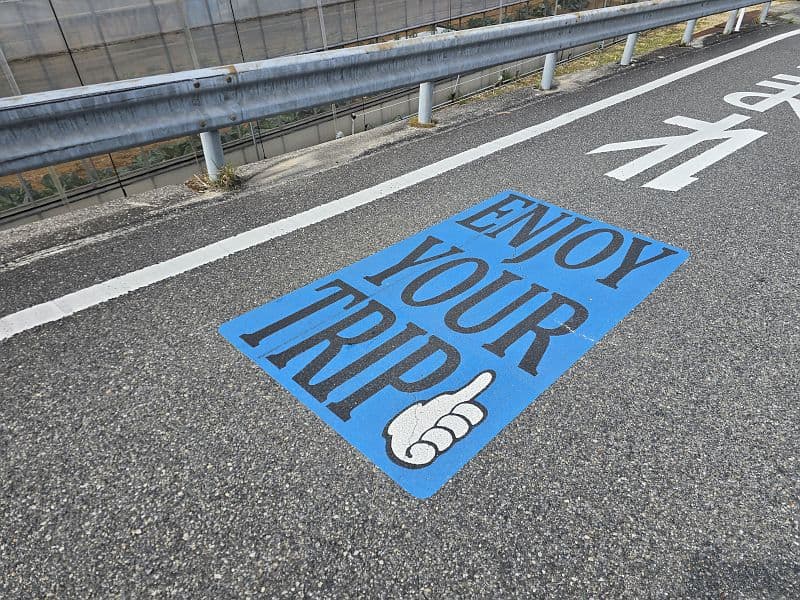
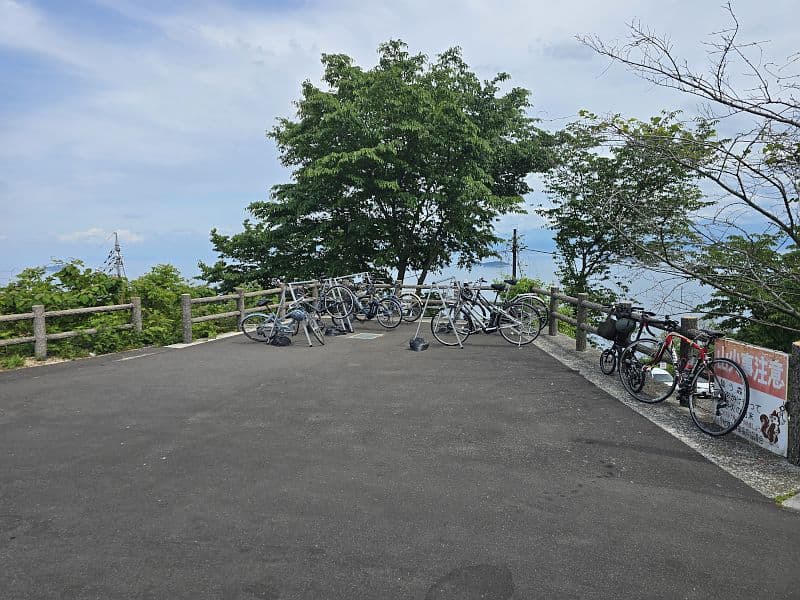
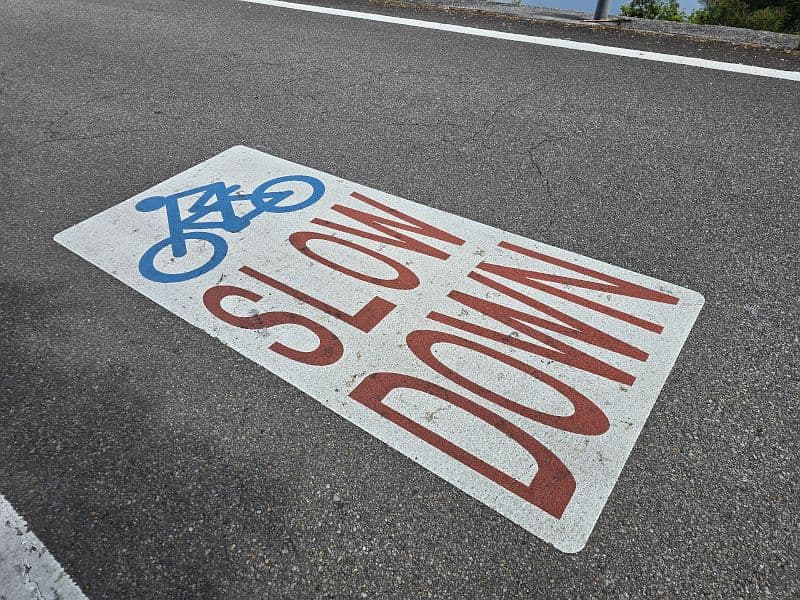
Mt. Kiro Observatory Park at sunset and night
The view in the evening and at night is also special.
At dusk, the outline of the Kurushima-Kaikyo Bridge against a red sky is well known among photographers as a Shimanami sunset spot, and more people set up cameras on the deck before sunset. After dark the observatory is open until 21:00, and you can see the lit-up bridge and fishing boat lights on the strait.
The road to the summit is dark at night, so plan your drive up early.
Facilities at Mt. Kiro Observatory Park
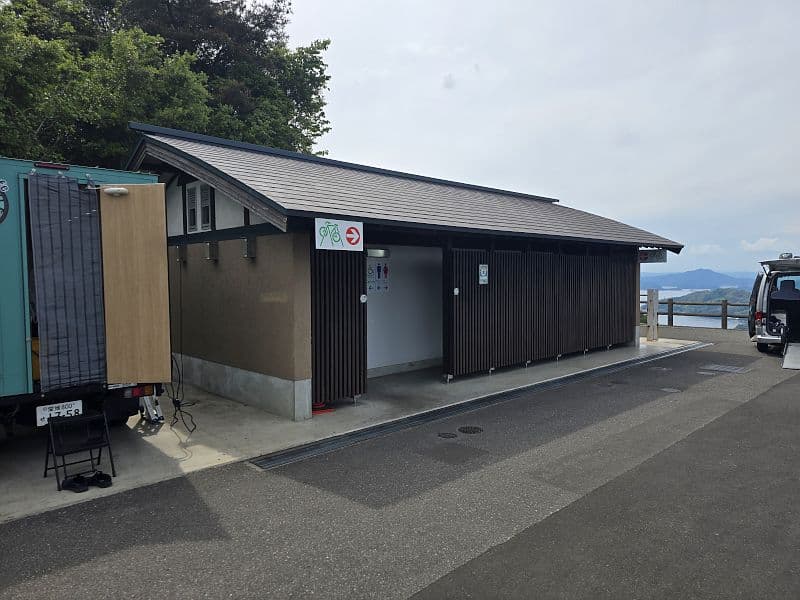
There is a toilet building at the summit parking lot. It is set up for cyclists and kept clean. When we visited, a food truck was selling sandwiches and drinks. It does not open on a fixed schedule, so bring snacks from below to be safe.
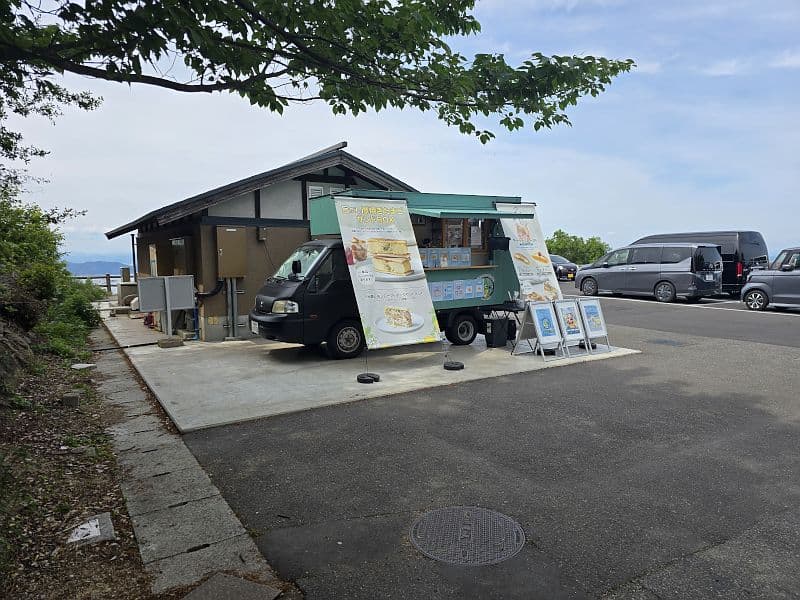
Best season and time to visit Mt. Kiro Observatory Park
You can visit all year, but visibility is most reliable from morning to early afternoon on clear days. Spring and autumn have less haze, and on clear winter days the air is especially sharp.
In summer the sun is strong even at the summit, so take precautions against heatstroke. On days with fog or low clouds, or in the rainy season, you may not see much. Check the forecast before you go. For nearby stops, see Yoshiumi Ikiiki-kan and Kurushima-Kaikyo Service Area, and for the full route the Shimanami Kaido cycling guide.


Basic information
Photo gallery
Tap a photo to enlarge it (swipe or use ← → keys).
RELATED