
Access
About 7 km from Omishima IC on the Nishiseto Expressway (Shimanami Kaido). About 10 minutes by car.
Hours
Grounds open at all times (Treasure Hall and Maritime Museum 8:30–17:00, last entry 16:30; November–March closes 16:30, last entry 16:00)
Address
愛媛県今治市大三島町宮浦3327
Oyamazumi Shrine in Omishima-cho, Imabari, Ehime Prefecture, is the head shrine of the Yamazumi and Mishima shrines across Japan. Its deity is Oyamazumi-no-Kami, worshipped since ancient times as a god of mountains, the sea and war. In the grounds stands a sacred camphor tree said to be more than 2,600 years old, and the treasure hall holds about 80% of the armor and weapons designated as Japan's national treasures and Important Cultural Properties, offered by generations of warriors. If you ride the Shimanami Kaido, this shrine on Omishima is a stop you should not miss.
GUIDE
Oyamazumi Shrine: Highlights and How to Visit
What to see and how to get around, with photos
Oyamazumi Shrine on Omishima is the head shrine of more than 10,000 Yamazumi and Mishima shrines across Japan. With a sacred camphor tree said to be 2,600 years old, a designated natural monument, and a treasure hall holding about 80% of Japan's armor and weapons designated as national treasures and Important Cultural Properties, it is the most prestigious power spot on the Shimanami Kaido. People come from all over Japan, from those praying for victory in martial arts and sports to those seeking a spiritual experience.
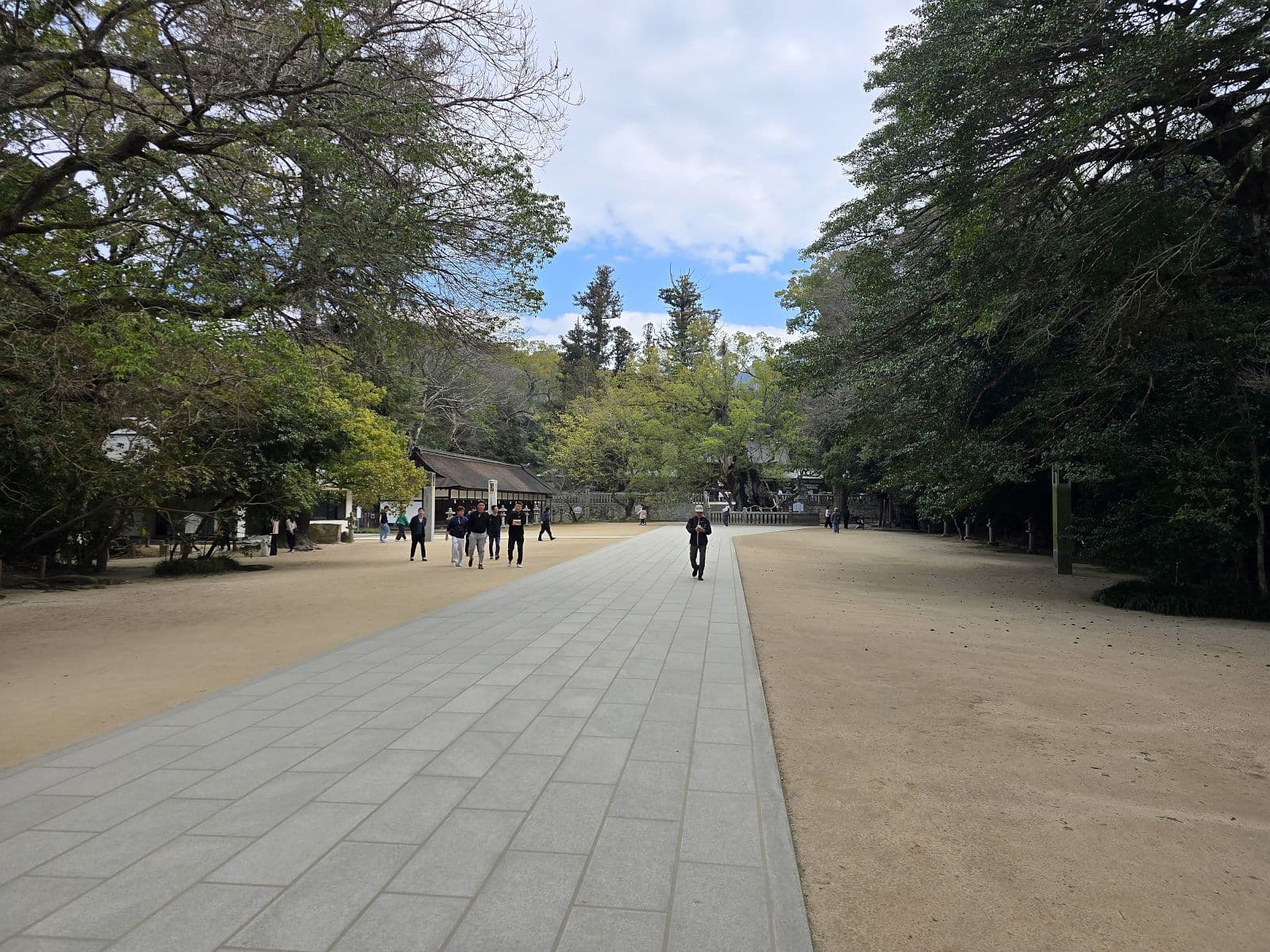
The moment you step onto the approach, the air feels heavier than at a typical tourist site. Old camphor trees arch overhead, and sunlight filters through thin gaps in the leaves. You can feel in your body why this shrine sits at the heart of Omishima, the "island of the gods."
What is Oyamazumi Shrine? Head of 10,000 shrines on Omishima, the island of the gods
The deity of Oyamazumi Shrine is Oyamazumi-no-Kami. With three characters, god of the mountains, god of the sea and god of war, he has long been worshipped by people of every kind: those who live in the mountains, fishermen working at sea and warriors on the battlefield.
It is the head shrine of more than 10,000 Yamazumi and Mishima shrines across Japan, with a history that goes back to the age of myth. Omishima floats roughly in the middle of the Shimanami Kaido, about 60 km from Onomichi, and the whole island is said to be sacred ground. Just stepping into the grounds, you feel a stillness and dignity unlike other sights.
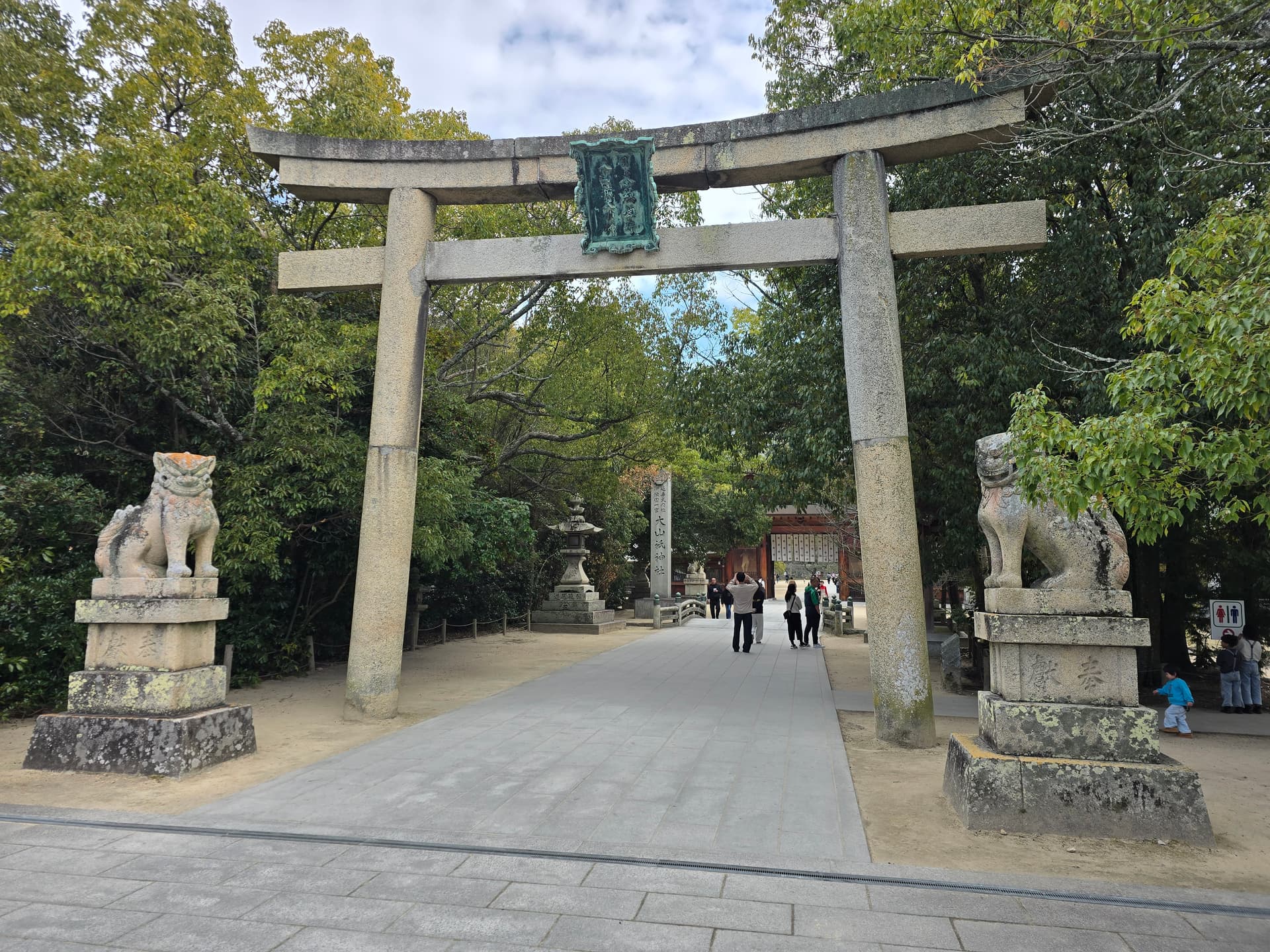
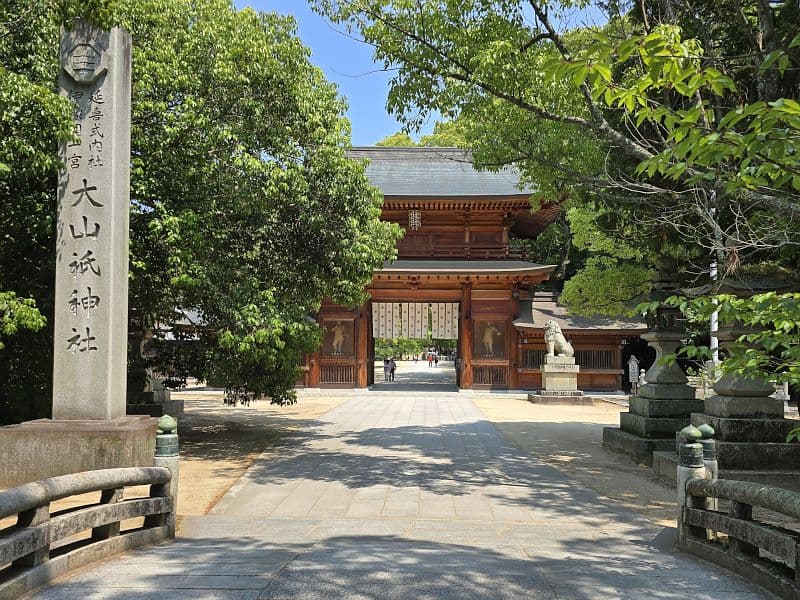
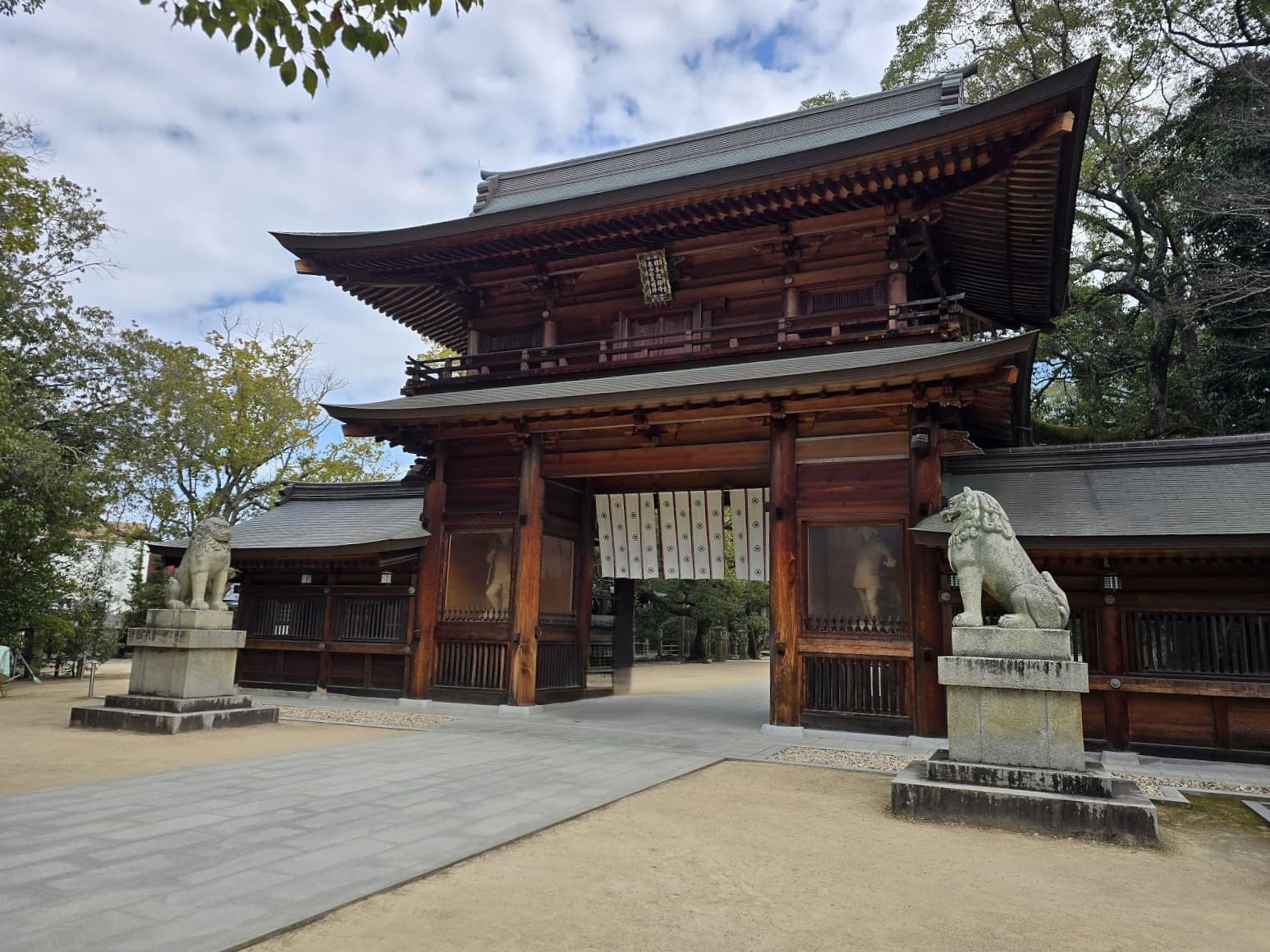
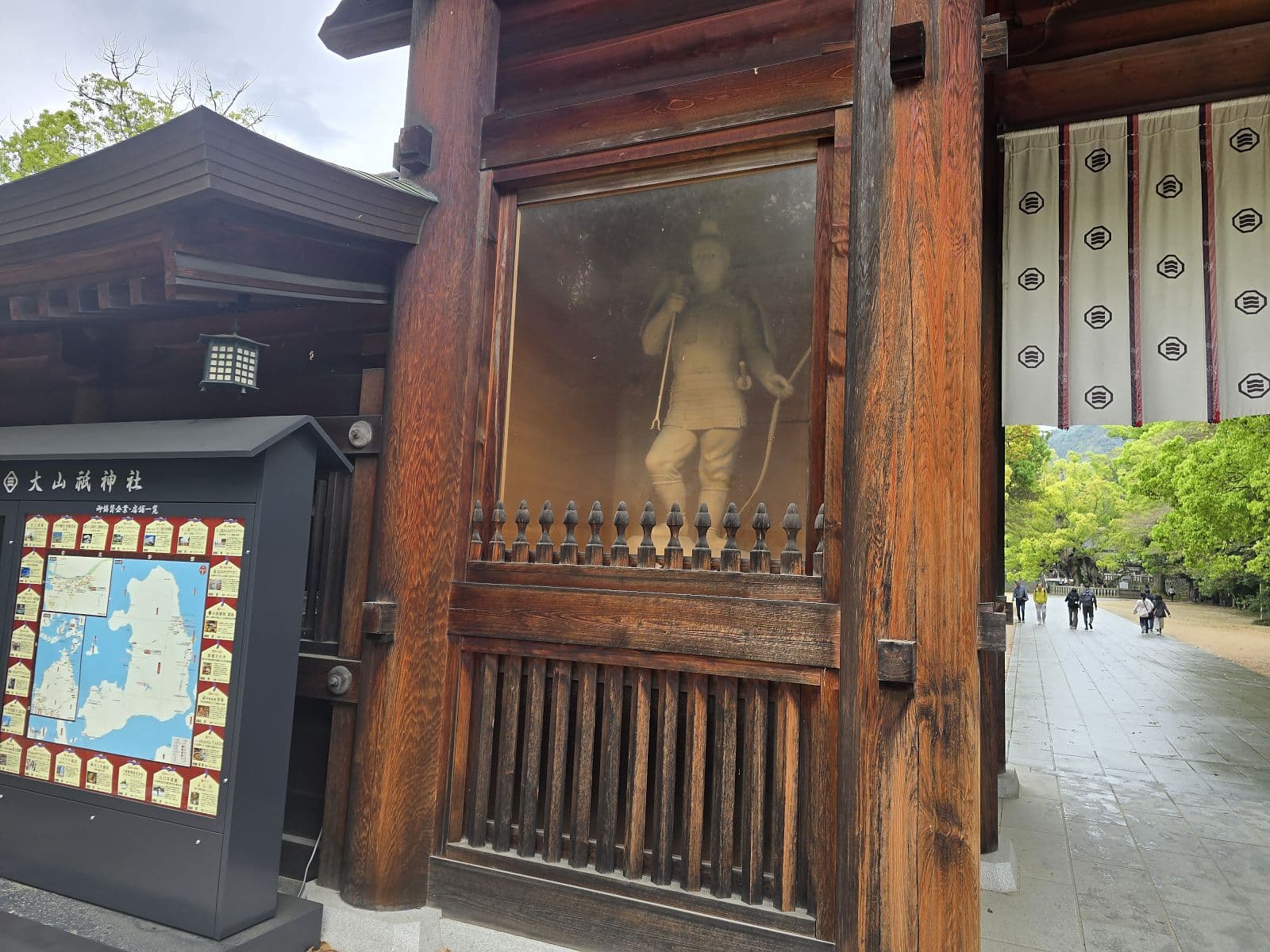
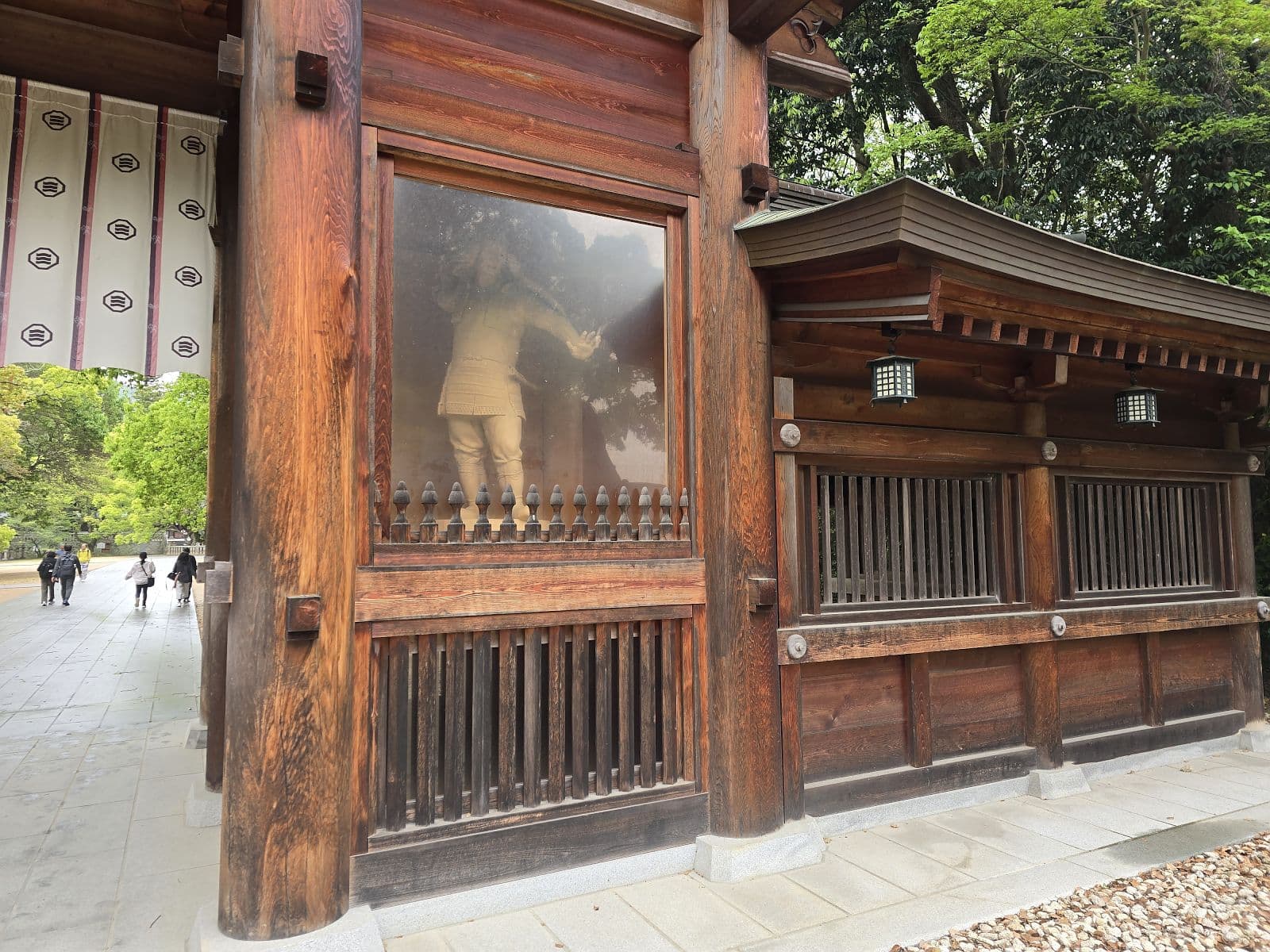
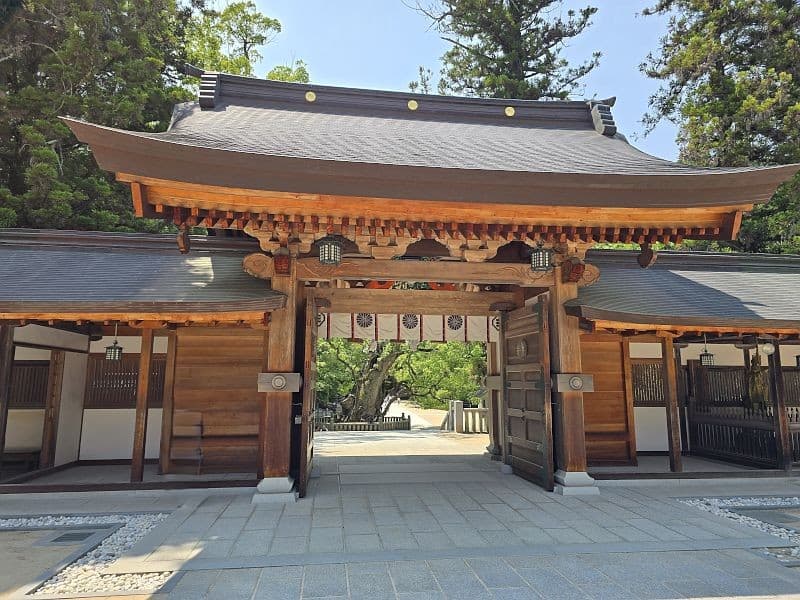
Between the pillars of the main gate, wooden statues of armored warriors are displayed in glass cases. Even before you enter the grounds, they show you that this is a shrine to the god of war.
How many shrines is Oyamazumi the head of? Its link with Yamazumi and Mishima shrines
Oyamazumi Shrine is the head shrine of more than 10,000 Yamazumi and Mishima shrines across Japan. A head shrine (sohonsha) is the top of a group of shrines that worship the same deity, and all Yamazumi and Mishima shrines around Japan trace their origin to Oyamazumi Shrine.
Shrines to Oyamazumi-no-Kami go by several names, such as Yamazumi Jinja, Mishima Jinja (written two ways) and others. They are found all over Japan, including Ehime, Hiroshima and Shizuoka.
Why is a shrine on Omishima, a small island in the Seto Inland Sea, the head of 10,000 shrines? The answer lies in its long history. Oyamazumi-no-Kami appears in Japan's oldest chronicles, the Kojiki and Nihon Shoki, and in ancient times, when sea travel was the main way to get around, Omishima, at a key point in the Inland Sea, served as a center of worship. The whole island is called the "island of the gods," and Oyamazumi Shrine has always been at its core.
Oyamazumi Shrine's sacred tree: the overwhelming presence of a 2,600-year-old camphor
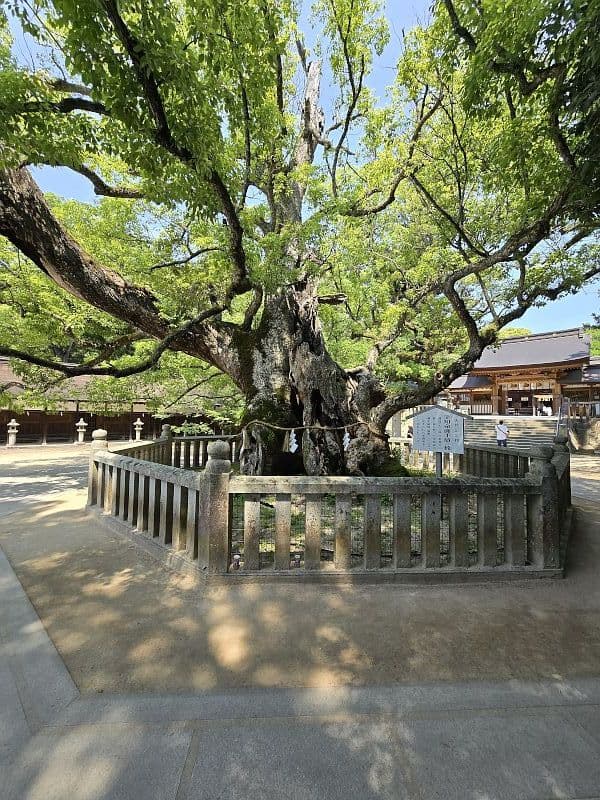
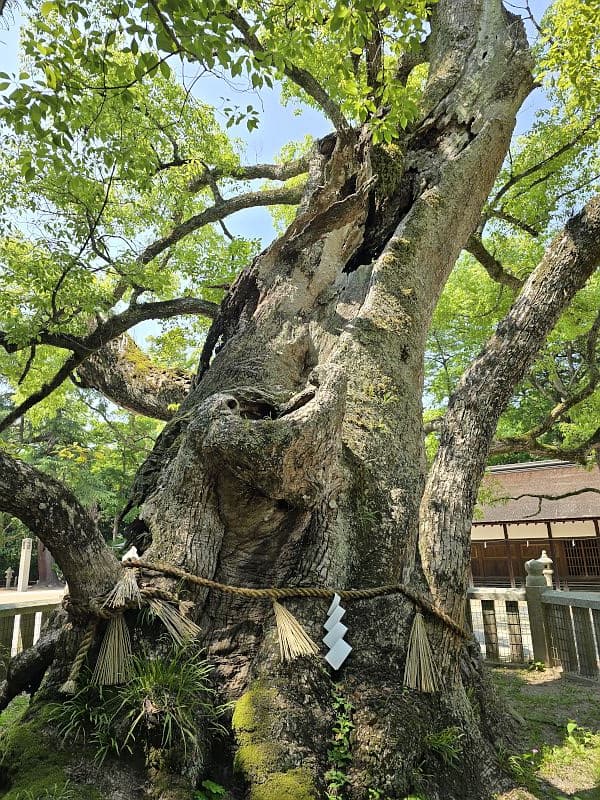
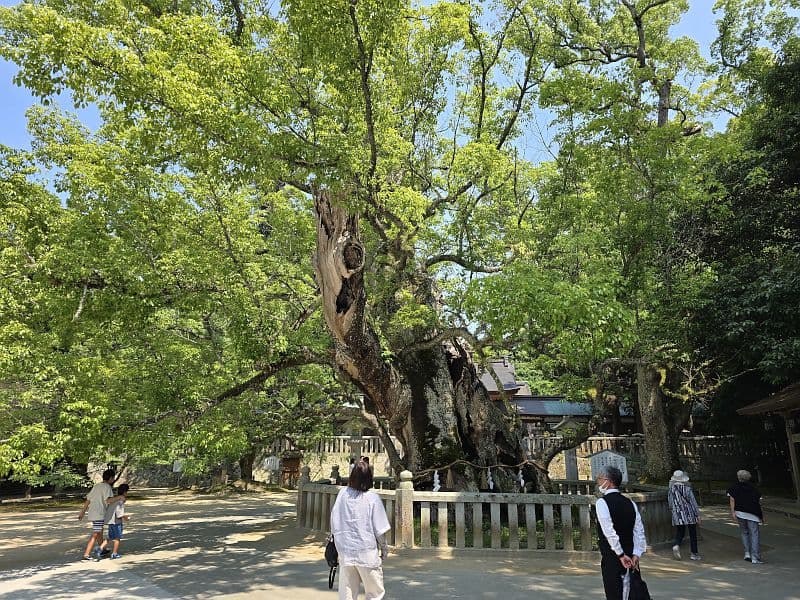
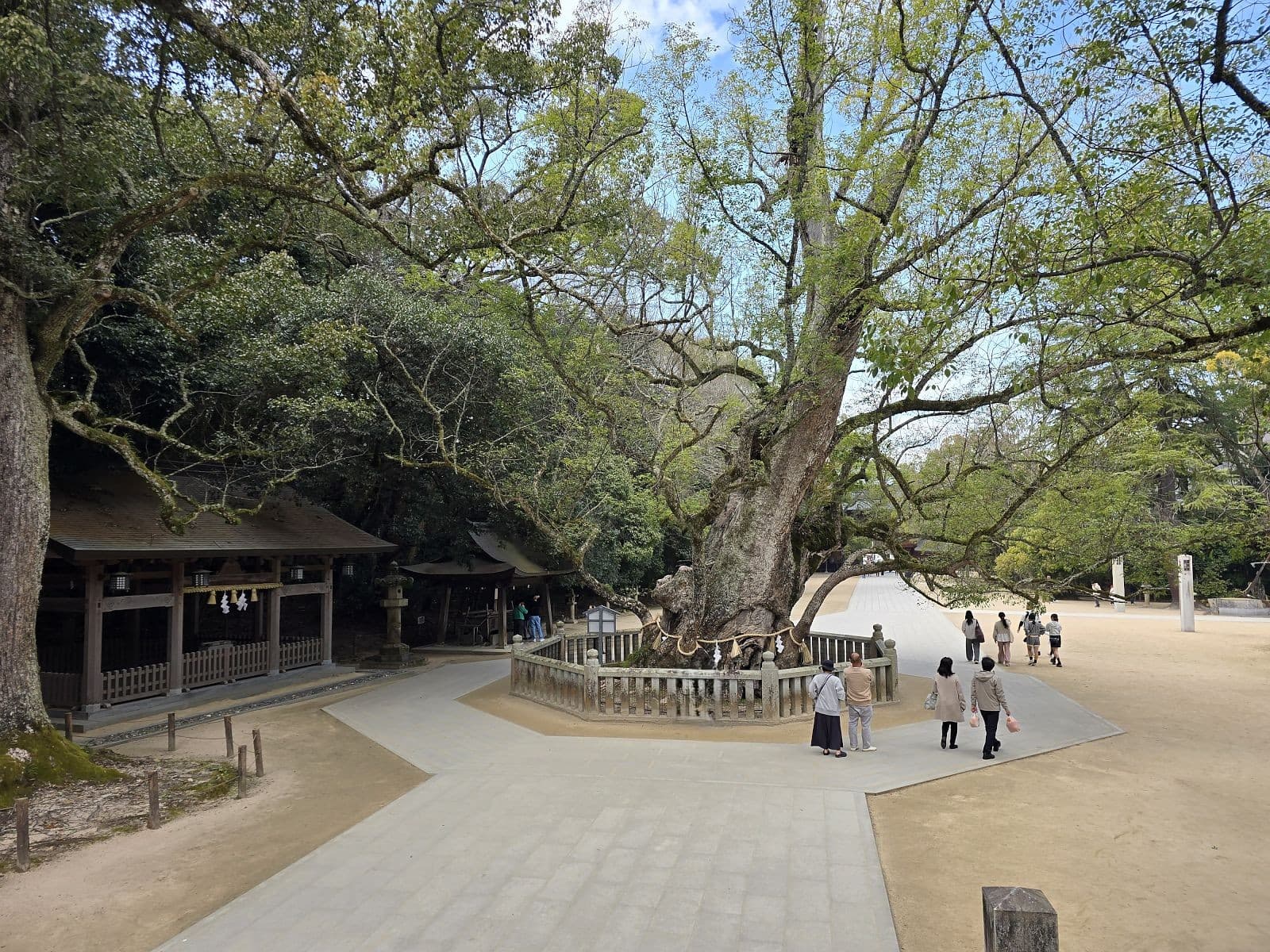
What leaves the strongest impression in the grounds is the sacred camphor tree, a designated natural monument. Called the camphor planted by Ochi-no-Mikoto, it is said to be 2,600 years old. Seeing a tree that has lived this long, your body tells you this is no ordinary place before you even read the sign.
The sacred rope around the trunk, roots spreading across the ground, a crown so wide it blocks out the sky: 2,600 years is hard to grasp as a number. Standing in front of this tree changes that. The weight of the fact that it has stood here since Japan's prehistoric Jomon period comes across as a feeling rather than words.
That overwhelming natural presence is probably why people describe it as a place of spiritual power. There is a restricted area around the base for its protection, so follow the signs when you look at it.
Oyamazumi Shrine blessings: protection in war, mountains and sea, and matchmaking
Oyamazumi Shrine offers many blessings. The main ones, lasting fortune in war, safe voyages and matchmaking, come from the three characters of its deity Oyamazumi-no-Kami (god of mountains, sea and war).
Historically, it is known as the shrine where warriors such as Minamoto no Yoshitsune and Minamoto no Yoritomo offered armor and swords when praying for victory. Today, continuing that tradition, athletes and martial artists come to pray for victory. Many professional athletes and school sports teams visit as groups.
The deity's daughter is Konohanasakuya-hime, and people from all over Japan also come seeking her blessing for good relationships.
Many people say things like "I felt strangely calm once I entered the grounds" or "I was lost for words in front of the sacred tree." This comes largely from the weight of more than 2,600 years of history and the atmosphere of the 2,600-year-old tree. That is also why more people are visiting it as a power spot, looking for a feeling they cannot explain.
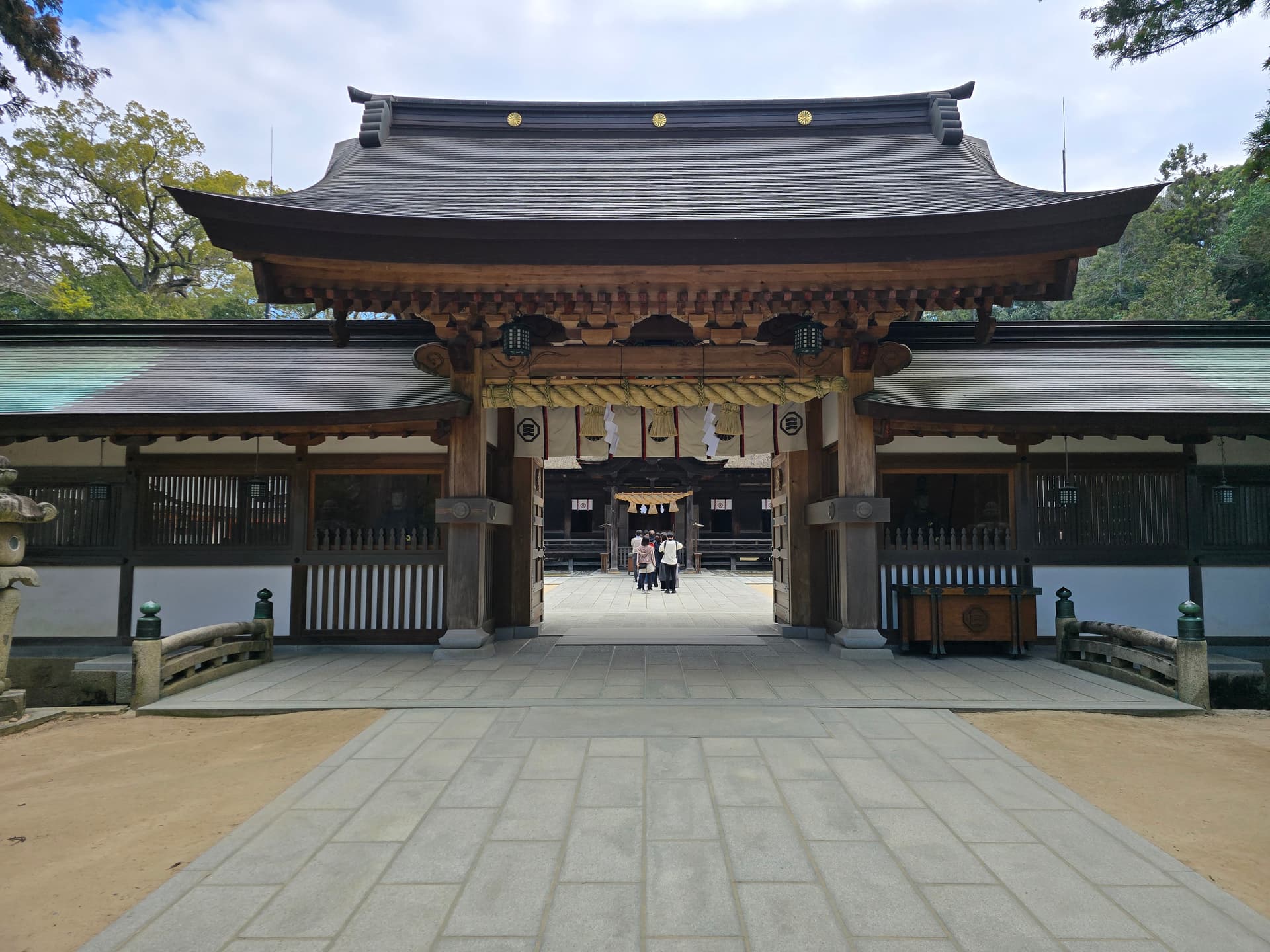
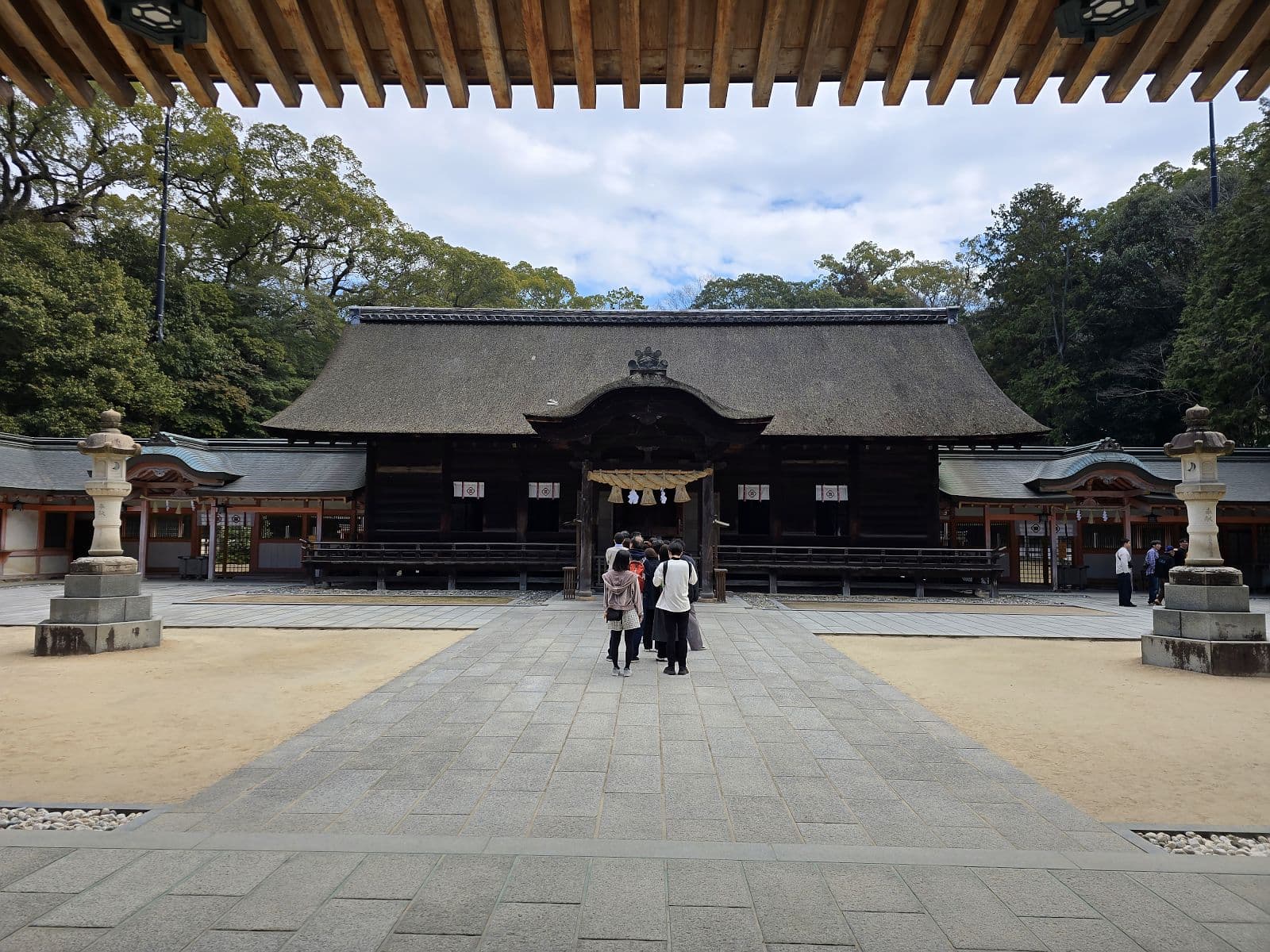
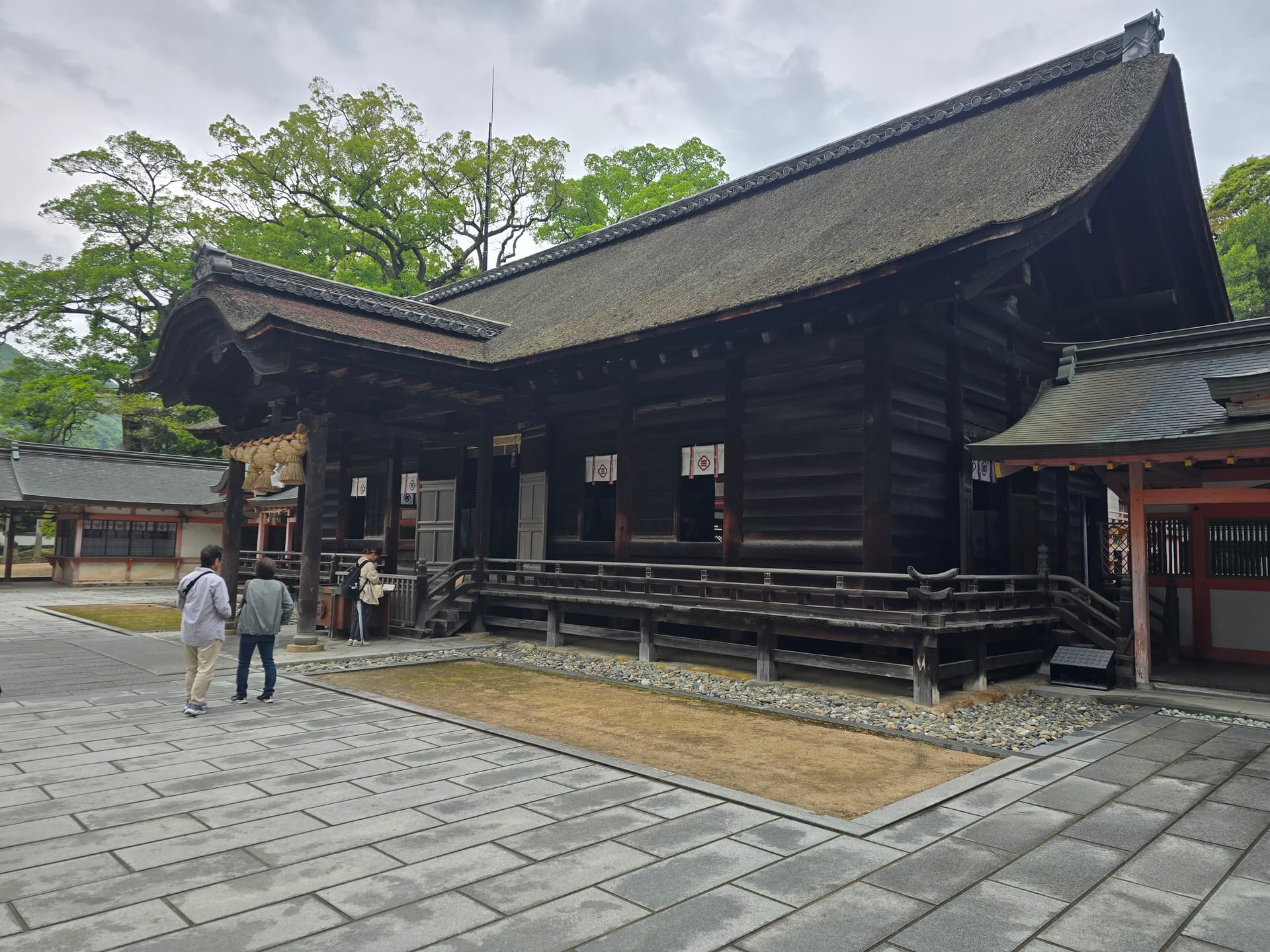
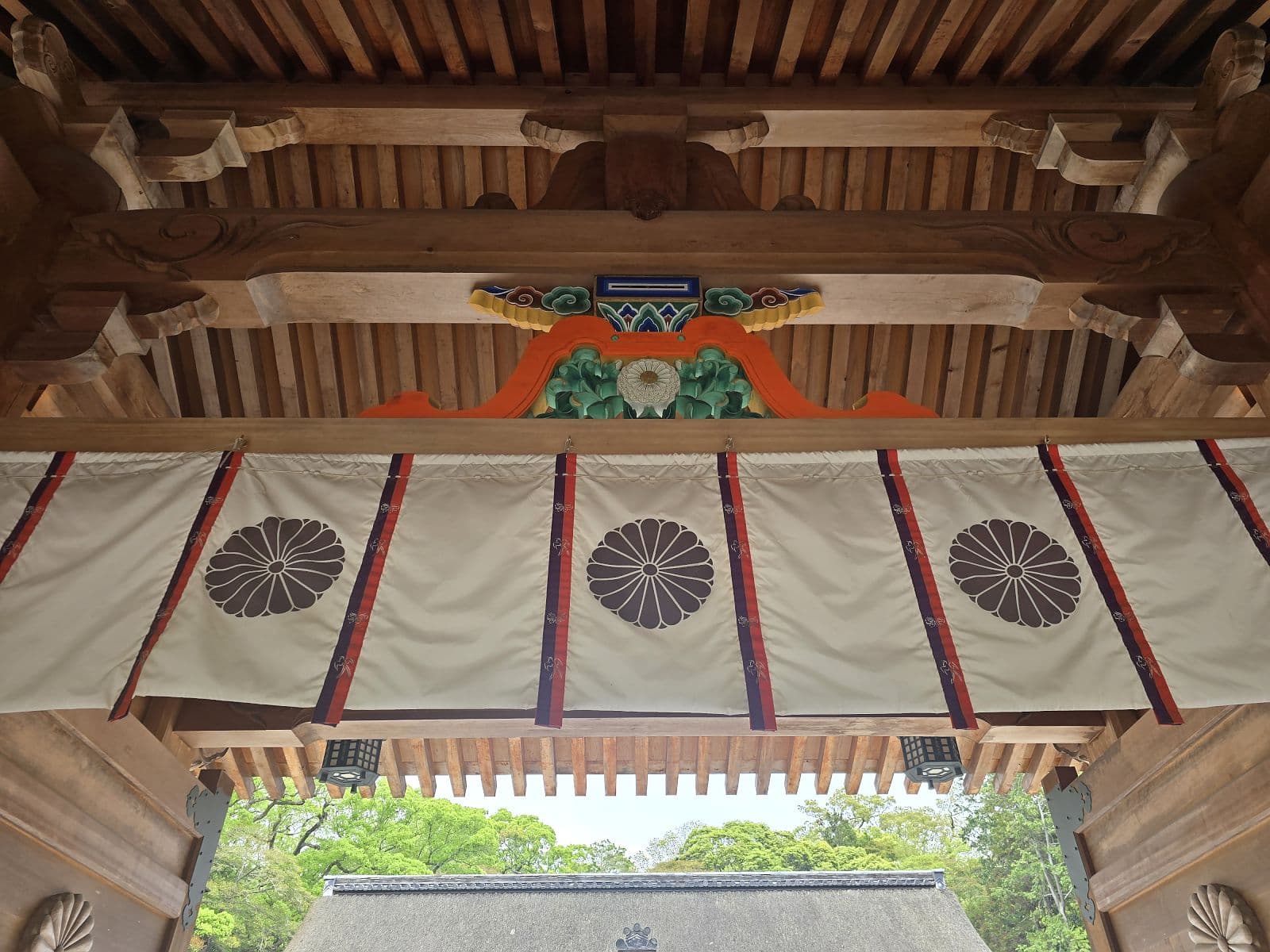
Look up inside the inner gate and you see fine carved decoration in vermilion, blue and green, with white curtains bearing the family crest. Turn around from the inside and the approach and torii line up straight in front of you. Pause here for a moment on your way to the worship hall.
Oyamazumi Shrine amulets and goshuin
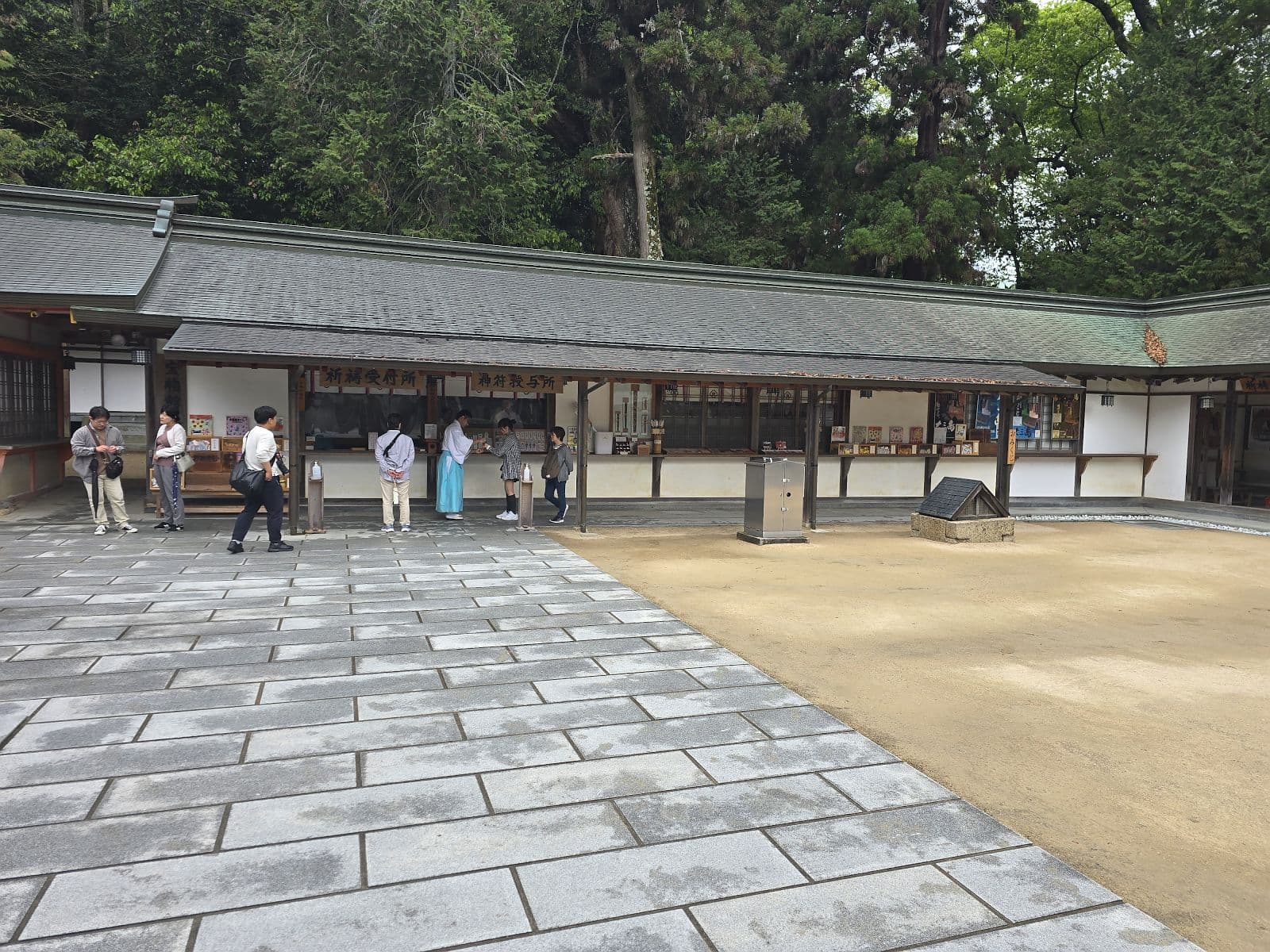
The shrine office offers kachi-mamori (victory amulets), linked to the god's role as protector of warriors, and several other amulets, for good relationships, family safety and more. They are available roughly 9:00–17:00.
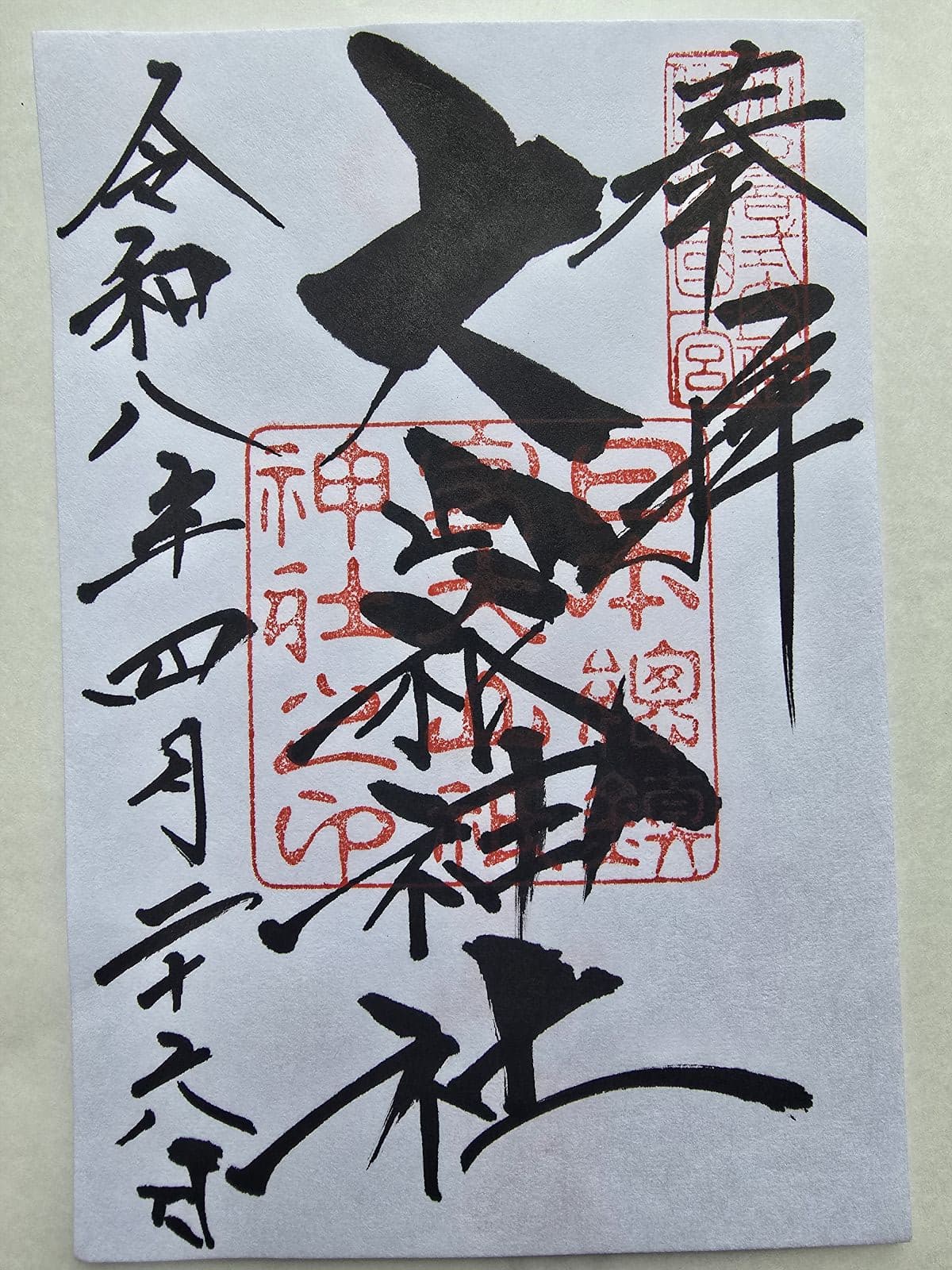
Goshuin (shrine seals) are given at the shrine office as pre-written sheets (500 yen; checked April 2026).
Oyamazumi Shrine Treasure Hall: about 80% of Japan's designated armor and weapons
After praying at the worship hall, if you have time, be sure to visit the Treasure Hall. About 80% of the armor and weapons designated as Japan's national treasures and Important Cultural Properties are kept at this shrine, a figure that is hard to believe until you see it.
Armor, swords and weapons offered by generations of warriors, including Minamoto no Yoshitsune and Minamoto no Yoritomo, to pray for fortune in battle are preserved and displayed in large numbers, and seeing them properly takes more than an hour. Admission is 1,000 yen for adults, 500 yen for high school students and 400 yen for elementary and junior high students (for reference; check the official website for the latest).
A highlight is the domaru armor said to have been worn by Tsuruhime, a female warrior. As a real object showing that a woman actually used armor, it has great historical value, a fragment of history not covered in textbooks. If you are interested in armor and swords, be sure to allow time for the Treasure Hall.
Best time to visit Oyamazumi Shrine and crowds
We most recommend visiting before 9:00. The grounds are open 24 hours, so you can pray before the shrine office and Treasure Hall open. Early in the morning there are almost no visitors, and you can have the sacred tree to yourself. The morning light filtering onto the approach is also ideal for photos.
Midday (11:00–14:00) is when tour buses tend to arrive, and people crowd the approach and the front of the worship hall. If you want photos in front of the sacred tree, avoid this time or wait until the groups leave.
When we visited on April 26, 2026 (a rainy weekday just before Golden Week), only a few people were lined up at the office and the grounds were quiet.
Busy periods:
- Golden Week (late April to early May)
- The first three days of the New Year
- Peak cycling season (weekends in April–May and September–October)
Quieter periods:
- Weekday mornings (local worshippers only)
- The rainy season (June)
- Winter weekdays
Getting to Oyamazumi Shrine, parking and information for cyclists
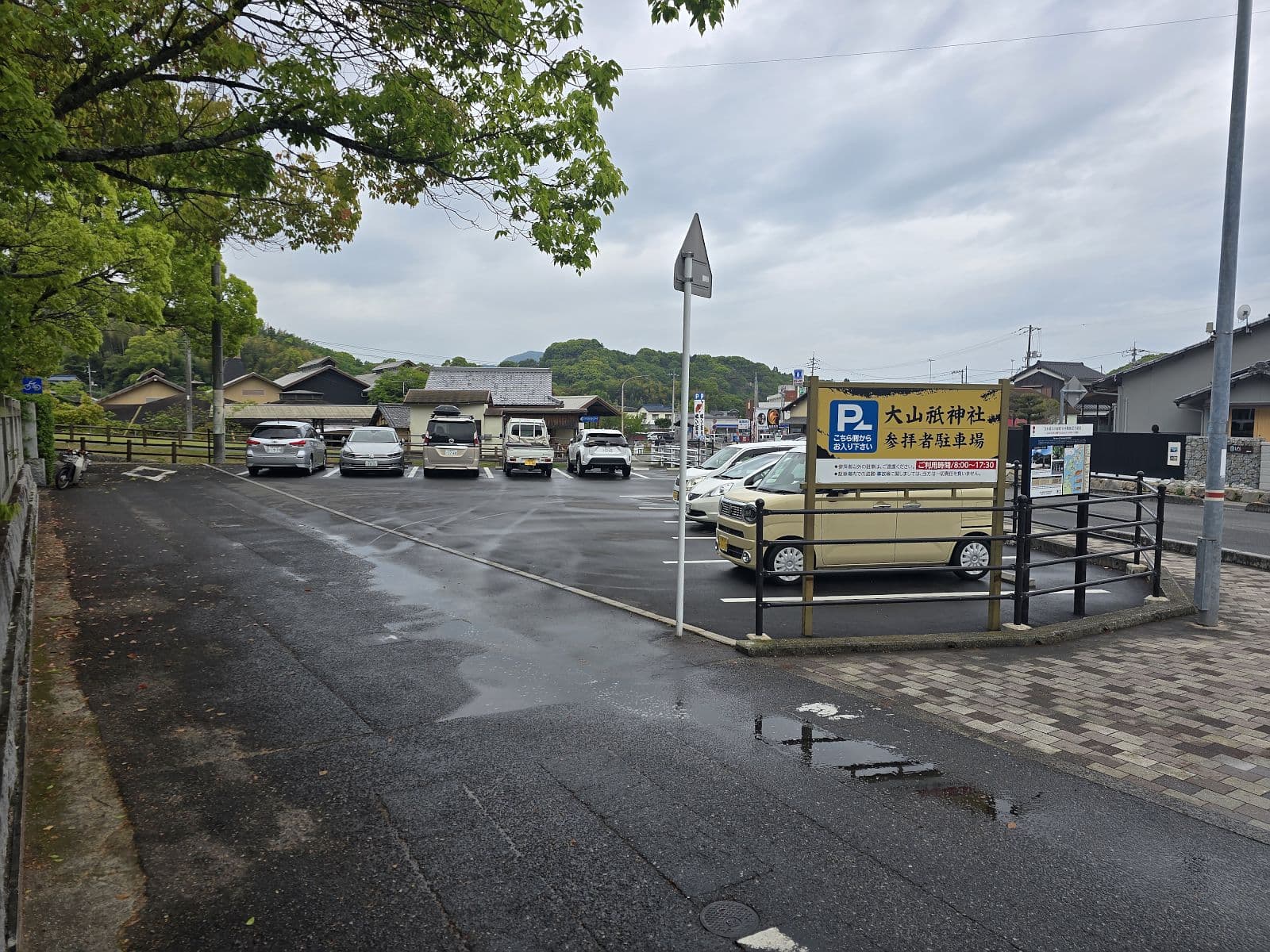
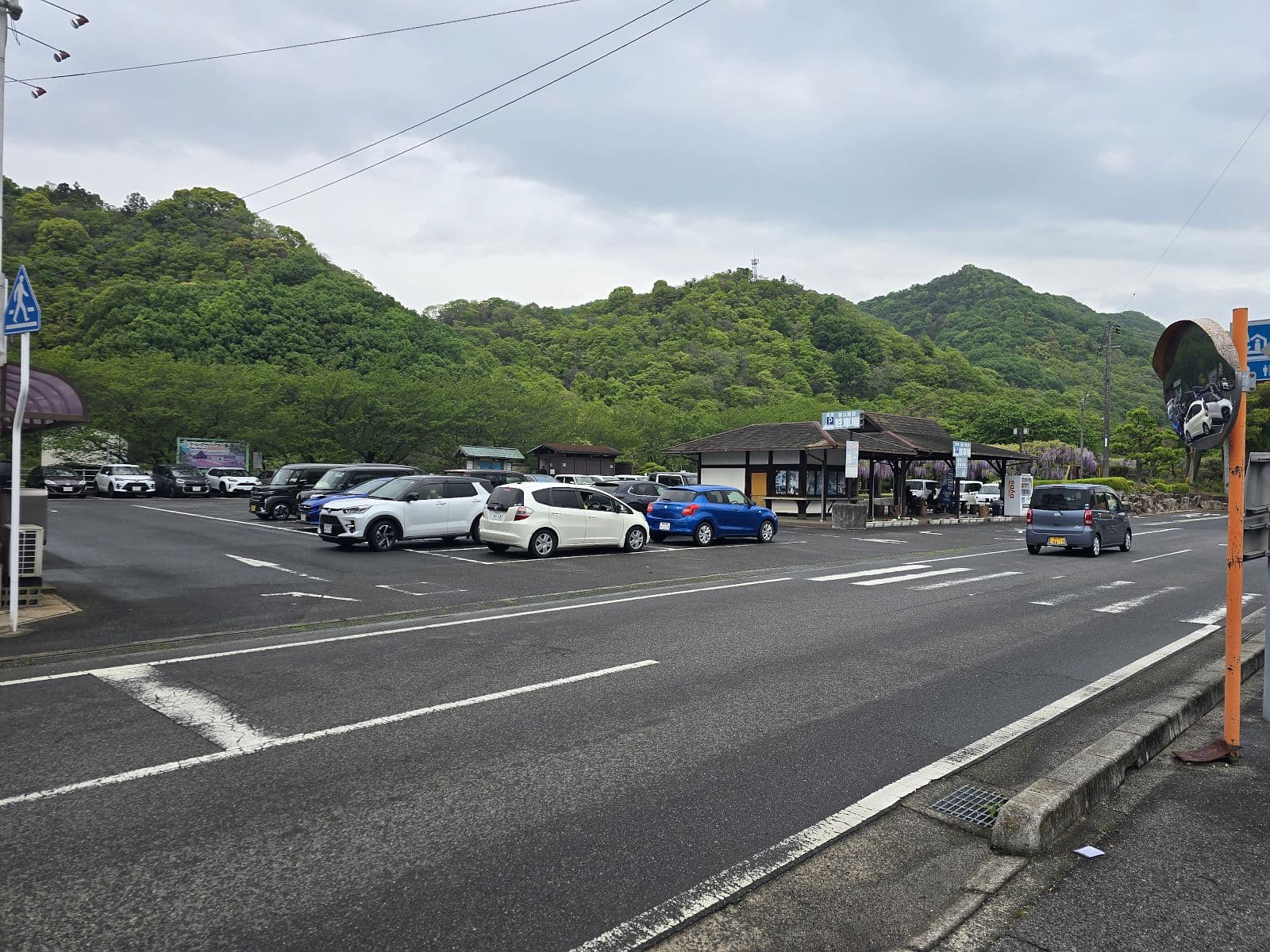
By car About 7 km, roughly 10 minutes, from Omishima IC on the Shimanami Kaido.
There are two parking areas.
- In front of the shrine (free): about 10–13 spaces right beside the main gate and torii. It is the closest, but has few spaces and fills quickly at busy times.
- Town-run Fuji Park parking (within walking distance): about 50 spaces, a few minutes on foot from the shrine. At busy times such as Golden Week and New Year, this is the realistic option.
By bike Follow the blue line of the Shimanami Kaido to reach the Omishima IC area. From there you need to ride about 7 km across the island to the shrine, including some hills, so keep some energy in reserve. There is bike parking near the grounds. You can enter the grounds with your bags, but check whether you can take them into the Treasure Hall.
Since it is near the middle of the Shimanami Kaido, a natural pace is to stop in the morning if you start from Onomichi, or in the afternoon if you start from Imabari. If you visit the Treasure Hall, allow 1.5–2 hours. See the Shimanami Kaido cycling guide.
By public transport Public transport to Omishima is mainly buses and ferries, but services are limited. Including getting around the island, a rental car or rental bike is the realistic option.
STAY
Places to stay on Omishima


Spots to visit with Oyamazumi Shrine
Omishima is near the middle of the Shimanami Kaido, with several easy stops nearby.
- Tatara Shimanami Park: about 10 minutes by car from the shrine. A leading photo spot on the Shimanami Kaido, with a close view of the Tatara Bridge.
- Kosanji Temple: a white temple on Ikuchijima, next to Omishima. Combined with Oyamazumi Shrine, it makes a full-day trip.
- Murakami Kaizoku Museum: learn the history of the Murakami navy, closely tied to Oyamazumi Shrine. Ideal for understanding the link between the shrine and the sea clans.
Oyamazumi Shrine FAQ
Q. How many shrines is Oyamazumi Shrine the head of? It is the head shrine of more than 10,000 Yamazumi and Mishima shrines across Japan. It stands at the top of the shrines that worship the same deity, Oyamazumi-no-Kami, and is considered the origin of Yamazumi and Mishima shrines throughout the country.
Q. How do you read the name? It is read "Oyamazumi Jinja." It is sometimes written with a slightly different character for "zumi" (祇 or 祗); both refer to the same shrine.
Q. Should I visit the Treasure Hall along with the shrine? If you are interested in armor, helmets or Japanese swords, it is a must. There is a lot on display and it takes more than an hour, so allow plenty of time. Just praying at the shrine takes 15–20 minutes.
Q. How many kinds of goshuin are there? As of April 2026, they are given as pre-written sheets (500 yen). Types and designs may change, so check at the office.
Q. Is there parking? There are about 10–13 free spaces in front of the shrine and the town-run Fuji Park parking (about 50 spaces) a few minutes' walk away. At busy times like Golden Week and New Year, the town lot is the realistic option.
Q. Can I enter the grounds at any time? The grounds are open 24 hours. The shrine office and Treasure Hall are open 8:30–17:00 (closing 16:30 from November to March).
Q. Can I stop by while cycling the Shimanami Kaido? Yes. However, you need to ride about 7 km across the island from near Omishima IC. Including the Treasure Hall, it takes 1.5–2 hours, so plan your schedule with time to spare.
Basic information
Photo gallery
Tap a photo to enlarge it (swipe or use ← → keys).
RELATED