Access
Ferry from Onomichi Port to Setoda Port on Ikuchijima (about 40 minutes). About 10 minutes on foot from Setoda Port. By bike, ride across the island after arriving on Ikuchijima.
Hours
9:00–17:00 (last entry 16:30). Open every day.
Address
広島県尾道市瀬戸田町瀬戸田553-2
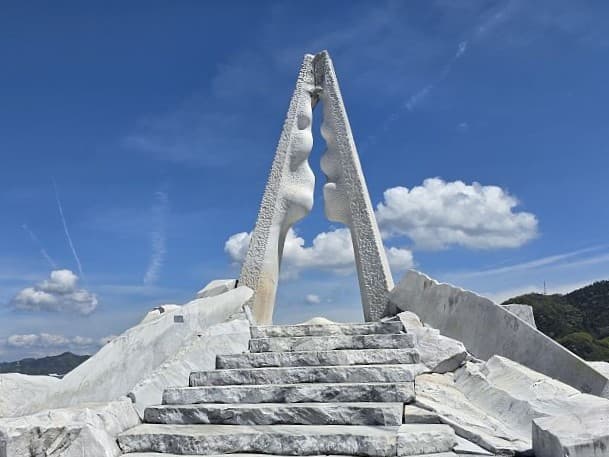
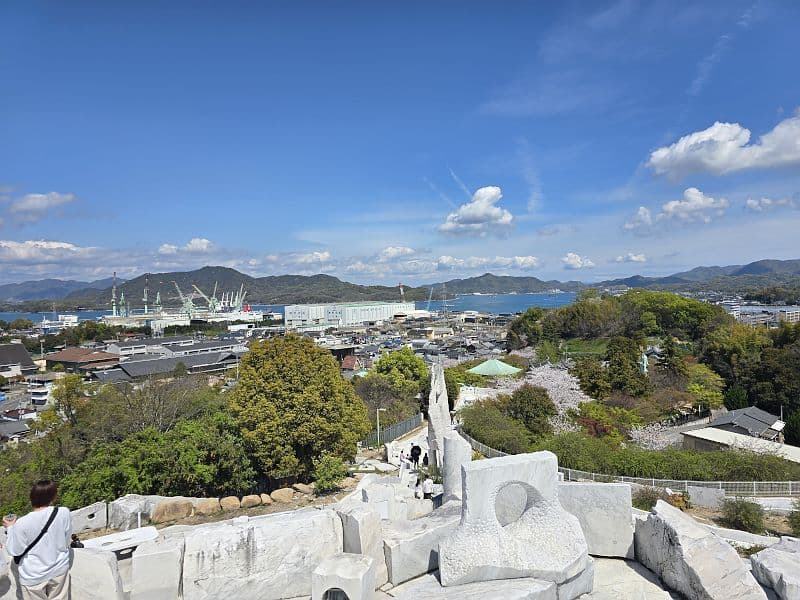
Kosanji is a Buddhist temple built in the Showa era by businessman Kosanji Kozo in gratitude to his mother. More than 15 buildings modeled on national treasures and Important Cultural Properties stand in its grounds. At the back of the grounds, the marble garden Hill of Hope (Miraishin no Oka), a white hill dotted with works by sculptor Kazuto Kuetani, draws attention from Japan and abroad as one of the most photogenic spots on the Shimanami Kaido.
GUIDE
Kosanji Temple: Highlights and How to Visit
What to see and how to get around, with photos
What is Kosanji? A grand Showa-era temple born of a son's love for his mother
Kosanji is the most impressive temple on Ikuchijima on the Shimanami Kaido. Admission of 1,800 yen covers the grounds, the Hill of Hope and the Kongo-kan museum, and a visit takes about 1 to 1.5 hours.
It is a Buddhist temple built over about 30 years starting in 1936. Its founder was Osaka businessman Nishiyama Mankichi (who later changed his name to Kosanji Kozo). He spent his own fortune building it in gratitude to his mother, Takako, and to pray for her. Sometimes called "the mother's temple," it has more than 15 buildings modeled on national treasures and Important Cultural Properties from all over Japan, on a scale beyond what you might imagine.
Kosanji highlights and how to walk around
Kosanji entrance: through the main gate
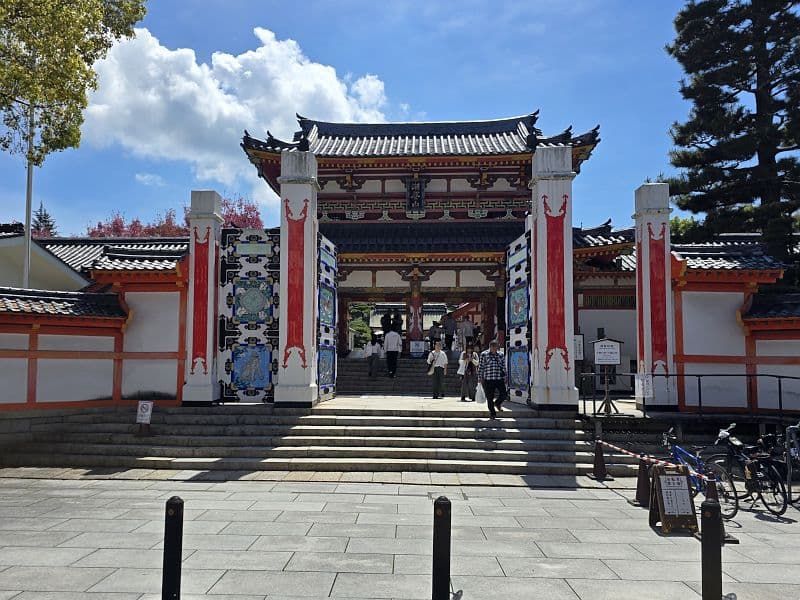
About 10 minutes on foot north of Setoda Port, the brightly colored entrance of Kosanji suddenly appears beside the road.
At the entrance stands the main gate (Sanmon). It is a Registered Tangible Cultural Property, built in the same style as a gate of the Shishinden at the Kyoto Imperial Palace, but made of steel rather than wood and painted vermilion. Dragons, waves and komainu are carved in relief on the doors, so finely made that you might mistake it for wood.
The density of vermilion and carving sets it apart from what most people picture as a Japanese temple. Its colors feel closer to temples overseas, and on a first visit you may briefly wonder whether you are really in Japan.
Beyond the gate, the approach leads inward with buildings on both sides. The grounds are larger than you expect; walking to the Hill of Hope at the back takes 10–15 minutes.
Kosanji Chumon: an inner gate recreating Asuka-period entasis
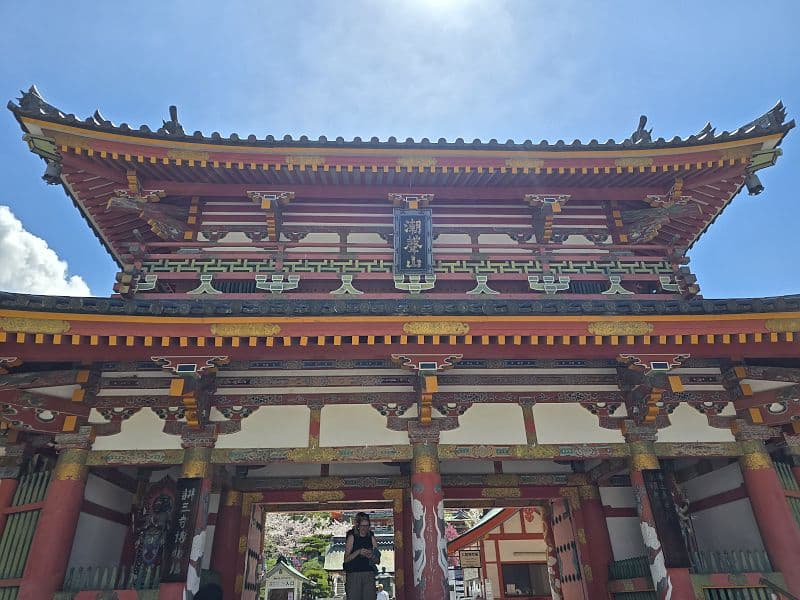
Right after the main gate you see the Chumon (inner gate). It is a Registered Tangible Cultural Property modeled on the gate of the Western Precinct of Horyuji in Nara.
Entasis, where round pillars narrow at top and bottom and swell slightly in the middle, is an Asuka-period technique that gives stability and beauty. The gate fully recreates the Asuka style down to the details: there is no staircase to the upper floor, since the design pursues only exterior beauty, and the upper railings have swastika-pattern latticework. The relief carvings on its pillars are considered the model for the building decoration at Kosanji after the war.
The architecture comes from the Asuka period, but the colors are so distinctive that it is hard to tell whether they follow the Asuka original or Kosanji's own interpretation.
Kosanji ticket office: admission fees
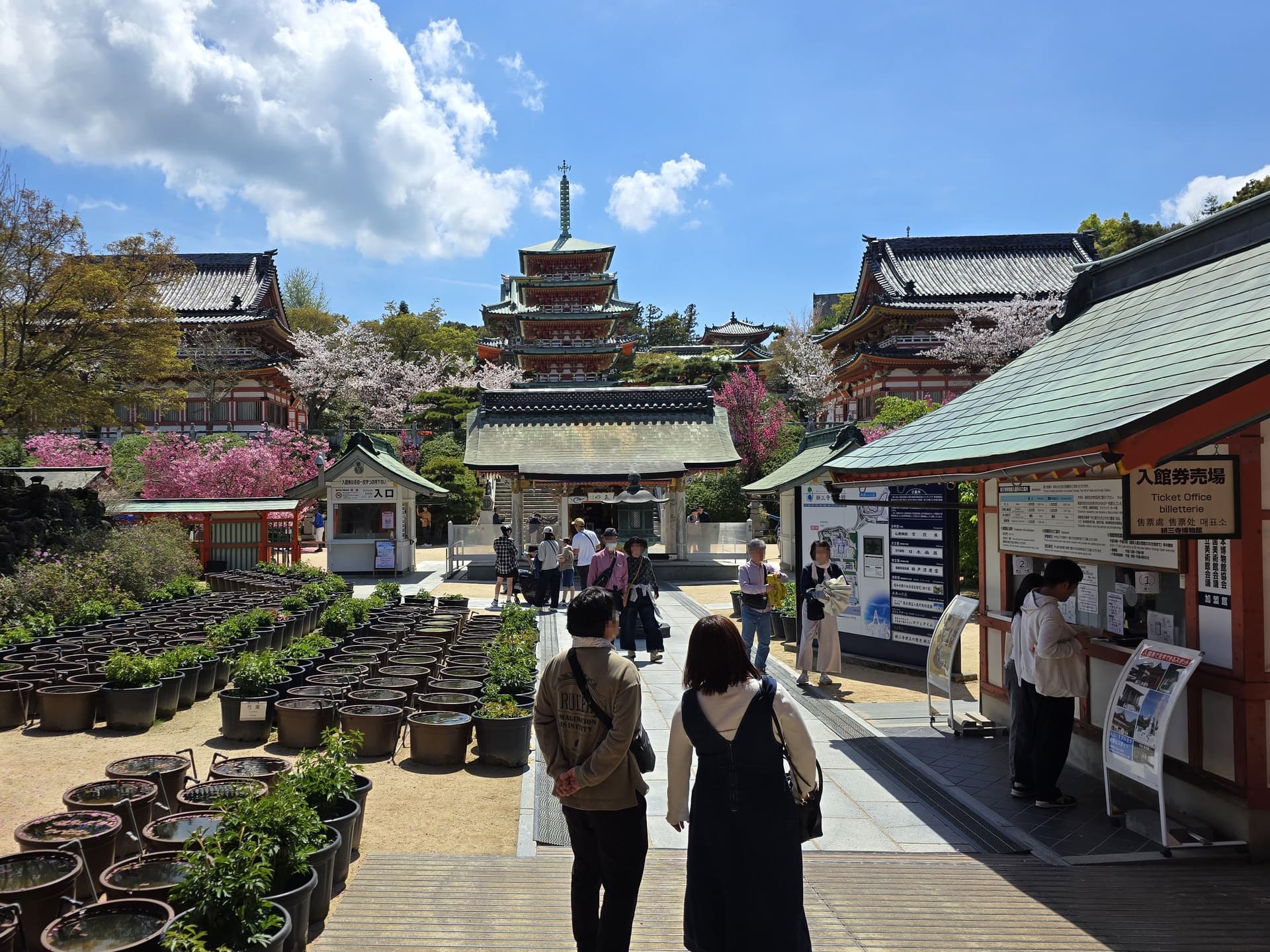
Admission (including the grounds, the Hill of Hope and the Kongo-kan)
| Category | Individual | Group (20+) |
|---|---|---|
| Adults | 1,800 yen | 1,600 yen |
| University and high school students | 1,200 yen | 1,000 yen |
| Junior high and younger | Free | Free |
| Onomichi residents | 1,000 yen | ─ |
Kosanji five-story pagoda (Daijibo-to): modeled on Muroji in Nara
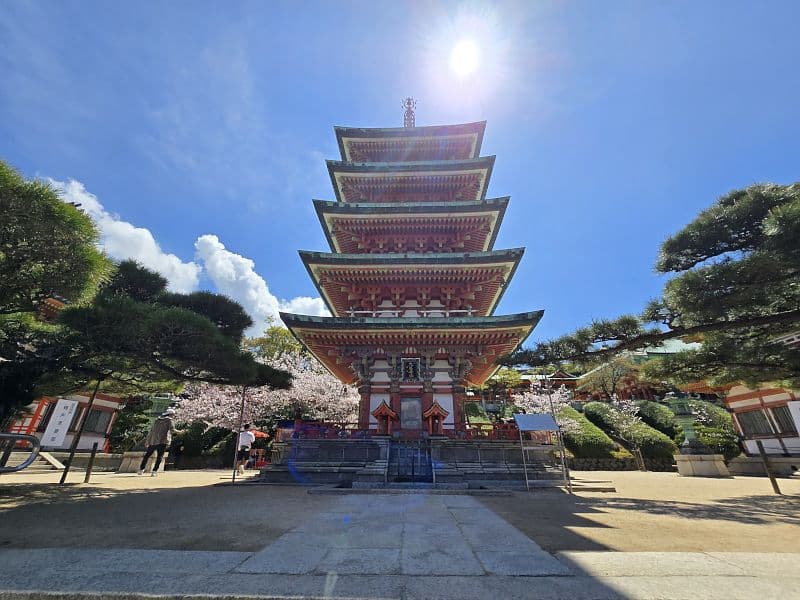
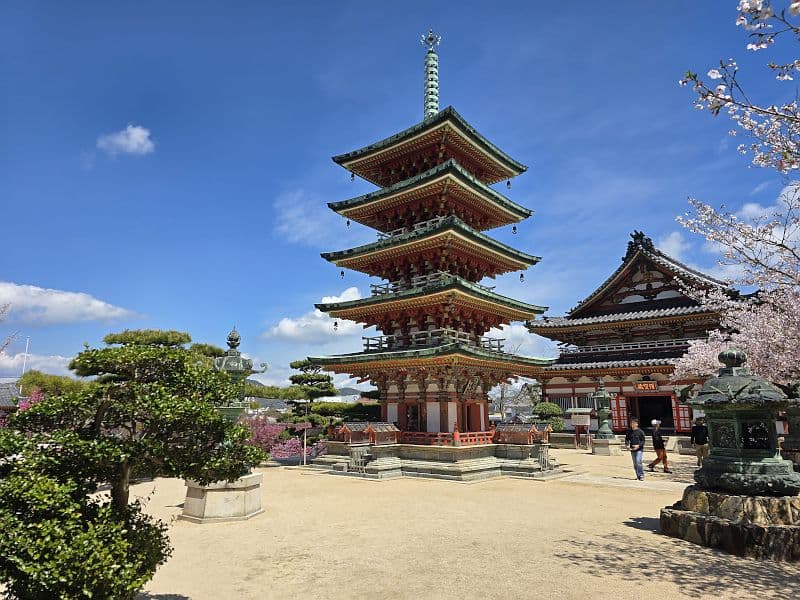
The five-story pagoda at the center of the middle level is called Daijibo-to. It is aligned in a straight line with the main hall and the Koyo Gate in the Shitennoji-style layout, making it the central building of the middle level.
It is modeled fairly faithfully on the five-story pagoda of Muroji in Nara (a national treasure). However, the railings of its base, the Buddhist reliefs on the first-story pillars and the brackets are painted with hosoge floral patterns, giving it Kosanji's own character. Inside, the central pillar is a steel pipe, a Showa-era technique devised by Kozo himself.
Kosanji Koyo Gate: more ornate than Nikko's Yomeimon
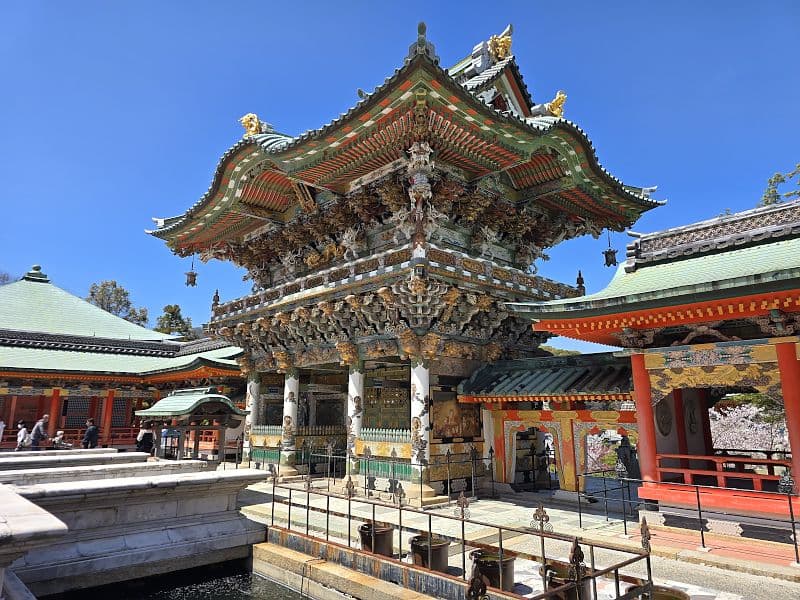
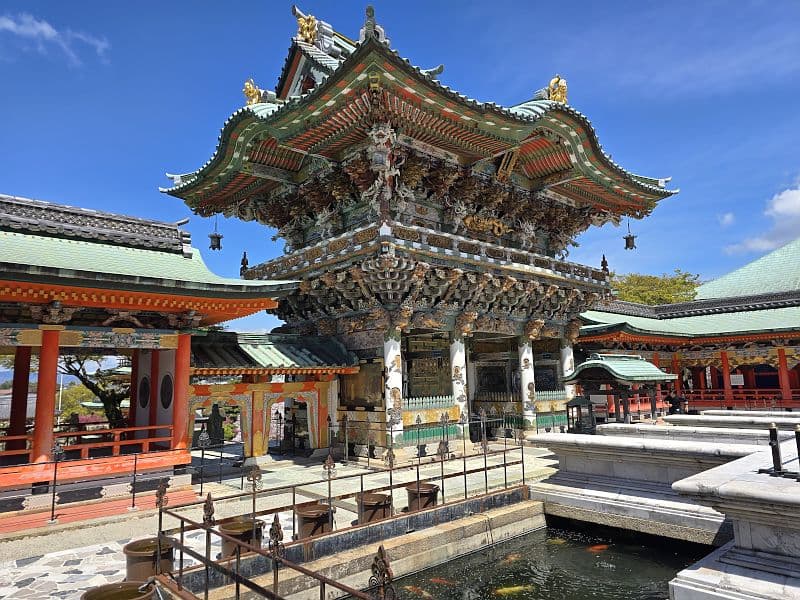
The original of the Koyo Gate is the Yomeimon of Nikko Toshogu. It is the only building at Kosanji made from measured drawings of the original, and its proportions match the Yomeimon.
In 1953, Kozo asked the Ministry of Education for the only set of Yomeimon drawings it held, obtained them and spent the next 10 years completing the gate.
The difference from the original is in the decoration. The lower pillars have reliefs of bodhisattvas descending to welcome the faithful, painted in gold and silver, and the brackets are painted with hosoge floral patterns in ungen gradated color. The density and splendor of the decoration even exceed the original Yomeimon. It would not be an exaggeration to call it one of the most ornate buildings in Japan.
Kosanji main hall: a Fujiwara-style hall modeled on the Byodoin Phoenix Hall
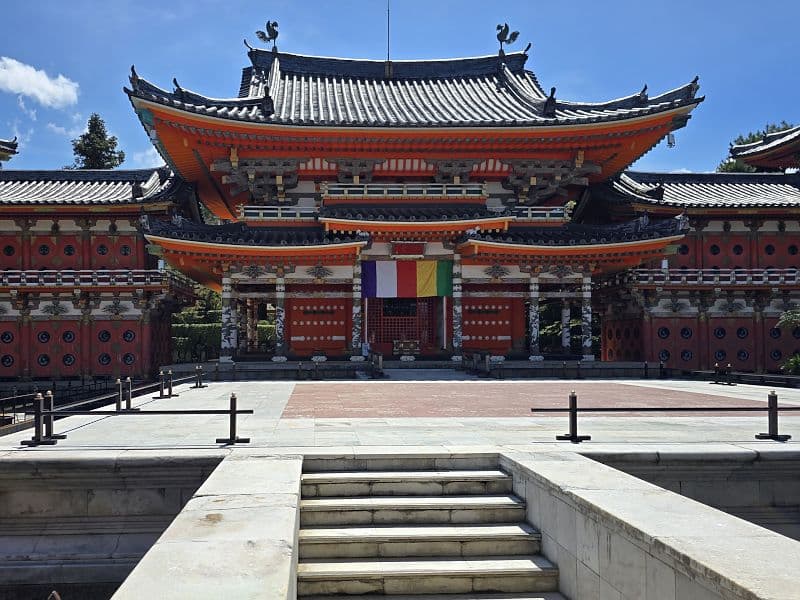
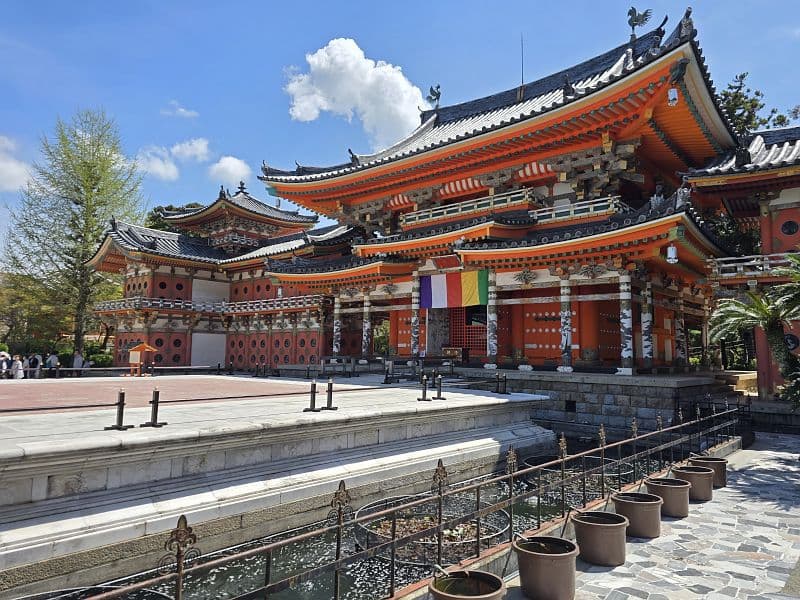
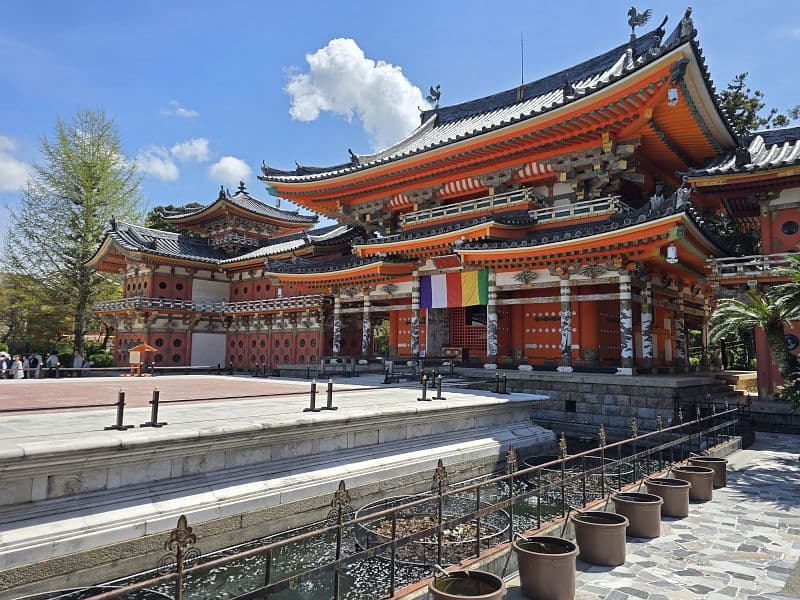
The main hall is a Registered Tangible Cultural Property modeled on the Phoenix Hall of Byodoin in Uji, Kyoto. Like the Phoenix Hall, it has a central hall, symmetrical wing corridors and a tail corridor behind.
Its biggest feature is how faithfully it adopts Fujiwara-period Buddhist architecture: hip-and-gable, gable, hip and lean-to roofs, and large chamfers on the bracket arms and rafters. The outer brackets are painted with hosoge arabesques in ungen gradated color, making it even more vivid than the Byodoin original.
In front of the main hall is a great ceremonial platform, about 8 ken (roughly 14.5 m) square, made entirely of white marble, with reliefs of auspicious flowers and sacred birds on its panels.
Kosanji Senbutsudo Jigokukyo: a 350 m underground cave with a thousand stone Buddhas
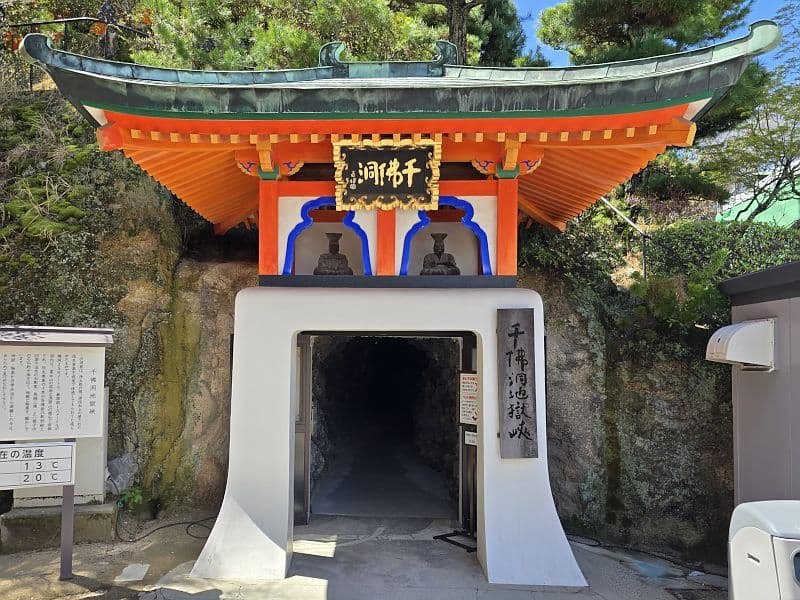
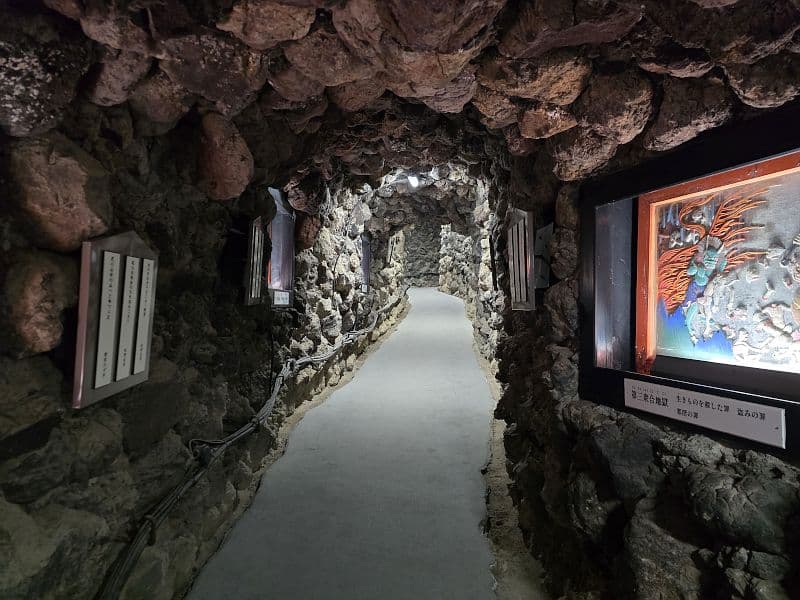
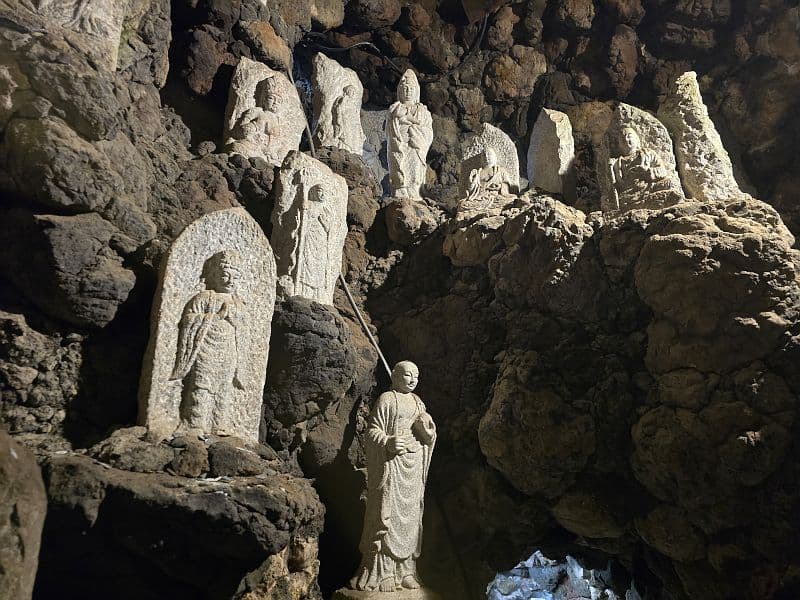
Senbutsudo Jigokukyo (Cave of a Thousand Buddhas and Gorge of Hell) is an underground cave begun in 1955 and completed in 1964. A tunnel about 15 m underground and 350 m long runs from beside the Shishinden on the west side of the main hall to near the great Guze Kannon statue.
The cave walls are made of Mt. Fuji lava and Mt. Asama volcanic rock set in reinforced concrete. Along the way are three chambers about 10 m high and tens of square meters in area, where a thousand stone Buddhist figures are enshrined. In the cave, where a waterfall flows, dozens of framed pictures of hell and paradise illustrating the monk Genshin's Ojoyoshu hang on the walls, letting you experience the Buddhist view of the world.
Kosanji Hill of Hope: a landscape of white marble
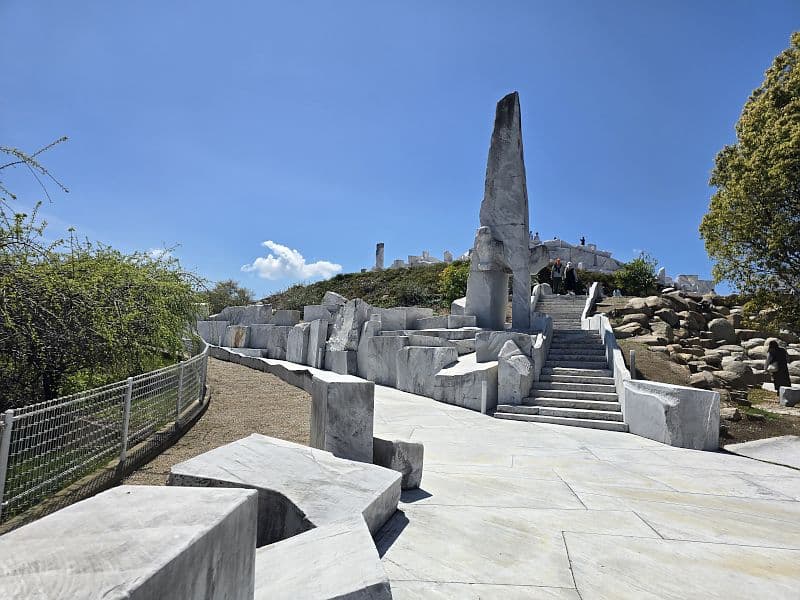
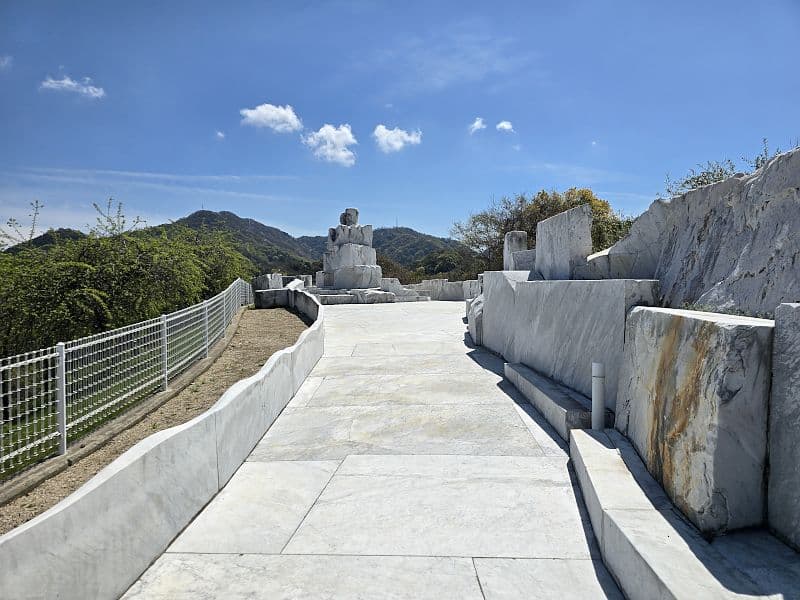
Head to the back of the grounds and a world of pure white suddenly opens up: the Hill of Hope (Miraishin no Oka).
This garden, made with about 5,000 tonnes of Italian marble, is a large artwork that sculptor Kazuto Kuetani spent more than 30 years creating.
This is only part of Kosanji
Main gate, Chumon, Koyo Gate, five-story pagoda, main hall, Senbutsudo Jigokukyo and the Hill of Hope: that alone is plenty, but the grounds hold more than 15 buildings, including the Choseikaku, the great Guze Kannon statue and the bell tower. We cannot cover them all here.
Kosanji is far denser in person than in photos. Do go and see the rest with your own eyes.
Best time to visit Kosanji: early morning or late afternoon
The best times to visit Kosanji are just after opening, around 9:00, or around 16:00.
Early morning (9:00–10:00) has few visitors, and you can walk the grounds almost alone. The morning light falls on the vivid colors of the Koyo Gate and main hall, ideal for photos. After 10:00, when tour groups start arriving, it gets crowded quickly.
Late afternoon (15:30–16:30) is when you can catch the sunset from the Hill of Hope. From the west-facing hill you can look toward where the sun sets over the islands, and the contrast of white marble and sunset is different again from the morning. Last entry is 16:30, so enter by 16:00 at the latest.
Midday (11:00–14:00) is the peak of the crowds, and the glare on the Hill of Hope is especially harsh in summer. If you go at this time, a hat, sunglasses and water are essential.
Sightseeing around Kosanji: combine it with Setoda town
Setoda, home of Kosanji, is the main port town on Ikuchijima and known as a lemon-growing area. Around Kosanji are the Hirayama Ikuo Museum of Art, Setoda's old streets and shops selling lemon sweets, making it an area to enjoy over half a day to a full day.
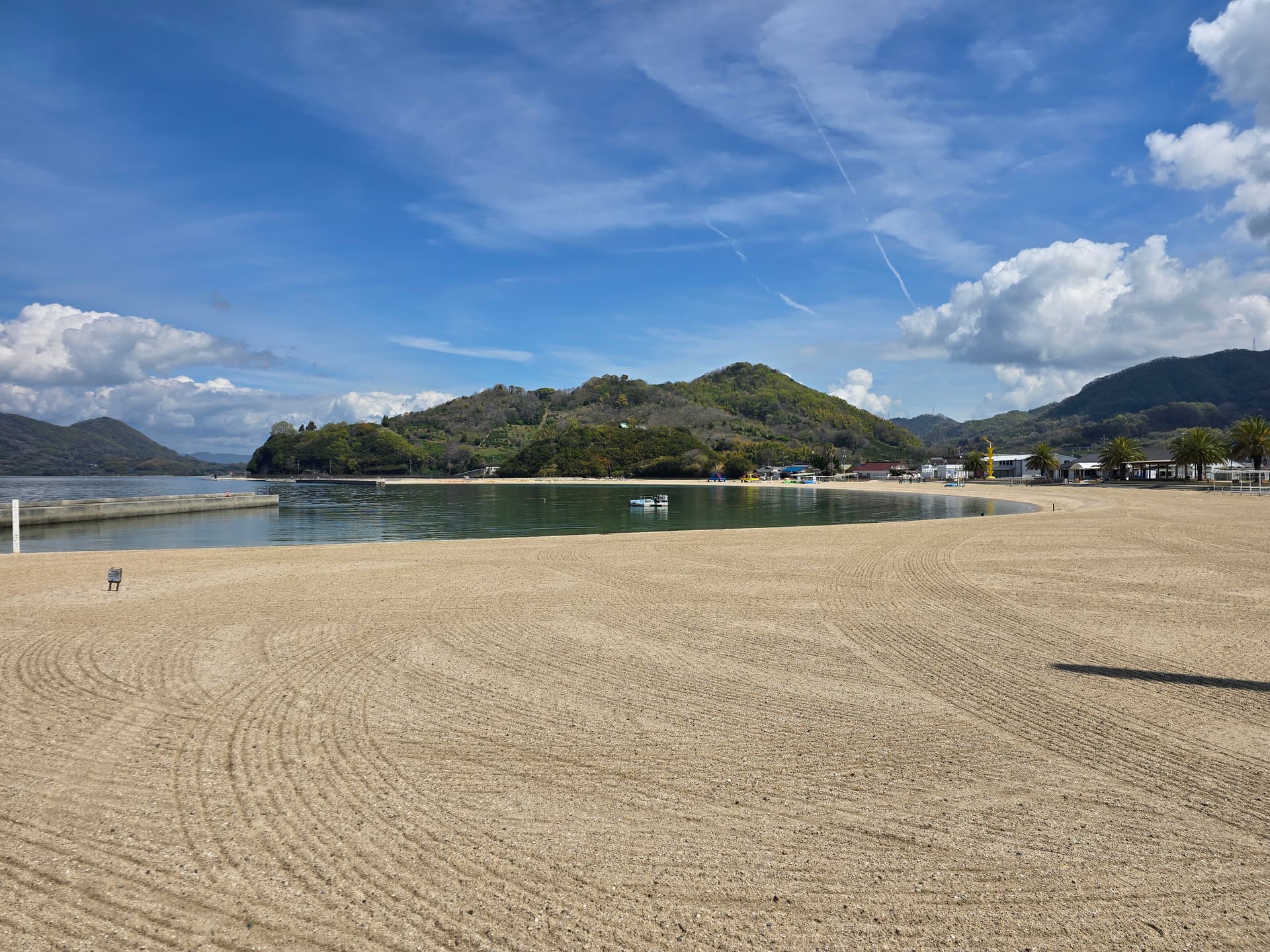
Setoda Sunset Beach, within reach of the temple, is a summer swimming spot that you can combine with Kosanji in a day. The Hirayama Ikuo Museum of Art is right next door. Further along the Shimanami Kaido, Omishima has Oyamazumi Shrine, head shrine of some 10,000 shrines across Japan, famous for its 2,600-year-old sacred tree.
For a route around Ikuchijima by bike, see the Ikuchijima cycling guide.
Getting to Kosanji and parking
Ferries to Ikuchijima from Onomichi Port (some via Mihara Port) take about 40 minutes to 1 hour. From Setoda Port, Kosanji is about 10 minutes on foot. If you are cycling the Shimanami Kaido, it is off the island's cycling route (the blue line), but well worth the detour.
Parking comes in free and paid options.
The free parking for the Kosanji Museum and Hirayama Ikuo Museum of Art (about 48 cars) is the best choice. It is about 50 m from Kosanji and free to use.
There are four paid lots nearby with 56 spaces in total, charging around 500–600 yen a day for regular and kei cars. Use them if the free lot is full.
Bike parking is a rail-type bike hanger at the bottom of the stone steps in front of the gate. When we visited in October 2026, about 10 bikes were parked there.
The tag on the hanger says "No mopeds or motorcycles" and "Bicycles only." Mopeds and motorcycles cannot park in front of the gate.
Admission is charged, so check the official website for the latest fees and hours before you go. The Hill of Hope is open, with nothing to block the sun, and gets very hot in summer. Choose early morning or late afternoon for a more comfortable visit.


Basic information
CYCLING
Cycling on Ikuchijima? Read the Ikuchijima Cycling Guide →
From the Ikuchi Bridge through Setoda town to the Tatara Bridge: the palm-lined coastal route and stops along the way, in photos
RELATED