Access
About 10 minutes by car from Innoshima-kita IC on the Shimanami Kaido. About 15 minutes on foot from the Habu Port ferry terminal. It is along the Shimanami cycling route, so it is easy to reach by bike.
Hours
Grounds open at all times (24 hours). Shrine office and amulet counter around 9:00–17:00.
Address
広島県尾道市因島土生町1424-2
Innoshima Oyama Shrine is a historic shrine in Habu-cho, Innoshima. It enshrines Okunitama-no-Mikoto and many other deities and has long been the guardian shrine of the whole island. In recent years it has become widely known as the "bicycle shrine," a sacred place for Shimanami cycling, and cyclists from across Japan come to pray for safety. In the grounds are a purification spot for bicycles and two-wheelers and sub-shrines such as Oyama Inari Shrine and Mimiaki Shrine, and a lookout gives a fine view over the islands of the Seto Inland Sea.
GUIDE
Innoshima Oyama Shrine: Highlights and How to Visit
What to see and how to get around, with photos
Innoshima's guardian shrine, known as the shrine of the bicycle god
Innoshima Oyama Shrine is an old shrine on a low hill in Habu-cho, Innoshima. It enshrines Okunitama-no-Mikoto and many other deities and has long drawn local faith as the guardian shrine of the whole island.
With the rise of Shimanami cycling in recent years, it has become known as the "bicycle shrine," a sacred place where cyclists from all over Japan come to pray for safe riding. Bicycle-themed ema plaques and amulets line the grounds, and people pedaling in to pray are an everyday sight.
Innoshima Oyama Shrine history: Innoshima's oldest shrine, from the Nara period
Innoshima Oyama Shrine dates back to 773 in the Nara period. It is also recorded as "Oyama-no-Kami" in the Heian-period history Sandai Jitsuroku (901), an old shrine long revered by the people of the Seto Inland Sea.
The deities include Okunitama-no-Mikoto and many others. Watashi-no-Okami, enshrined in the grounds, has been worshipped since ancient times as a guardian of voyages and transport, protecting the people who lived by crossing the Inland Sea. This character as a god of "crossings," and so of transport, has carried over naturally to protecting bicycles and two-wheelers today.
The Murakami navy, which once had its base here, is also said to have deeply revered Oyama Shrine as its guardian. The lookout that remains in the grounds is evidence of this, showing how closely the shrine was tied to the navy's control of the sea.
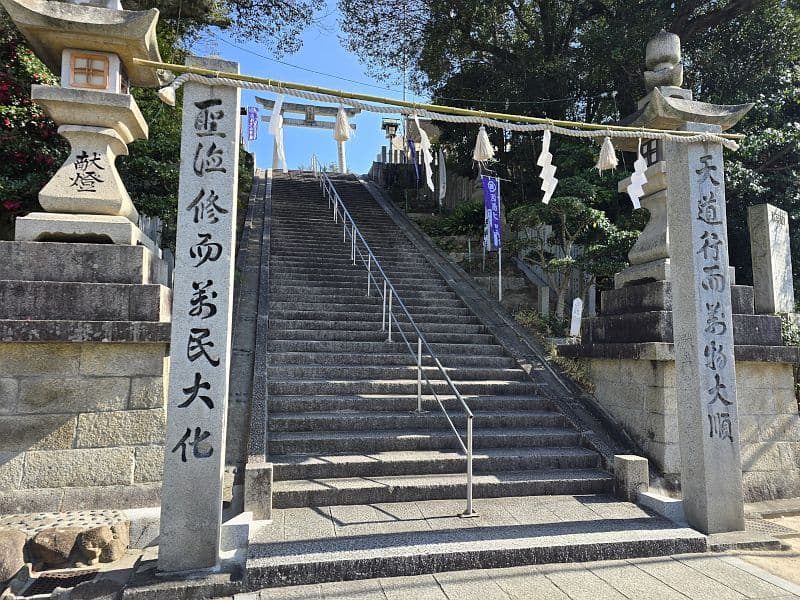
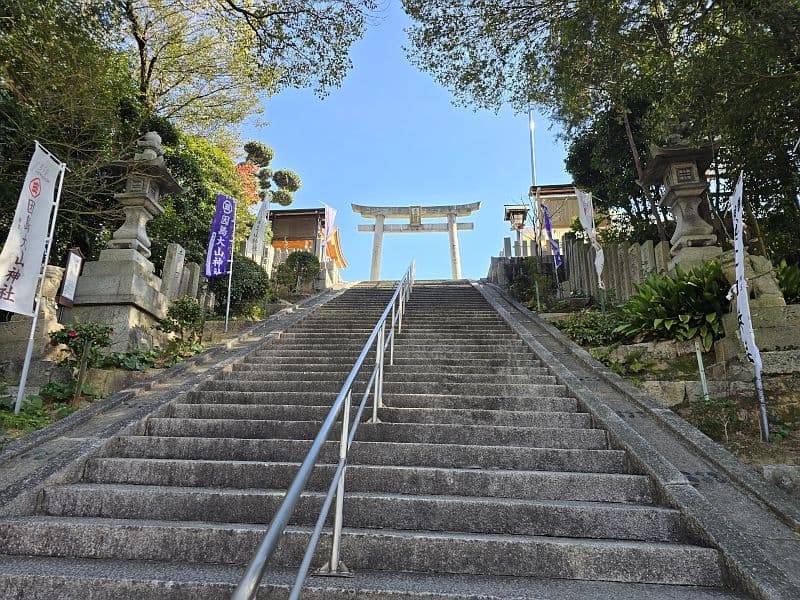
The stone steps of the approach to Innoshima Oyama Shrine
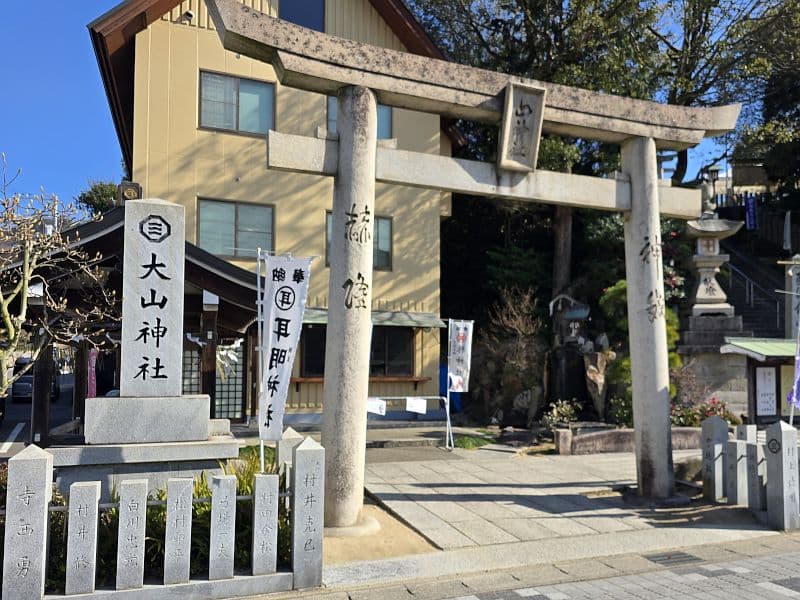
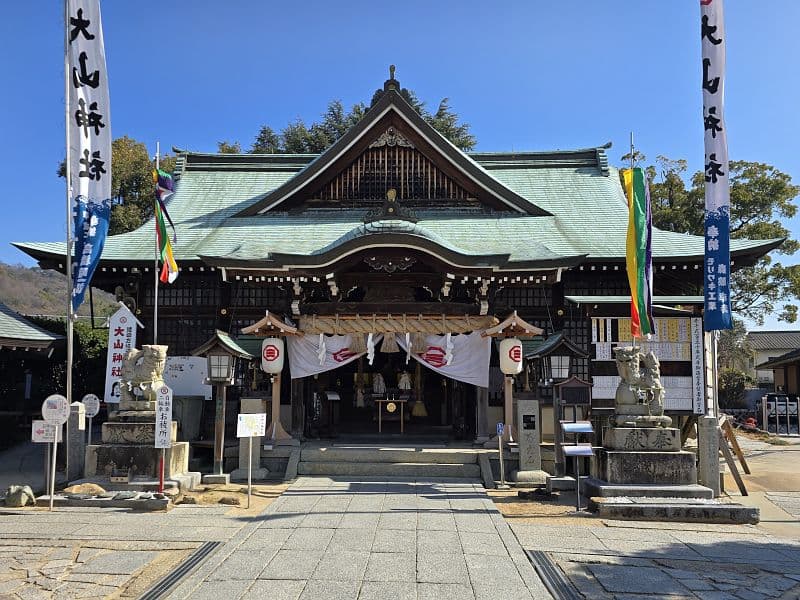
Through the torii, stone steps lead up to the worship hall. Stone lanterns and evergreen trees line both sides, and the air feels quiet and apart from everyday life. At the top of the steps rising toward the sky, the impressive worship hall greets you.
The worship hall of Innoshima Oyama Shrine
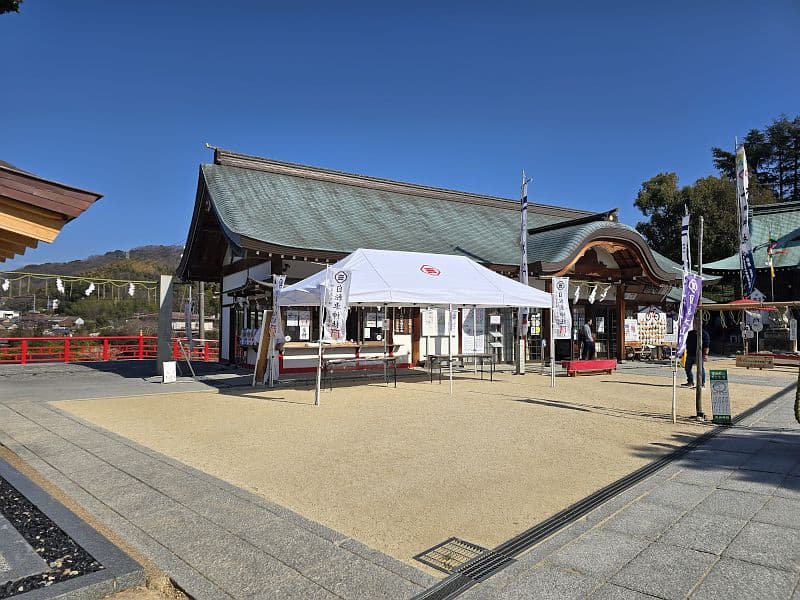
At the top of the steps, the worship hall draws the eye with its verdigris-green roof and finely carved wood. Komainu guardian dogs sit in front to greet visitors. The grounds are wide and covered in gravel, and they fill with people at festivals and events.
The bicycle shrine: purification spot and bicycle ema
What makes Innoshima Oyama Shrine a sanctuary for cyclists is the purification spot for bicycles and two-wheelers in its grounds. The stone monument is carved "Purification Place for Cars and Two-Wheelers," and many riders and cyclists use it to pray for the safety of their machines.
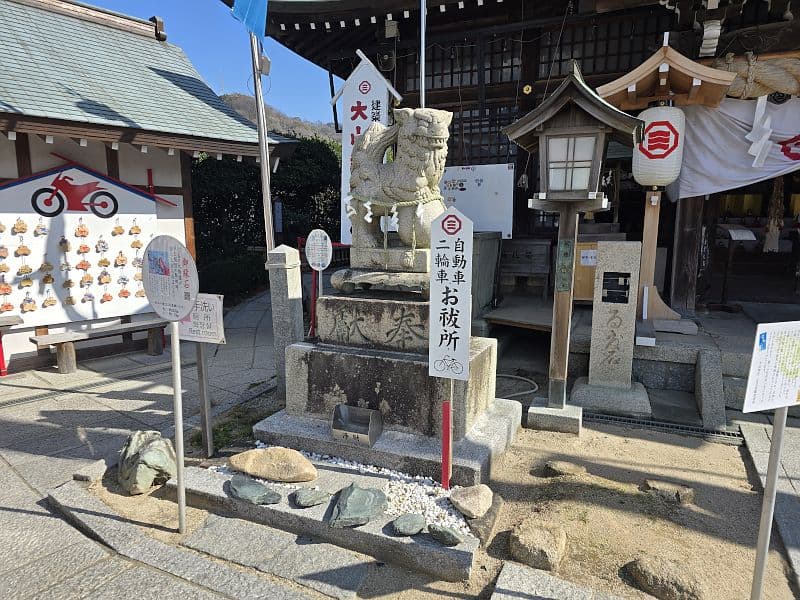
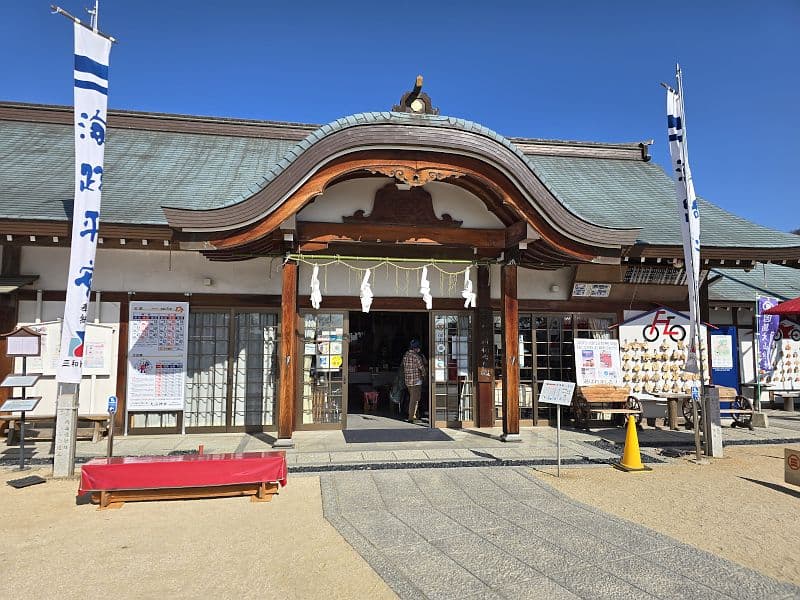
The shrine office offers bicycle-shaped ema and amulets for safe cycling. Among Shimanami cyclists, a visit here has become one of the rites of passage of the trip.
Amulets and offerings
The shrine office has bicycle-shaped amulets, wakka-mamori amulets shaped like wheels, bicycle stickers and more. Their unusual designs make them popular souvenirs with cyclists from all over Japan.
Bicycle blessing (reservation required)
You can also bring your bike for a bicycle blessing. Blessings are by reservation, so contact the shrine office in advance. Cyclists use it when they want a formal prayer for safety before starting the Shimanami Kaido.
Ride through the torii on your bike
At Oyama Shrine, visitors can pass through the torii while riding their bikes. Most shrines ask you not to bring bikes into the grounds, but here you can visit together with your bike, the style of a bicycle shrine. Riding through the torii just as you came off the Shimanami Kaido is a special moment for cyclists.
Bicycle Shrine Festival (every May)
The Bicycle Shrine Festival is held every May. Cyclists from across Japan and local people gather for a grand ceremony praying for safety. It is known as the event that marks the start of the Shimanami cycling season, and many people come from far away.
Sub-shrines in the grounds: Inari Shrine and Mimiaki Shrine
Besides the main hall, several sub-shrines are spread around the large grounds.
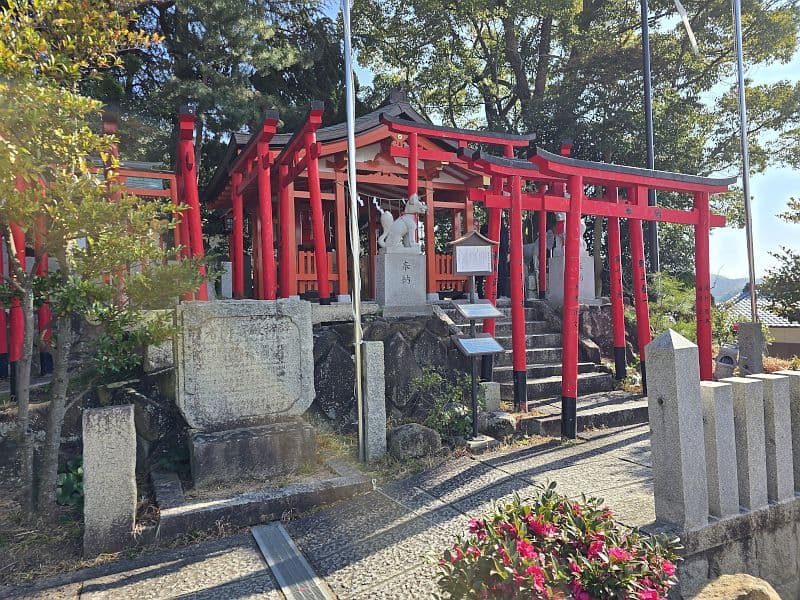
Oyama Inari Shrine is an Inari shrine reached along a path beside the main hall, striking with its row of vermilion torii gates. It is known for blessings of business prosperity and good harvests and is deeply revered by locals.
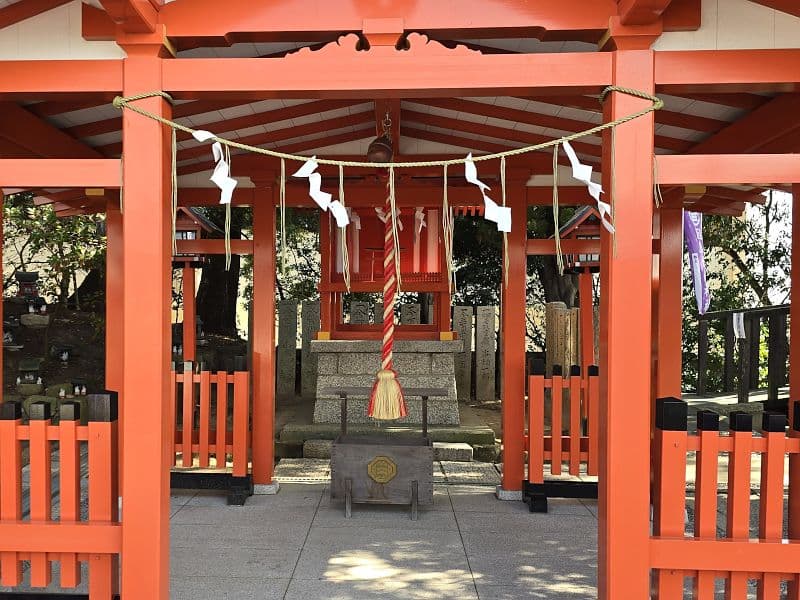
Mimiaki Shrine is an unusual sub-shrine dedicated to the god of ears. People pray here for recovery from ear ailments and better hearing, and from the phrase "the ears open," it is also said to bring wisdom. Many students and people praying for academic success visit.
The grounds of Innoshima Oyama Shrine
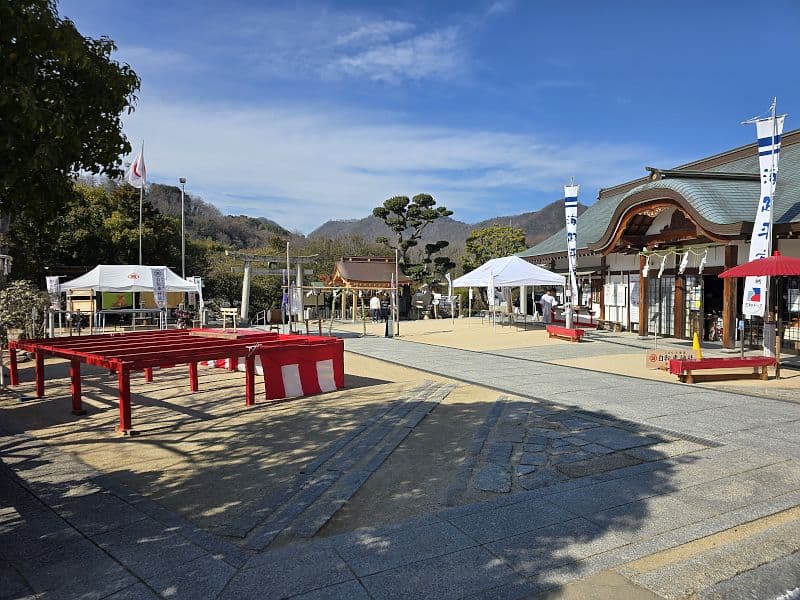
The grounds in front of the main hall are wide, open and covered in gravel. At festivals, a stage and food stalls are set up and islanders gather. Large trees grow around the edges and give the place a sacred atmosphere.
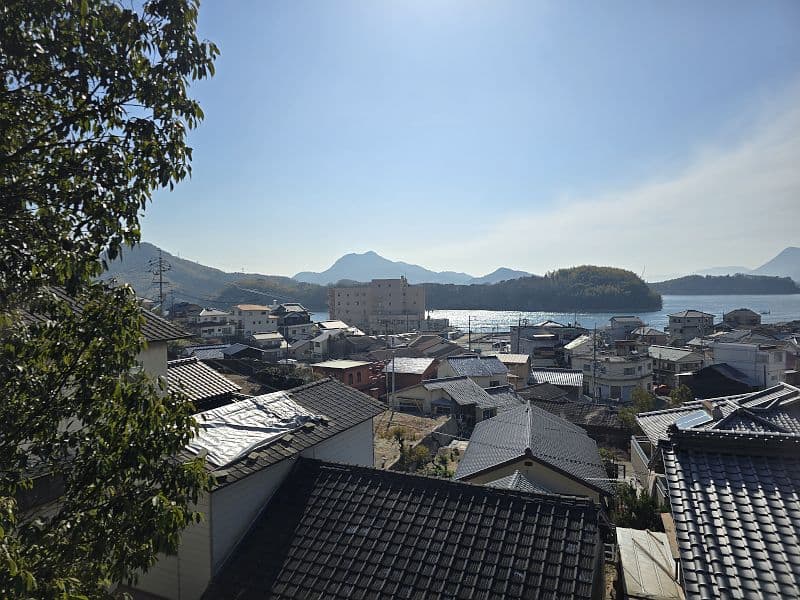
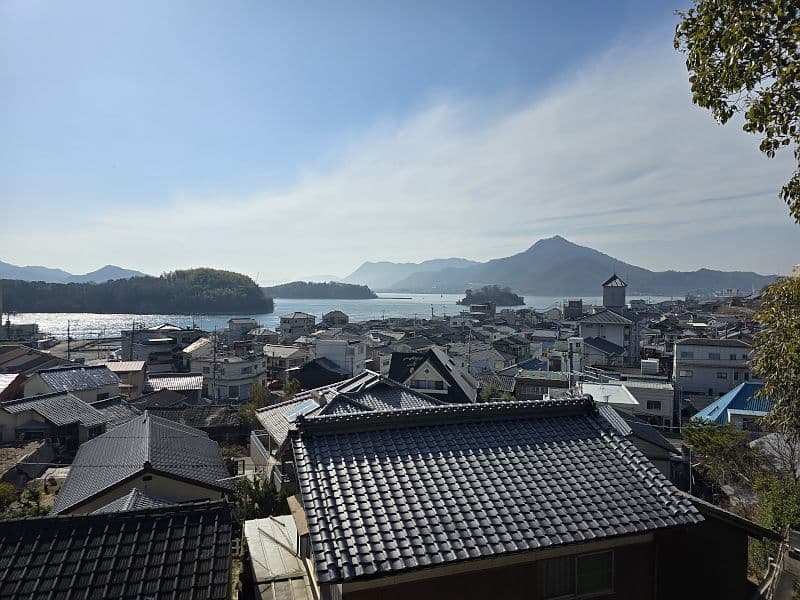
The view from the lookout at Innoshima Oyama Shrine
Further into the grounds is the Tsurishima Hakozakiura Lookout, a historic lookout said to have been used by the Murakami navy, once known as masters of the Seto Inland Sea. Based on Innoshima, the navy is said to have watched the sea toward Tsurishima and Hakozakiura from this high ground and tracked the movement of ships crossing the Inland Sea. A sign in the grounds explains its origin and the sea traffic of the time.
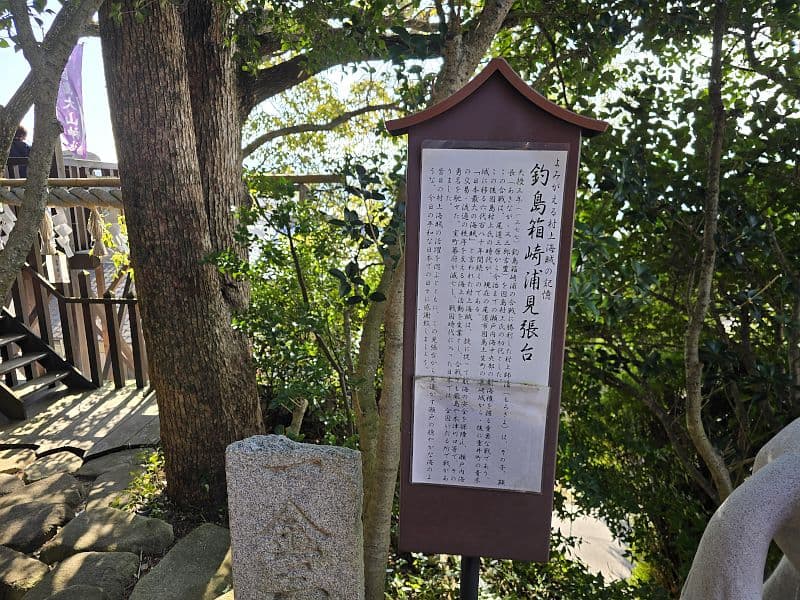
From the lookout on the hill, a wide panorama opens over Innoshima's town and the islands of the Seto Inland Sea. On clear days you can see as far as the mountains toward Onomichi, and the calm Inland Sea below is hard to walk away from. The lookout's sign also has a note titled "Three Fujis and the Crane and Turtle," introducing a local saying that likens the shapes of the visible mountains to Mt. Fuji.
Goshuin at Innoshima Oyama Shrine
Innoshima Oyama Shrine offers several goshuin (shrine seals). Besides the main Oyama Shrine seal, there are seals for Mimiaki Shrine and the Setouchi Seven Lucky Gods pilgrimage, so pilgrims are well catered for.
There are two goshuin book designs, a bicycle design and a Murakami navy design, and these original designs unique to this shrine are popular. Seals are given at the shrine office during opening hours.
Getting to Innoshima Oyama Shrine
By car: about 10 minutes from Innoshima-kita IC on the Shimanami Kaido via Prefectural Road 173. There is parking beside the grounds.
By bike or motorcycle: it is along the Shimanami cycling route, so it is easy to reach by bike from the Habu Port side. Many cyclists stop here during their ride. See the Innoshima cycling guide for the island route.
By ferry: about 15 minutes on foot from the Habu Port ferry terminal. Habu Port, with ferries to Onomichi, Mihara, Ikuchijima and elsewhere, is Innoshima's gateway and the starting point if you come by boat.
STAY
Places to stay on Innoshima


Basic information
Photo gallery
Tap a photo to enlarge it (swipe or use ← → keys).
CYCLING
Cycling on Innoshima? Read the Innoshima Cycling Guide →
From the Innoshima Bridge to the Ikuchi Bridge: the coastal route and stops around Habu, in photos
RELATED